UAE at the UN General Assembly: From diplomacy and dialogue to solutions and implementation
The UAE has identified three broad priorities for its participation in the current session
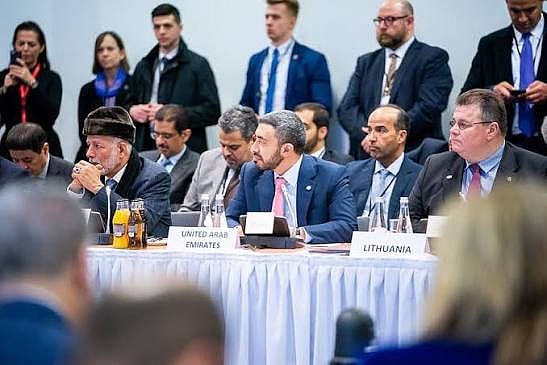
The UAE’s participation in the 81st session of the United Nations General Assembly, being held in New York from September 22 to 28, 2026, comes at a time when security, political, economic, climate and technological crises are increasingly intertwined. This convergence is putting multilateralism to a genuine test — not only in its ability to manage crises, but also in its capacity to address their underlying causes and translate international commitments into practical, implementable solutions.
Sheikh Abdullah bin Zayed Al Nahyan, Deputy Prime Minister and Minister of Foreign Affairs, is heading the UAE delegation to the High-Level Week. The delegation includes a number of senior officials, among them Dr Anwar Gargash, Diplomatic Adviser to the UAE President; Reem bint Ibrahim Al Hashemy, Minister of State for International Cooperation; Dr Sultan Ahmed Al Jaber, Minister of Industry and Advanced Technology and the UAE’s Special Envoy for Climate Change; and Dr Thani bin Ahmed Al Zeyoudi, Minister of Foreign Trade, alongside other ministers and ministers of state.
Get updated faster and for FREE: Download the Gulf News app now - simply click here.
The composition of the delegation, and the breadth of issues on its agenda, reflect an approach that goes beyond traditional diplomacy towards a multi-track engagement bringing together politics, security, economics, climate, water, health, technology and artificial intelligence.
The UAE has identified three broad priorities for its participation in the current session: supporting conflict resolution and promoting stability, tolerance and peaceful coexistence; supporting reform of the United Nations system and enhancing its efficiency, including through the responsible use of artificial intelligence; and advancing climate action and sustainable solutions in the water sector.
The significance of the UAE’s participation extends beyond speeches and formal meetings to the nature of the issues it is bringing to the international table.
During the opening days of High-Level Week, Sheikh Abdullah bin Zayed held meetings with a number of foreign ministers and officials attending the General Assembly. Discussions covered bilateral cooperation and partnerships in the fields of economy, trade, investment, culture, education, healthcare, advanced technology, artificial intelligence, food security, renewable energy and climate action, alongside peace and security issues and efforts to strengthen multilateral cooperation.
This broad engagement reflects a wider understanding of diplomacy, in which political, economic and development relations are not separate tracks, but interconnected elements of a broader network of partnerships.
The agenda of the General Assembly itself reflects the widening scope of international action. During High-Level Week, the United Nations is addressing sustainable development, climate change, sea-level rise, pandemic preparedness, the right to development and reform of the multilateral system, alongside pressing security and political crises.
The UAE’s engagement therefore operates at the intersection of security, economics, development, climate and technology — areas that are increasingly inseparable in shaping international stability.
Amid multiple and overlapping sources of tension, the UAE’s diplomatic messaging places strong emphasis on dialogue, political solutions and respect for international law.
Sheikh Abdullah bin Zayed has stressed that dialogue, respect for international law and multilateral cooperation are becoming increasingly essential in confronting challenges to peace, security and stability, while underscoring the need to advance practical solutions that promote peace and sustainable development.
This position also reflects the UAE’s wider diplomatic approach throughout 2026. In June, amid regional tensions, the Ministry of Foreign Affairs reaffirmed the priority of dialogue and diplomacy, respect for international law, the cessation of hostilities, respect for the sovereignty of states and freedom of navigation, as well as the continuation of negotiations aimed at achieving sustainable outcomes.
From an analytical perspective, the significance of this approach lies in keeping political channels open even when military and security considerations dominate the landscape.
Diplomacy does not eliminate differences. Rather, it provides mechanisms for managing them and creates space for moving from escalation towards arrangements that can reduce risks and open the way for negotiated settlements.
De-escalation is a central element of the UAE’s stated approach to regional crises. Across different files, the UAE has emphasised its support for political processes, cessation of hostilities and the creation of space for diplomatic solutions.
On Sudan, the UAE said in July 2026 that there is no military solution to the conflict and called for an immediate and unconditional ceasefire, while stressing the protection of civilians, unhindered humanitarian access and support for a civilian-led political process.
On Gaza, the UAE joined a joint statement in August with Arab and Islamic countries calling for the protection of civilians, medical facilities and humanitarian and healthcare workers, and for safe and unhindered humanitarian access. The statement also stressed the importance of a political pathway as the foundation for achieving lasting peace.
These positions indicate that, in the UAE’s stated approach, de-escalation is not an objective separate from a political settlement. Rather, it is a necessary step towards creating the conditions in which negotiations can take place and stability can gradually be restored.
The humanitarian dimension of international policy becomes increasingly important as conflicts become more prolonged.
Modern conflicts affect far more than armies and armed groups. Their consequences extend to hospitals, schools, infrastructure, food and energy supply chains, water systems and essential services. Civilian protection therefore represents both a humanitarian imperative and a matter of international law.
In its positions on Gaza and Sudan, the UAE has repeatedly stressed respect for international humanitarian law, the protection of civilians and civilian and medical facilities, and the need to ensure humanitarian assistance reaches those in need.
The same broader approach extends to the protection of trade and energy routes and maritime corridors.
During an Arria-formula meeting at the United Nations, the UAE warned that disruptions to supply chains, trade and energy flows have consequences extending beyond security to food security, fertiliser availability and the global economy, with particularly significant implications for countries in the Global South.
Security, therefore, increasingly has a broader meaning: human security, food and energy security, resilient supply chains and freedom of navigation are all interconnected components of international stability.
In an international environment marked by geopolitical tensions, trade disruptions and vulnerable supply chains, diversification of economic partnerships has become an important element of national resilience.
For years, the UAE has pursued a strategy of expanding its economic, trade and investment relationships, reducing excessive dependence on any single market or region while opening new channels for trade, investment and technology.
The UAE Ministry of Foreign Affairs describes economic diplomacy as encompassing efforts to attract foreign investment, encourage outward investment, develop bilateral and multilateral economic relations, and negotiate trade and investment agreements.
In July 2026, the UAE announced that it had concluded more than 37 Comprehensive Economic Partnership Agreements with strategic partners since the launch of its CEPA programme in 2021. The UAE Ministry of Foreign Affairs also said bilateral trade between the UAE and the European Union had exceeded €94 billion annually.
In another example, bilateral trade between the UAE and Australia increased from $4.2 billion in 2024 to $5.8 billion in 2025, according to the UAE Ministry of Foreign Affairs, following the entry into force of the two countries’ Comprehensive Economic Partnership Agreement.
The significance of this policy extends beyond trade. Diversification increasingly encompasses technology, energy, food, investment, infrastructure and supply chains.
It is therefore also a response to a fundamental transformation in the global economy, where resilience depends not only on the volume of trade, but on the diversity and reliability of the networks underpinning it.
In New York, UAE diplomacy is operating simultaneously on two levels: bilateral relations on the one hand and multilateral engagement on the other.
The bilateral meetings held by UAE officials on the sidelines of the General Assembly cover economic, development and technological issues, but they are also closely connected to the broader priorities of the United Nations.
This reflects an increasingly interconnected model of international partnership, extending beyond political agreements to include governments, international organisations, the private sector, financial institutions, academia, civil society and young people.
In this context, the UAE has expressed support for the UN80 Initiative, which seeks to make the United Nations more efficient, effective and responsive, strengthening its ability to fulfil its mandate amid growing challenges facing the multilateral system.
The initiative comes at a time when the United Nations itself has placed restoring confidence in multilateralism among the central priorities of the 81st session, under the theme: “Restoring Trust and Reigniting Global Solidarity: Accelerating Action on the 2030 Agenda and its Sustainable Development Goals towards a Sustainable Future for All.”
The link between water and climate action has emerged as one of the UAE’s key priorities.
Climate change is not manifested only through rising temperatures and extreme weather events. It also generates growing pressures on water, food, health, infrastructure and local economies.
The UAE has increasingly shifted the focus from commitments towards implementation, building on its role in hosting COP28 and the outcomes of the UAE Consensus.
UN Climate Change has noted that the first Global Stocktake under the Paris Agreement, adopted at COP28, established follow-up mechanisms designed to help countries and stakeholders translate its outcomes into policies and action plans, while the new nationally determined contributions for 2035 are being developed in light of those findings.
The UAE has also emphasised the importance of finance, technology, capacity-building, adaptation and resilience in climate negotiations, while linking climate action to water and food security and sustainable development.
This highlights one of the defining questions of the next phase of global climate action: the issue is no longer simply how many commitments can be announced, but how those commitments can be translated into projects, investments, infrastructure and measurable outcomes.
From New York to Abu Dhabi, the global water agenda will move to another major international platform in December.
The UAE, in partnership with the Republic of Senegal, will host the 2026 United Nations Water Conference at ADNEC in Abu Dhabi from December 8 to 10.
The conference seeks to accelerate implementation of Sustainable Development Goal 6 on clean water and sanitation, with a focus on translating political commitments into practical action, mobilising investment, supporting innovation and strengthening the participation of the private sector and young people.
The conference will feature six major interactive dialogues addressing “Water for People,” “Water for Prosperity,” “Water for the Planet,” “Water for Cooperation,” “Water in Multilateral Processes,” and “Investing in Water.”
This structure reflects an effort to broaden the concept of water security beyond an environmental or service-delivery issue and place it within the wider context of economic development, investment, health, stability and international cooperation.
The conference will also feature the “Oasis” platform, bringing together innovators, investors, policymakers, experts, young people and communities around solutions that can be implemented and scaled.
In that sense, the Abu Dhabi conference can be viewed as a practical test of the international community’s ability to move from recognising the water crisis to financing, implementing and scaling solutions.
Technology is increasingly inseparable from the other issues under discussion in New York.
Artificial intelligence is reshaping economies, education, healthcare, public administration, energy and security, while simultaneously raising questions about governance, privacy, bias and the digital divide.
The 81st session of the General Assembly places AI governance, technology and innovation among its priorities, alongside calls to implement the Global Digital Compact and strengthen digital inclusion, connectivity and digital skills.
The UAE, for its part, links the responsible use of artificial intelligence to reforming the UN system and strengthening its capacity to respond to emerging challenges, in line with the priorities it has identified for its participation in the current session.
In this context, technology is becoming less about technological advancement in the narrow sense and more about governance.
Who sets the rules? How can developing countries gain meaningful access to advanced technologies? And how can AI be used to improve the efficiency of institutions and public services rather than deepen existing inequalities?
These questions are likely to become increasingly central to the international system in the years ahead.
The UAE’s agenda at the UN General Assembly reveals a clear connection between issues that may initially appear unrelated: conflict and peace, civilian protection, trade and energy, water and climate, artificial intelligence and investment.
The common thread is the ability to transform international cooperation from a political framework into practical outcomes.
Dialogue requires political processes capable of reducing escalation. De-escalation requires civilian protection and humanitarian access. Stability requires resilient economies and secure supply chains. Development requires water, energy and food. Economic transformation requires technology and artificial intelligence. And all of these objectives require international institutions capable of coordinating action, taking decisions and implementing commitments.
The UAE’s participation in the 81st General Assembly therefore carries significance beyond the individual issues being discussed in New York. It reflects an effort to connect these issues within a broader framework for international action.
According to the UAE’s stated positions, diplomacy, dialogue and de-escalation are tools for addressing crises; economic partnerships are instruments of resilience; climate and water action are investments in long-term stability; and technology and artificial intelligence are tools for strengthening institutional capacity to meet the challenges of the future.
Ultimately, the success of this vision depends on the wider international community’s ability to translate commitments into action, and on the willingness of governments, financial institutions, the private sector and international organisations to work together on solutions that can be financed, implemented and scaled.
This is where the agenda of the General Assembly intersects with that of the UN Water Conference in Abu Dhabi: the transition from commitment to implementation, and from dialogue to action.
In a world where security crises are increasingly intertwined with economic, climate, humanitarian and technological challenges, no country can address the major challenges of the future on its own.
The broader message emerging from the UAE’s participation in the 81st session is therefore that addressing the challenges ahead requires not only more dialogue, but the transformation of dialogue into partnerships, partnerships into projects, and projects into tangible outcomes that improve people’s daily lives.
This is ultimately where the value of multilateralism is measured — not by the number of meetings held or statements issued, but by its capacity to turn shared political will into more sustainable peace, more inclusive development, greater water security, stronger climate resilience, more resilient economies, more responsible technology and a future better prepared for generations to come.
Sign up for the Daily Briefing
Get the latest news and updates straight to your inbox
Network Links
GN StoreDownload our app
© Al Nisr Publishing LLC 2026. All rights reserved.