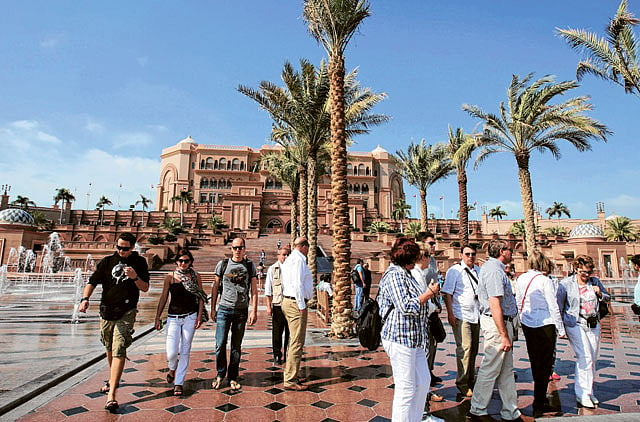
The global recession is over and the tourism sector is rapidly growing again, according to Dr Mohit Vij, assistant professor at Skyline University College.
With an influx of more than seven million tourists every year, the sector is booming, with the UAE owning three national airlines and tourism organisations such as travel agencies, tour operators, ground operators, hotels and destination tourism authorities.
Demand for employees
"However, at the same time there has been a constant increase in demand of suitable manpower for this sector," said Vij who is currently researching the contribution of the tourism sector to the UAE's economy.
"The short-term vocational courses are not enough to make this industry sustainable in the long run," he said.
He said this was particularly true for a country like the UAE where a drastic growth in tourist arrivals and activities can pose a serious threat to its fragile environment. He said what was needed right now was an understanding of the tourism industry's functioning at a larger level to fuel a sustainable growth which is socially, culturally and environmentally viable.
"This is possible only when the people running this sector are equipped with holistic knowledge of the tourism sector and take decisions accordingly," said Vij.
Another cause for concern are the people who work in the tourism industry, said Vij. "People who are attached to tourism industry often don't have full knowledge, training or education in tourism. There will be money made in the short term, but this is not good for the long term."
Growth
Tourism is the second largest industry in the world and contributes to 10 per cent of the global GDP — in the UAE, the figure was 11.3 per cent for 2010, according to the World Tourism and Travel Council.
Similarly the industry's total contribution to employment increased from 8.5 per cent in 2009 to 9.1 per cent in 2010, according to the WTTC.
The organisation predicts that the average annual growth of the sector's contribution to the GDP and employment in the UAE, will be 11 per cent and 8.9 per cent respectively from 2011 to 2020.
Also WTTC data shows the contribution of the travel and tourism economy to employment is expected to result in 745,000 jobs by 2020 from 429,000 jobs in 2010.
According to Vij, the UAE is an ideal tourism model to the rest of the world with its strategic location, an optimum blend of natural attractions (sun, sand, sea), man-made attraction such as palm islands, skyscrapers, shopping festivals, well-established infrastructure and availability of a range of accommodation.
"All this, and huge support and investment from the government to diversify from the oil sector, have given a major thrust to tourism development and promotion."
Another indicator of where the employment needs will lie is the hotel industry.
Hotel occupancy rates in Abu Dhabi, Dubai and Sharjah and increased by 5 per cent to 10 per cent last year.
"The last couple of years remained slightly discouraging for the global tourism trends due to the global recession, yet the UAE remained the leading country in terms of tourist arrivals in the Middle East," said Vij.
Although the global recession cast a shadow on the UAE economy as well, the tourism industry would be a thriving business in the times to come, said Vij.
Sign up for the Daily Briefing
Get the latest news and updates straight to your inbox
Network Links
GN StoreDownload our app
© Al Nisr Publishing LLC 2026. All rights reserved.