Middle East War: Houthi missile targets Riyadh, tankers hit mines near Hormuz
Saudi air defences intercepts drone as Iran reports two tankers struck mines near Hormuz
Highlights
Saudi coalition says intercepts ballistic missile launched towards Riyadh
The Saudi-led coalition fighting Yemen's Houthis said on Saturday it had intercepted a ballistic missile launched towards Riyadh by the Iran-backed group.
"Air defences intercepted and destroyed a ballistic missile launched by the Houthi terrorist militia toward Riyadh," coalition spokesman Turki al-Malki posted on X.
Two explosions heard in Riyadh following alert
Two explosions rang out in Riyadh early Saturday, an AFP journalist in the Saudi capital said, as Yemen's Houthis keep up strikes on the kingdom.
The Saudi civil defence said an early warning system was activated to alert residents to a potential threat.
Saudi coalition says downed drone
The Saudi-led coalition fighting Yemen's Houthis said on Saturday it had downed a drone, as the Iran-backed group carries out daily attacks on the kingdom.
"A drone was intercepted and destroyed in the Eastern Province," said Turki Al-Malki in a post on X, the spokesman for the coalition.
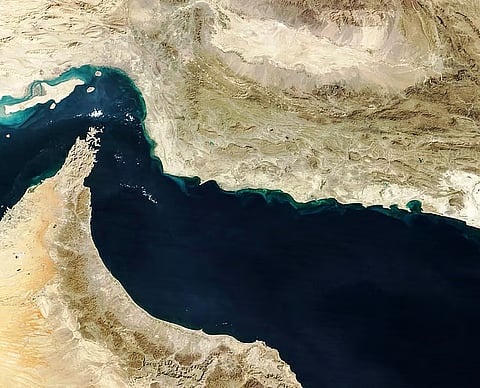
Two oil supertankers hit mines in Strait of Hormuz: IRGC
Iran’s Islamic Revolutionary Guard Corps (IRGC) Navy reported that two supertankers attempting to pass through an unauthorised southern route in the Strait of Hormuz struck naval mines earlier on Friday, triggering explosions and severe fires that disabled their engine rooms and left both vessels stranded.
The two tankers were carrying a combined total of more than 4.5 million barrels of crude oil, according to the IRGC Navy.
The statement added that the vessels had been abandoned off the southern coast of the Strait of Hormuz following the explosions, with their crews leaving the ships.
Netanyahu says Israel must circumvent growing sanctions
Israel may need to develop an alternative digital economy to circumvent rising international sanctions, Prime Minister Benjamin Netanyahu said, as he acknowledged rising pressure from key ally the United States.
"You have to understand that there could be sanctions, including banking sanctions," Netanyahu said on a talk show of Israel's Channel 10 released ahead of elections.
"You need to prepare an alternative economy that can operate around them," he said.
Asked if he was speaking about blockchain, a decentralised digital system that does not rely on central government authorities, Netanyahu said, "Absolutely. I have asked to prepare this plan."
Netanyahu did not specify from which country he expected sanctions.
Netanyahu, who has previously called for Israel to become self-sufficient militarily, said that multibillion-dollar weapons packages from Washington "won't keep coming".
"It's over. It's just a question of when," he said, acknowledging he was "worried" about the shift in the United States.
Yair Lapid, a centrist former prime minister who is part of the opposition bloc challenging Netanyahu, seized on the remarks.
"Netanyahu now admits, in his own words: if his government is reelected, American security aid will come to an end and Israel will face sanctions that would devastate our economy, lead to runaway price hikes, and cause irreparable damage," Lapid said.
Iran plans to target Gulf internet cables if war resumes
Iran has drawn up plans to target undersea communications cables in the Gulf if the US and Israel launch fresh attacks, two senior Iranian security officials told Reuters on October 23.
One official said Tehran could also seek to delay repairs to prolong disruptions to communications and internet connections. Iran’s Revolutionary Guards deputy head of political affairs, Yadollah Javani, said the country could target seven major internet cables beneath the Strait of Hormuz if Iranian infrastructure came under attack.
Analysts have said the global impact of any disruption could be limited, although damage to the cables could affect connectivity across the Gulf.
If cables in the Strait of Hormuz are cut:
Gulf countries could face widespread internet outages and severe connectivity problems.
Banks, payment systems, cloud platforms and businesses could suffer major disruptions.
Government, military and emergency communications could also be affected.
Multiple cable cuts could isolate parts of the Gulf from global internet networks and cause a broader regional communications crisis.
Jordan declares three days of mourning after church attack
Jordanian Prime Minister Jaafar Hassan issued a directive on Friday declaring three days of national mourning across the kingdom, starting October 23, 2026, in honour of the victims of the terrorist attack on the Greek Orthodox Church in Hamoud village, Karak Governorate. Flags will be flown at half-mast on the buildings of ministries, government departments, public institutions and authorities throughout the mourning period. The directive described the attack as a brutal and cowardly act of terrorism and stated that the national mourning reflected the grief and solidarity of Jordanians following the deaths of innocent victims.
Signs point to renewed major US military ops against Iran
The United States appears to be preparing for renewed large-scale strikes against Iran, with military deployments and heightened regional alerts raising concerns about further escalation, according to AFP.
Experts point to additional US military assets moving to the Middle East, a planned deployment of the USS Theodore Roosevelt aircraft carrier and another Marine Expeditionary Unit, alongside heightened Israeli military readiness.
Some analysts believe strikes could follow the November 3 US midterm elections, although the timing remains uncertain. US envoy Tom Barrack said an attack could also take place over the weekend.
The conflict has largely centred on attacks involving commercial shipping, a US blockade of Iranian ports and tensions over the Strait of Hormuz. Major attacks on land-based targets have been limited since early September.
However, analysts warn that renewed military action may not resolve the conflict. They say previous strikes have already heavily damaged Iran’s conventional military sites, while further attacks could increasingly affect civilian infrastructure.
Experts also question the feasibility of a ground operation, citing damage to US bases in the region and the difficulty of deploying the forces required.
Trump has said the conflict could be ended quickly, but the path towards either a diplomatic settlement or further military escalation remains unclear
India facilitates life-saving medicine supplies to Iran
India is continuing to facilitate the transport of life-saving medicines to Iran despite flight disruptions caused by the regional conflict, the Ministry of External Affairs said on Friday.
MEA spokesperson Randhir Jaiswal said Indian authorities remain in contact with Iranian counterparts to ensure the delivery of essential medicines as a humanitarian gesture.
India has also raised concerns over the safety of its seafarers and tankers amid attacks on shipping in the Strait of Hormuz.
National Security Adviser Ajit Doval discussed the issue with Iran’s Supreme National Security Council secretary, Mohsen Rezaei, during a telephone conversation on October 12.
Defence Minister Rajnath Singh met Iranian First Vice President Mohammad Reza Aref on the sidelines of the Shanghai Cooperation Organisation Heads of Government meeting in Dushanbe earlier this week.
US could strike Iran this weekend, envoy says
The United States could strike Iran as soon as this weekend, a US envoy said Friday, after mounting threats by both Washington and Israel.
"Could there be a strike this weekend? Absolutely," Tom Barrack, the US ambassador to Turkey and point man on Syria who does not have a direct role on Iran, said in an interview with podcast host Mario Nawfal.
President Donald Trump "is very clear. He's open and available and accessible to a deal and we've been at the table for months and months and months," Barrack said in the interview, a snippet of which was aired on Israeli army radio.
Israeli Prime Minister Benjamin Netanyahu, who faces elections Tuesday, in recent days has repeatedly vowed to topple the clerical state in Iran, following two major bombing campaigns against Iran since last year.
Trump has also signalled an openness to resuming strikes on Iran after a long deadlock in diplomacy although he earlier said it would not happen before US congressional elections on November 3.
Egypt urges de-escalation and US-Iran dialogue
Egyptian Foreign Minister Badr Abdelatty said he had stressed the need to reduce tensions, promote US-Iran dialogue, protect Saudi Arabia’s security, safeguard freedom of navigation and achieve a just peace in Palestine during talks with counterparts in Istanbul.
Foreign ministers from Saudi Arabia, Pakistan, Egypt and Turkey, known as the R4, are meeting counterparts from the UK, France and Germany, the E3, to discuss Iran and Yemen amid concerns over renewed military escalation.
Turkey pushes for regional cooperation
Turkish Foreign Minister Hakan Fidan is hosting the meeting as Turkey seeks to strengthen its regional role, including through the Mecca Defence Alliance, a defence pact launched with Pakistan and Saudi Arabia in August.
Türkiye has said the pact is not directed against any specific country and remains open to others, including Egypt.
Cairo has yet to decide whether to join the alliance. On Wednesday, Egyptian President Abdel Fattah Al Sisi said Egypt would defend Saudi territory but would not participate in any attack on Yemen.
Britain calls for Hormuz diplomatic solution
British Foreign Secretary Ed Miliband's office said the talks would focus primarily on the Strait of Hormuz and the situation in Saudi Arabia.
Miliband would advocate a diplomatic solution to the Hormuz crisis that restores full freedom of navigation, his office said.
He would also stress how what it described as Iranian tactics were being replicated across the region, with attacks on Saudi Arabia further destabilising the region and increasing pressure on vital waterways and global chokepoints, including Bab Al Mandeb and the Suez Canal.
Akasa Air extends Saudi flight suspensions
Akasa Air has extended the suspension of flights to and from Jeddah until November 10 and Riyadh until November 30, 2026, citing the prevailing security situation in Saudi Arabia.
The airline said it was closely monitoring developments and assessing the situation in real time.
Affected passengers can claim a full refund, credited to their original payment method within seven days, or reschedule their travel at no additional cost. Passengers who booked through travel partners should contact them directly for assistance.
Akasa Air said passenger and crew safety remained its highest priority.
3,000 stranded Umrah pilgrims return to India
Around 3,000 stranded Indian Umrah pilgrims have returned from Saudi Arabia over the past week, while more than 10,000 other pilgrims have also travelled home on available flights, India’s Ministry of External Affairs (MEA) said on Friday.
The Indian Embassy and Consulate in Saudi Arabia are working with airlines and tour operators to facilitate the early return of remaining stranded pilgrims.
Indian officials are assisting stranded pilgrims with community volunteers and operating round-the-clock control rooms in Riyadh and Jeddah. Regular advisories are also being issued to keep Indian nationals informed of developments.
MEA spokesperson Randhir Jaiswal said arrangements were being discussed to help other stranded Umrah pilgrims return to India as soon as possible.
Tanker hit by unknown projectile near Oman in Strait of Hormuz
A tanker was hit by an unknown projectile while sailing out of the Strait of Hormuz near Oman, the United Kingdom Maritime Trade Operations (UKMTO) said.
The incident occurred at 5.15pm UTC on October 22, about seven nautical miles northeast of Limah, Oman, according to a UKMTO advisory issued after a delayed report from the vessel’s company security officer.
The tanker was able to continue its voyage to its next port of call. The advisory did not provide details of the vessel or report any casualties.
UKMTO advised vessels transiting the area to exercise caution and report any suspicious activity as authorities investigate the incident.


