Aisha Abdulla Miran as the Director General of the Knowledge and Human Development Authority in Dubai
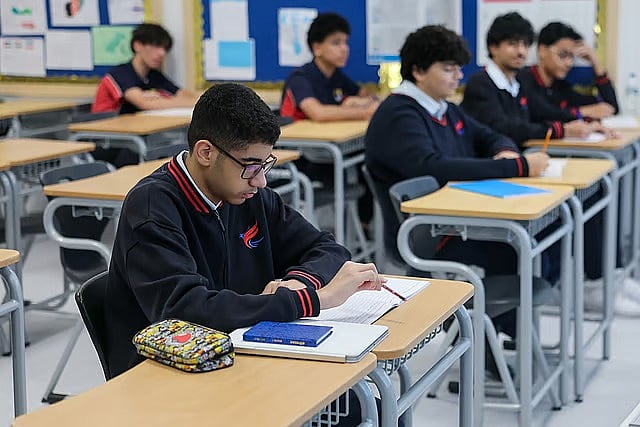
Dubai: Dubai is set to add around 18,000 affordable seats to its private education sector over the next two academic years, as the emirate widens access to affordable education options for families.
The expansion comes as private education continues to grow. A total of 406,563 students were enrolled in private schools at the start of the new academic year, compared with approximately 388,731 in June 2026, an increase of 4.6%. Over the past two academic years, 51 new private educational institutions have opened in Dubai.
Get updated faster and for FREE: Download the Gulf News app now - simply click here.
Dubai’s Knowledge and Human Development Authority (KHDA) outlined its priorities for the 2026-27 academic year at the KHDA Media Majlis, which brought together KHDA leadership and media representatives to discuss Dubai’s education sector, implementation of Dubai’s Education 33 (E33) Strategy, and key initiatives and policies planned for the next phase.
Expanding access to affordable education options is among them, alongside raising the performance of schools with high concentrations of Emirati students, strengthening cultural identity and Arabic language, enhancing student wellbeing and protection, empowering parents, and developing Emirati talent across the education ecosystem.
Growing demand
Twenty-six new private educational institutions opened this academic year, including 17 private early childhood centres (ECCs), seven schools and two international higher education institutions. The new schools added nearly 17,000 new seats, while the new ECCs will add more than 1,700 seats to Dubai’s private education sector.
The continued growth reflects sustained demand for private education in Dubai and families’ choice of the emirate as a place to live, raise their children and access high-quality education.
Dubai’s private education landscape has recorded annual growth of 4.6% across early childhood education, schools and higher education over the past three academic years. Eleven new higher education institutions have opened over the past three years, alongside a 29% increase in enrolment.
Two globally recognised universities are opening in Dubai this academic year. Peking University HSBC Business School will launch its MBA and EMBA programmes, ranked 47th globally in the QS rankings, in January 2027, while the American University of Beirut’s Dubai campus opened in September 2026, further strengthening Dubai’s position as a global hub for higher education and research.
Education 33 progress
In the two years since the launch of the E33 Strategy, KHDA has introduced more than 20 transformative game changer initiatives and developed 28 policies, guidelines and regulatory frameworks, with a focus on placing learners at the centre of the education journey.
These initiatives and policies cover education quality assurance, future skills, Arabic language education – particularly in early childhood, national identity, inclusive education, teacher wellbeing, digital transformation and artificial intelligence, flexible regulation, and the empowerment of students, educators, and families.
KHDA has also worked over the past two years to support different stages of the learner journey and strengthen the quality, clarity and sustainable growth of Dubai’s private education sector.
Speaking at the event, Aisha Miran, Director General of KHDA, said: “Dubai’s Education 33 Strategy is the compass that guides our work and sets out where we want Dubai’s education ecosystem to be by 2033. Two years since its adoption, we have made important progress, but our ambition extends further. We want its impact to reach every student, family, teacher, and educational institution in Dubai.
“Every initiative we launch, policy we develop and partnership we build contributes to an education ecosystem that responds to the needs of learners, develops their skills, strengthens their identity and expands opportunities, while supporting Dubai’s global competitiveness.”
Global rankings
Miran noted that Dubai’s private schools ranked among the world’s top 10 education systems across all PISA 2025 assessment domains. The performance of Emirati students also improved by 31 points in mathematics, 30 points in science and 18 points in reading, reflecting progress in student outcomes and the continued development of Dubai’s education system.
As quality assurance visits to private schools resume during the current academic year, KHDA will continue to apply high-performance standards through a regulatory approach that is clear, fair, consistent and supportive of educational institutions.
Parents, students and educators
The 2026-27 academic year will also see the formation of the second cohort of the Dubai Students Council, alongside the introduction of the first Dubai Parents Council and the first Dubai Educators Council. The councils will provide students, parents and educators with a platform to contribute to the development of the education sector and help shape the learner journey.
Empowering parents is a key pillar of Dubai’s Education 33 Strategy, the director general pointed out.
Since E33 was adopted, KHDA has organised more than 20 parent awareness sessions, reaching over 5,000 parents and covering topics such as positive parenting, family resilience, digital safety and supporting children during periods of stress.
During the 2026-27 academic year, KHDA will also continue its efforts to attract international higher education institutions and international students, support research and innovation, strengthen AI literacy, financial literacy and future skills, and expand career readiness and education pathways.
It will continue to develop programmes and services under the City of Students game-changer initiative to enhance the experience of higher education students studying in Dubai. The initiative aims to attract more international students, talent and global institutions while supporting research, innovation and knowledge creation across the emirate.
Sign up for the Daily Briefing
Get the latest news and updates straight to your inbox
Network Links
GN StoreAbout Gulf NewsTerms & ConditionsReach by GNSitemapContact usPrivacy PolicyGN FocusHave your sayWork with usAdvertise with usGulf News epaperPrinting Services
Download our app
© Al Nisr Publishing LLC 2026. All rights reserved.