Sharjah Police embrace social media
Twitter used to inform people about traffic congestion and even track down missing people
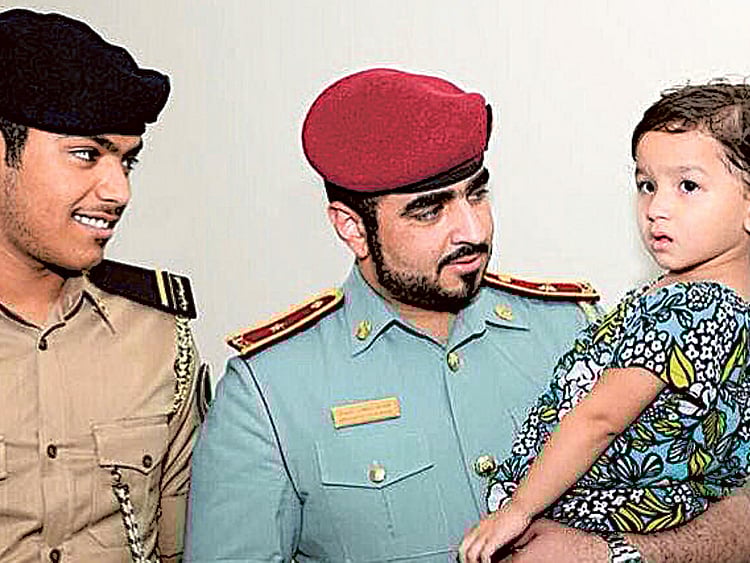
Sharjah: Twitter, Facebook and Instagram are increasing being embraced by police to reach out to the public and fight crime.
Sharjah Police is using social media to inform people about road crashes, traffic congestion, arrests, and even track down missing people and solve crimes.
Major Daib Bu Hindi, director of Media Affairs Coordination, pointed out that in the past, police could only communicate with the public through television and radio.
“Twitter is an effective tool to share information quickly in an emergency,” he said.
Bu Hindi said Sharjah Police used social media channels for the first time four years ago when a car was stolen with a baby girl inside. The news was posted on Twitter along with the vehicle’s plate number. An alert resident spotted the car and informed police.
In another case, social media helped Sharjah Police track down an elderly man who had been missing from his house in Khor Fakkan for five days. Unfortunately, he was found dead in Oman.
Lieutenant Abdullah Al Khayal, a police officer at Al Buhairah station, said: “Police departments are increasingly embracing the idea of using social media channels for everything from soliciting crime tips to sharing safety-related information and improving community relations.”
Through Twitter, for example, police can easily share pictures of missing children. Two girls were reunited with their families in this manner.
In the first case, a two-year-old Ethiopian girl was found crying on the road by a police patrol. They posted a picture of the girl on Twitter. In less than two hours, the girl’s family turned up at the police station.
In the second case, a three-year-old Afghan girl was found crying on a road at night. She was separated from her father while shopping in a supermarket. Half an hour after police posted the news on Twitter, the girl was reunited with her family.
However, social media needs to be used within the parameters of privacy and public safety. The Cyber Crimes Law (Federal Law No 5 of 2012) makes it an offence to use any IT means to breach someone else’s privacy, including by taking pictures of others, or publishing or displaying those pictures.
The UAE Penal Code (Federal Law No 3 of 1987) makes it an offence to transmit someone’s photograph without their consent.
The Copyright Law (Federal Law No 7 of 2002 in Respect of Author Copyrights and Parallel Rights) states that, in the absence of an agreement to the contrary (and with limited exceptions), a person who takes a picture of another cannot distribute or publish such picture without the consent of the person appearing in the picture.
Disclosing secrets relating to someone’s private life, without that person’s consent, can attract liability under the Penal Code and the Cyber Crimes Law. Similarly, the disclosure of confidential information, such as information belonging to an employer, can also attract legal liability in the UAE.
The Penal Code makes it an offence to publish information that exposes another person to public hatred or contempt, or to make a false accusation which dishonours or discredits another person. The Cyber Crimes Law contains similar provisions that prohibit insulting others, or attributing to them conduct that would make them the subject of the contempt.
The Cyber Crimes Law also makes it an offence to use any IT means for activities which are inconsistent with public morals and good conduct.
Sign up for the Daily Briefing
Get the latest news and updates straight to your inbox
Network Links
GN StoreDownload our app
© Al Nisr Publishing LLC 2026. All rights reserved.