Dh5m investment drops to Dh123 in decade
Client, who was forced to stay away from the UAE for 10 years after accident, files lawsuit against local bank
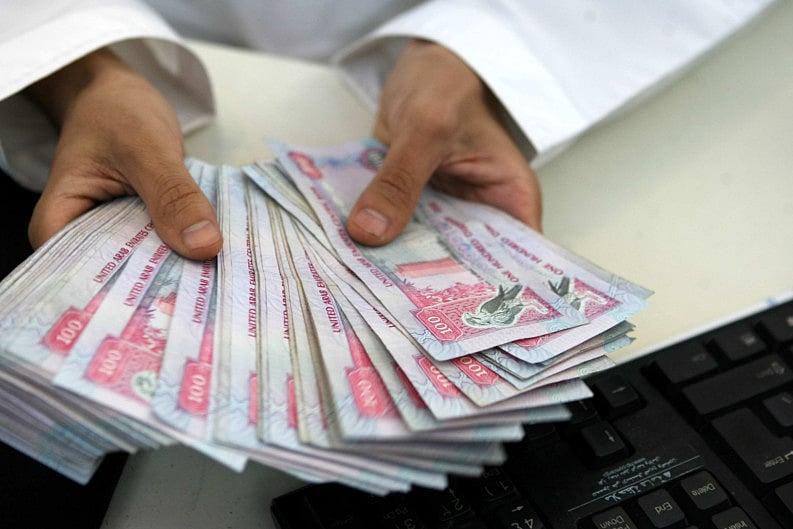
Dubai: A client who deposited Dh5 million in two trust accounts with a UAE bank 10 years ago, recently sued the bank after discovering that his investment was now worth only Dh123.
An accident had forced the client — a resident of a Gulf Cooperation Council country — to stay away from the UAE for 10 years.
The Dubai Rulers Court’s Disputes Settlement Department recently resolved the case after the client had filed a lawsuit against the bank in the Dubai Commercial Court.
Explaining the case, Hashem Salem Al Qiwani, Director of the Dubai Rulers Court’s Disputes Settlement Department, said: “Such commercial disputes rarely happen between a bank and its client. The client claimed in his lawsuit that the bank owed him Dh3 million in one trust and around Dh2 million [$544,000] in another trust held in foreign currency. He also mentioned in his lawsuit that both trusts were connected years ago and that he was expecting profit from them. The court referred the dispute to our department.”
The department’s investigation revealed that after the client deposited money in the two trusts held in dirhams and dollars, he used his ATM and credit cards to withdraw cash from his accounts.
The client also did not deny trading in the Dubai Financial Market, Al Qiwani said.
“Our probe further found that there had been a number of cheques and financial receipts worth Dh2.6 million that were submitted for encashment from his account. The claimant denied having submitted those cheques and receipts and asked that they be referred to Dubai Police’s forensic lab to examine whether they had been forged. We referred all the cheques and receipts to the forensic lab and we provided them with client’s specimen signatures [which he gave at the time of opening his bank accounts]. The forensic lab’s report confirmed that some of the signatures matched those of the client’s while others did not,” Al Qiwani said.
Further, Al Qiwani pointed out that the bank did not show records calculating any yield in dollars on the deposits, claiming that the client terminated the deposit without any documents.
The interest was not calculated in dollars and the claimant had made withdrawals using ATM and credit cards within the duration of term, he added.
“Based on forensic reports and financial analysis of customer’s both accounts, the court ruled for entitlement of the client for the claimed amount with accumulated interest,” Al Qiwani said.
Advising clients to be cautious, Al Qiwani said that in spite of banks’ periodical internal follow up and auditing systems, there are some back door accesses through which intruders could break into clients’ accounts and deposits. “Long term and accumulated yield deposits are considered weakest among the saving plan instruments in terms of internal supervision and owner’s external follow up. The customers of such saving deposits leave them for a long term without any follow up and revision with the bank, depending totally on bank’s internal auditing system, which cannot be accomplished without external supervision of owner,” he said.
Al Qiwani recommended that customers follow up with banks and regularly review their accounts and deposits, maintain bank statements and follow up on any updates, or suspicious transactions immediately.
Complex world of savings instruments
Amid increasingly competition in the banking industry, more and more multinational banks are inviting individuals to invest their money through the UAE’s banking system, Hashem Salem Al Qiwani, Director of the Dubai Rulers Court’s Disputes Settlement Department, said.
“This involves different forms of savings, investment deposits and investment funds that are convenient to the circumstances of each individual, Al Qiwani said.
He explained that three kinds of deposits are in use: Deposits under demand, under which a client can ask the bank to unfreeze the deposit, or part of it, without prior notice.
Term deposits, under which a client cannot access his funds for a certain period. Fines, or deductions from the earned profits, may be imposed if the term is broken.
Conditional deposits, which require giving the bank prior notice to access the funds. Such deposits are not termed, but clients are required to notify the bank about their desire to unfreeze the deposit, or part of it, before the date agreed upon.
“If the deposits are categorised according to interest and yield in relation with term and related duration, banks offer countless saving instruments [products], Al Qiwani said.
The most common are current/fixed deposit, increased value deposit [capital guaranteed deposit] and fixed yield deposit, he explained. These deposits grant current fixed yields with a difference of calculated term and period, whether on a monthly, quarterly or half-yearly basis. Usually individuals turn to the same to secure a fixed dependable income to cover their livelihood.
In a variable value deposit, however, yield and interest value are accumulated to grow the investment for the duration of the deposit.
“Generally, this type of deposit is taken by individuals interested in growth of excess savings, or for securing their families’ future. Beside current and fixed deposits and accumulated yield deposit, there are varieties of saving deposits such as saving accounts, current accounts with interest and bonds. As banks compete in offering different types of saving products, they also compete through raising interest rates on their saving instruments, in pursuance with state/central bank monetary policy. The banks also compete in attracting customers through quality of services for their saving programmes. The banks, which are regulated through internal auditing, usually send their customers statements of accounts and deposits showing transactions and deposits, and updates. They seek confirmation, and also give customers the opportunity to seek any clarification regarding deposits,” Al Qiwani said.
Sign up for the Daily Briefing
Get the latest news and updates straight to your inbox
Network Links
GN StoreDownload our app
© Al Nisr Publishing LLC 2026. All rights reserved.