Abu Dhabi start-up revolutionizes physiotherapy with AI-powered home recovery solution
AI transforms home physiotherapy with real-time feedback and personalized care.
Abu Dhabi: Shamma Alsaedi often found herself in the waiting room when her mother and grandmother went to physiotherapy. She accompanied them to their appointments and watched how their treatment unfolded. What caught her attention was not what happened in the clinic, but what came after.
After each session, the two women were sent home with a sheet of exercises. That is where a large part of recovery is meant to take place. It is also where the physiotherapist is not present. “Physiotherapists are very good at what they do,” Alsaedi said. “The problem is that, during most of a patient’s recovery journey, they are not in the room, because it happens at the patient’s home.”
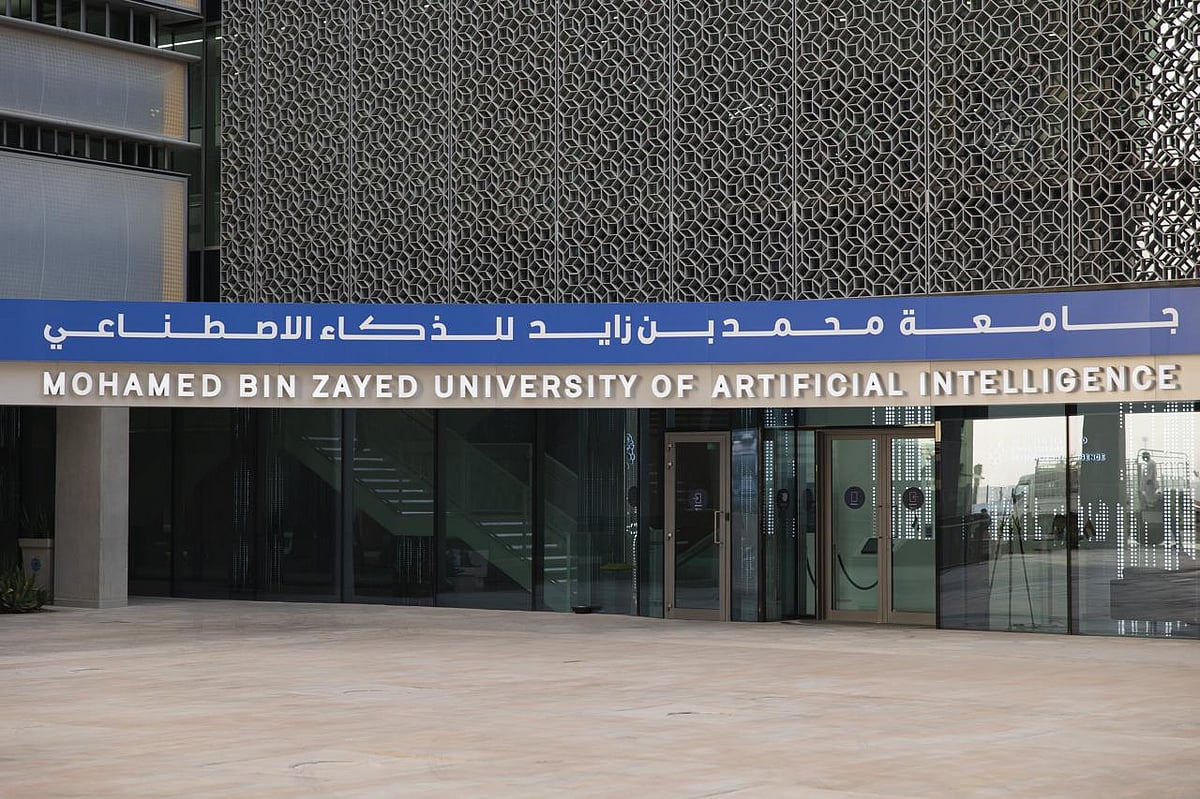
That observation became the starting point for Limb, an Abu Dhabi start-up she co-founded with Aisha Alraeesi. Both are graduates of the Mohamed bin Zayed University of Artificial Intelligence (MBZUAI), and Alraeesi is now the company’s Chief Technology Officer.
The numbers behind the hunch
Alsaedi did not leave it at an impression. As part of her master’s thesis research, she surveyed 80 physiotherapy patients in the UAE about their experience of treatment.
Seventy-one per cent said they were not doing their home exercises consistently or not doing them at all.
The sample is small, but it pointed in the same direction as what she had seen at her mother’s and grandmother’s side.
The reasons are familiar. People forget, life gets busy, or they are unsure whether they are performing a movement correctly. For those recovering from surgery or trauma, there can also be a fear of exercising the wrong way and causing further injury.
A camera in the living room
Limb tries to bring a little of the physiotherapist’s eye into the home. The practitioner builds a programme in a clinic dashboard, using their own demonstration videos, which are sent to the patient through an app.
As the patient exercises, computer vision tracks key points on the body and compares the movement with the prescribed exercise.
The app can give spoken feedback in real time, and the physiotherapist can see whether exercises were completed and what pain scores the patient reported. According to the company, video footage is not stored. It is processed to extract movement data and then discarded.
Clothing the training data left out
One of the more concrete problems emerged when the technology met the people it was built for.
Many patients in the UAE exercise in loose, traditional clothing such as abayas and kandooras. The company estimates that around 90 per cent of publicly available exercise datasets, by contrast, show people in fitted sportswear.
“Most computer-vision models are trained on people wearing fitted sportswear, so they can struggle to accurately track movement when patients are wearing loose-fitting clothing,” Alraeesi said. “If the model cannot clearly see how the body is moving, it cannot provide accurate feedback.”
Limb has been collecting its own movement data from people in loose-fitting clothing. The app works in Arabic and English, uses colour-coded buttons to make it easier for elderly users, and stores patient data in the country. Alsaedi puts the principle simply: start with the patient’s current situation and reality, not the clinic’s general assumptions.
From thesis to start-up
The path from idea to company was not a straight line. Alsaedi arrived at MBZUAI with an idea, persuaded her supervisor to work with her in the area, and took entrepreneurship courses through the university’s Incubation and Entrepreneurship Center (IEC). Her thesis explored the personalisation of exercises, but Limb is not directly built on it. She points in particular to the access to talks, seminars and start-up founders as what gave her confidence.
Shortly after graduating, she won first place in the Future Pioneers category of the Ministry of Education Graduate Fund’s Entrepreneurship Challenge, competing against more than 300 projects. Since then, Limb has continued to develop within Abu Dhabi’s start-up ecosystem, including through the IEC, Hub71 and Khalifa Fund.
Today, Limb is bringing clinics into an early-access programme and demonstrating the platform to rehabilitation centres and independent practices. It is still early days.
Alsaedi stresses that the technology is not meant to replace the physiotherapist. “Allow physiotherapists to extend their reach, without losing their role,” she said.
What began as an idea at MBZUAI has become an attempt to bring physiotherapy closer to where recovery actually takes place: at home, between appointments, when no one else is in the room.
Sign up for the Daily Briefing
Get the latest news and updates straight to your inbox
Network Links
GN StoreDownload our app
© Al Nisr Publishing LLC 2026. All rights reserved.