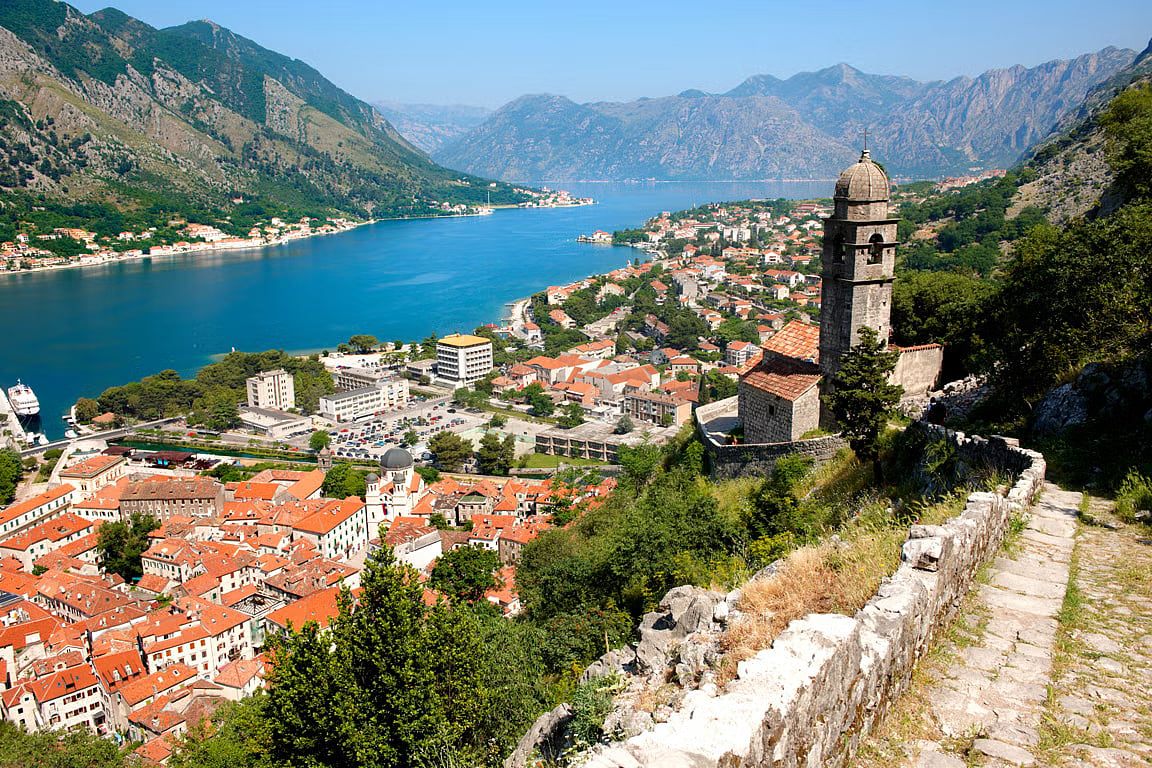
Kotor's Unesco-listed old town is a maze of narrow cobbled lanes, centuries-old stone churches and little squares perfect for people-watching over a coffee.
Montenegro travel guide: Best things to do and what it costs for UAE travellers
Explore Kotor, Budva and Skadar Lake with this guide to costs, attractions and travel tips
Last updated:
6 MIN READ
Montenegro is one of those places that feels far bigger than it is.
Dubai: Montenegro is one of those places that feels far bigger than it is. In a country roughly the size of a large emirate, you get medieval walled towns, a fjord-like bay, mountain national parks and a whole strip of Adriatic beaches, all within a couple of hours' drive of each other.
For UAE residents used to long-haul flights for a proper change of scenery, it's a refreshingly compact escape where you can pack a lot into a short trip.
Here's how to spend your time, and what to budget for it (approximately).
Wander Kotor's old town
The obvious starting point, and rightly so. Kotor's Unesco-listed old town is a maze of narrow cobbled lanes, centuries-old stone churches and little squares perfect for people-watching over a coffee. The old town itself is free to wander, which makes it an easy half-day just soaking up the atmosphere.
Climb to San Giovanni Fortress
Above Kotor, a zig-zagging trail of around 1,350 steps leads up to San Giovanni (St John's) Fortress, with the bay unfolding beneath you as you climb. The views are the whole reward, and they're spectacular. Go early morning or late afternoon to dodge both the heat and the cruise crowds, before around 9am the mountain still shades the trail.
San Giovanni Fortress, in Montenegro
Cost: Around €15 (about Dh60) at the main entry gates during peak season, April to October. It was historically €8 for some lower wall sections or off-season entry, but the official fee at the main checkpoint has risen to €15
Take a boat out on the Bay of Kotor
Often called Europe's southernmost fjord, the Bay of Kotor is best seen from the water. Boat trips run out to Perast and the tiny man-made island of Our Lady of the Rocks, with its church and small museum. It's the classic Montenegro postcard shot.
Bay of Kotor
Cost: Around €5 (about Dh20, keep cash in handy) for the boat to Our Lady of the Rocks, plus roughly €1 (Dh4) for the island museum
Spend a day in Budva
About half an hour south of Kotor, Budva is the coast's livelier side, bigger, busier, with more beaches, restaurants and nightlife. Its old town has its own walled charm, and it's the go-to base if a beach-and-bars holiday is more your speed than quiet medieval streets. Many travellers do it as a day trip from Kotor and keep Kotor as their base.
Budva, coastal town of Montenegro
Cost: Buses between Kotor and Budva are cheap, roughly €3 to €5 (Dh12 to Dh20) each way
Escape to Skadar Lake
For a complete change of pace, Skadar Lake, the largest lake in Southern Europe, is a birdwatcher's paradise straddling Montenegro and Albania. Boat trips glide through lily-pad-covered water past karst mountains, with a good chance of spotting pelicans and herons. Tours run from Virpazar or Rijeka Crnojevića and usually last two to three hours.
For a complete change of pace, Skadar Lake, the largest lake in Southern Europe, is a birdwatcher's paradise straddling Montenegro and Albania.
Cost: From around €20 (about Dh80) per person
Go inland for food and mountains
Montenegro's interior is a different world from the coast, quieter, greener and cheaper. Food and drinks tours around Lovćen National Park, Cetinje (the old royal capital) and the Njeguši region are popular, often combining winery visits with local tastings. Renting a car gives you the most freedom to explore inland.
Lovćen National Park
Cost: Car hire runs roughly €25 to €40 (Dh100 to Dh160) a day in shoulder season, rising to €40 to €60 (Dh160 to Dh240) in August
Budgeting tips
Montenegro has a split personality when it comes to cost. The coast in peak summer charges mid-to-high European prices, while the interior stays genuinely cheap. As a rough daily guide for 2026:
A budget trip runs around €40 to €60 (Dh160 to Dh240) a day, covering a hostel dorm, cheap eats and buses. Mid-range comfort, a private room or decent hotel, restaurant meals, the odd tour, sits closer to €128 (about Dh510) a day. Luxury, with four-star stays and private tours, climbs to €297 (around Dh1,180) a day and up.
On food specifically, you can eat extremely well for little if you skip the seafront tourist spots. A plate of ćevapi (grilled minced-meat sausages in flatbread with onions and kajmak) at a local grill runs just €4 to €6 (Dh16 to Dh24) and is a full meal. Family-run taverns, called konoba, and bakeries selling burek pastries keep costs down to €5 to €12 (Dh20 to Dh48) per person. Sit down at a tourist-facing restaurant in Kotor or Budva in peak summer, though, and a meal can average closer to €38 (about Dh150).
A plate of ćevapi
Accommodation ranges from hostel dorms at around €19 to €27 (Dh76 to Dh108) a night, to mid-range rooms at €50 to €80 (Dh200 to Dh320), up to Porto Montenegro's marina five-stars at €200-plus (Dh800-plus).
A few notes for UAE travellers
Montenegro uses the euro, so it's worth sorting some cash before you go. It's genuinely a cash-and-card country rather than card-only, and knowing where each works will save you a headache.
Where you'll strictly need cash. Many independent taxi drivers don't take cards, and paying bus drivers directly or buying tickets at smaller stations usually means cash too. Bakeries (pekara) for that morning burek and local green markets for fresh produce are cash-only. So are most small incidentals, beach sunbed rentals, public restrooms, parking attendants and tipping. And the further inland you go, toward Lovćen, Virpazar or the northern national parks, the rarer card terminals become.
Where cards work fine. Large supermarkets like Voli and Idea in the major towns, hotels, upscale restaurants and beach bars across Kotor, Budva, Tivat and Podgorica, plus car rental agencies and the bigger tour operators, all take cards without issue.
Two money tips worth knowing. Carry small denominations, taxi drivers and small shop owners often can't change a €50 or €100 note, especially early in the day, so keep a stash of €5, €10 and €20 notes handy. And watch ATM fees: independent machines like Euronet tend to charge more per withdrawal than local banks such as CKB or Erste, so use bank ATMs where you can.
Beyond the cash question, two more things. Summer (June to August) is peak season, meaning the best weather but the highest prices and biggest crowds, so the shoulder months of May and September often hit the sweet spot of warm days and lighter footfall. And a small mandatory daily tourist tax applies at most accommodation, usually around a euro a night, worth factoring in.
One last tip that comes up again and again: base yourself in Kotor for atmosphere, day-trip to everything else, and don't be surprised if you leave wishing you'd booked a week instead of a long weekend.
The old town of Kotor
Network Links
GN StoreAbout Gulf NewsTerms & ConditionsReach by GNSitemapContact usPrivacy PolicyGN FocusHave your sayWork with usAdvertise with usGulf News epaperPrinting Services
Download our app
© Al Nisr Publishing LLC 2026. All rights reserved.