Windfall by windmills
The Dutch built windmills for many centuries, and to a great extent, the windmills built their country for them. Iona Stanley explores their charm
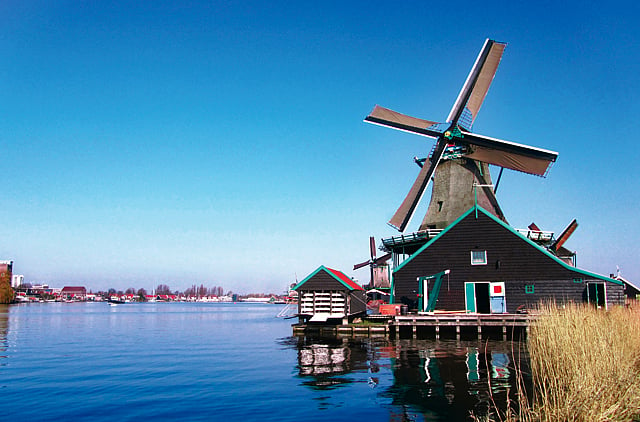
Although not the actual inventors, windmills are considered essentially Dutch. The perception that windmills are synonymous with the Netherlands can be traced back to the explosive development of their economy in the 17th century, when the Dutch made great progress in the fight against their biggest foe, water.
It is windmills that helped the Dutch pump water out of lakes, ponds, and water-laden peat bogs, and convert them into arable, fertile land. They also used windmills to saw lumber for shipbuilding and trees into boards, grind grain into flour and beverage, and process seeds for oil.
The invention of printing created an enormous demand for paper, and the Dutch also learnt how to convert old sails into paper using mills. Large-scale industrial processing, global shipping, and imports of colonial produce gave rise to much activity — and prosperity — featuring windmills, and the 17th century came to be known as the Golden Age in the country’s history.
Just as windmills served practical and essential roles in daily life, they also developed into a cultural phenomenon for the Netherlands when painters used them to portray the ‘New Netherlands’ until the early 20th century. Jongkind, Roelofs and Gabriel from The Hague School of painters led this movement.
Today, a windmill is often the first thing associated with the country. Don Quixote may have foolishly thought of them as ‘ferocious giants’, but to ignore them in the modern-day Dutch context is akin to the expression attributed to him: tilting at windmills.
About 100 years ago there were an estimated 10,000 windmills in the Netherlands. Although their acme has certainly waned, there is still a surprisingly large number dotting the tiny country — the Dutch only count workable models — and with last decade’s extensive restorations and rebuilds, the figure now stands at about 1,150.
Although some structures are still used to pump water out of the soil, most have been replaced by powerful draining machines and wind turbines. Many windmills are protected monuments, and some have been innovatively transformed into museums, homes, and hotels.
The Sloten (www.molenvansloten.nl) near Amsterdam, is one of the Netherlands’ most exotic wedding venues. The wedding room is located in the attic of a windmill, which also houses the Coopery Museum — the only venue demonstrating the craft of making wooden barrels.
The fully functional water-draining mill, built in 1847, often has live demonstrations of its sails turning into the wind. Another attraction at the Sloten is an audiovisual presentation about the artist Rembrandt, the son of a miller, appropriately titled Rembrandt in the Attic.
Mill with a view
De Verrekijker (www.deverrekijker.com) is a belt windmill in Wijchen, between Maas and Waal. Surrounded by sweeping views over forested areas and the picturesque Gelders landscape, the historic corn mill has been converted to self-catering accommodation for up to 12 people. With six bedrooms and extensive facilities, the property is ideal for friends to share a holiday.
The Windmill Museum in Schermerhorn (www.landvanleeghwater.nl), a short distance from Amsterdam, calls itself ‘a top-class museum below sea level’. Although small, it possesses an old-world charm, and houses a miller’s living quarters, preserved from another era, as well as a cinema and café. The De Hoop windmill in Serooskerke village in Zeeland is now a famed tavern that serves Dutch pancakes and fish and meat specialities. The active corn mill, open for viewing, has a shop selling specialty flours.
Young visitors can visit the mini zoo and go-kart track.
Keukenhof is one of the Netherlands’ most popular attractions, clocking up almost 50 million visitors in the last 60 years. The largest flower park in the world is also home to a quaint windmill that makes a significant contribution to Keukenhof’s charm.
The 1892-built water mill from Groningen has been located in the park since 1957, when it was donated by the Holland America Line. The National Heritage-listed building also features a clog-making demonstration and clog shop at its premises.
Such is the importance of these living monuments that the Dutch celebrate National Windmill Day annually, when they bedeck their windmills with flowers and angel figurines.
THE WORKING GIANTS
Contrary to popular belief, the most famous working windmills of the Netherlands are neither located in remote places or deep in the countryside, but stand in the heart of some of the world’s most densely populated areas.
Schiedam lies to the west of the Port of Rotterdam, and despite being surrounded by 20th century commercial areas, has the charms of an 18th century town. The world’s five tallest windmills are what remain of the original 20 that serviced nearly 400 distilleries. These gigantic 40-metre-tall windmills played an important role in the production of beverages, and made Schiedam famous.
The windmill’s location explains their height: when they were built between 1770 and 1803 at the edge of town, they were made to stand high to catch as much wind as possible. Of the five, two windmills still serve their original purpose while the others house a shop, a museum and a restaurant.
Kinderdijk in South Holland is the most famous group of old polder mills in the Netherlands, and was placed on Unesco’s World Heritage List in 1997. Kinderdijk has 19 windmills dating back to the 1700s, making it the largest and best-preserved set of windmills in the world.
Today, the large paddle wheels have been replaced by motorised pumping engines, but the structures remain intact. Some of the windmills have been transformed into homes, and one is open to visitors. Take a close look at how a miller and his family may have once lived, and enjoy views of Kinderdijk from the top, which is simply spectacular.
At Zaanse Schans, 600 windmills were responsible for the creation of the first industrial site in the world, about 250 years ago, and fulfilled multiple roles in manufacturing. Today, it is an open-air conservation area and living museum. The six active industrial windmills at Zaanse Schans include the mustard windmill of De Huisman, the paint windmill of De Kat, the wood-sawing windmills of De Gekroonde Poelenburg and Het Jonge Schaap, and the oil windmills of De Zoeker and De Bonte Hen.
Two windmills are located at The Hague — the polder windmill of Laakmolen near the centre of The Hague, and the corn windmill of Korenaer at Loosduinen — which date back to the late 17th and early 18th centuries respectively.
There are eight windmills in and around Amsterdam. The best examples of 17th century mill architecture can be seen at Herman Bonpad, Roeon Haarlemmerweg, or the Riekermolen located along the Amstel. For a latter day example, there is the D’Admiraal on Noordhollandschkanaaldijk, or the relocated De Bloem on Haarlemmerweg. Located close to Dam Square is the De Otter mill built in 1630: this wood-sawing mill is the oldest and the only one of its kind in operation in the world.
Sign up for the Daily Briefing
Get the latest news and updates straight to your inbox
Network Links
GN StoreDownload our app
© Al Nisr Publishing LLC 2026. All rights reserved.