Abu Dhabi hosts Christie’s first fine art auction
Interview with Christie’s Middle East's chairman Dr Ridha Moumni
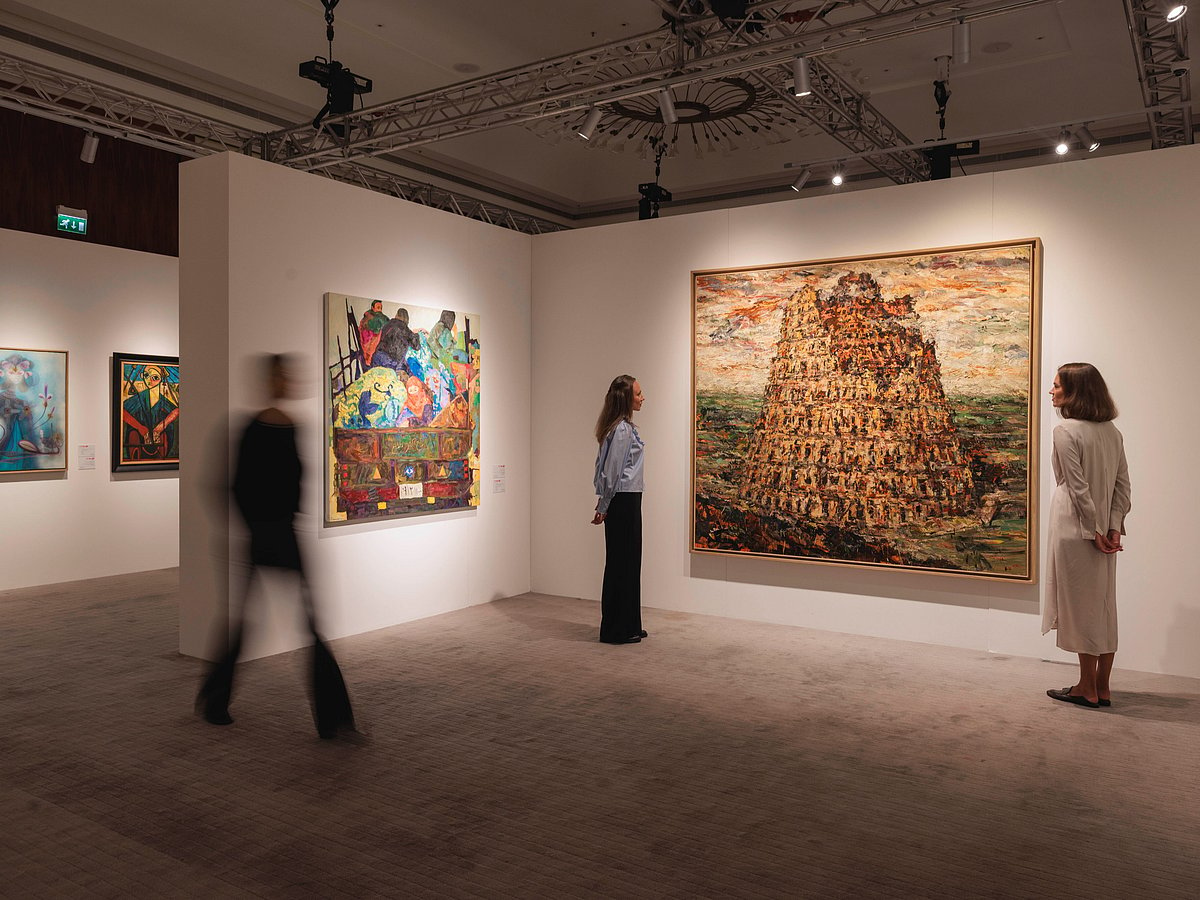
November has arrived with a remarkable line-up of events, marking a season of major cultural milestones for Abu Dhabi. Earlier this month, the capital hosted Christie’s first auction of fine art in the Emirate.
Titled MAWASIM: 20 years of Modern and Contemporary Middle Eastern Art, the live sale took place on 1 November 2026 at The Abu Dhabi Edition. This auction marked 20 years since Christie’s landmark UAE debut in 2006, when it became the first international auction house to hold a sale in the region. This landmark event celebrated the richness, diversity and dynamism of art from the Middle East and North Africa, bringing together 70 works spanning more than six decades - from pioneering modernist movements to contemporary experimentation. On that occasion The Kurator caught up with Dr Ridha Moumni, Chairman, Christie’s Middle East and Africa, who shared insights into the selection of the exceptional works, and his vision of MAWASIM. He also reflected on the significance of this anniversary auction, Christie’s ambitions for the region and its continued commitment to championing Middle Eastern art on the international stage.
After twenty years entering the UAE, Christie’s is marking this milestone with a landmark auction in Abu Dhabi. What makes Abu Dhabi the right place for this moment, particularly at a time when the capital is entering a new chapter in its cultural evolution?
Abu Dhabi was a natural place for this milestone. Over the past two decades, the UAE has become an increasingly important centre for the arts, and Abu Dhabi in particular has developed a remarkable cultural landscape, with a clear ambition to bring together local heritage, regional perspectives and international exchange. There is a fast-growing ecosystem of museums, institutions, collectors and cultural voices, all contributing to a richer understanding of the region's artistic contribution.
For Christie’s, holding our first fine-art auction in Abu Dhabi was both a recognition of this evolution and an opportunity to contribute to its next chapter. The response to MAWASIM was very encouraging, with the sale realising more than USD$8.9 million, with bidders from across the globe. It was particularly meaningful to achieve this twenty years after our inaugural auction in the UAE. The results demonstrate the international interest in the region's art and the importance of Abu Dhabi as a place for this conversation to continue.
MAWASIM brings together two decades of Christie’s engagement with modern and contemporary Middle Eastern art. How does this auction serve as a culmination of that journey?
MAWASIM was an opportunity to reflect on how much has evolved since Christie’s first auction in the UAE in 2006, both in the region and in the international understanding of its art. Over these two decades, we have witnessed the growing recognition of artists from the Middle East and North Africa, alongside the emergence of new generations of collectors and a deeper appreciation of the region's artistic histories.
The sale brought together works from important private and institutional collections, including the Dalloul Collection and Barjeel Art Foundation, alongside works that speak to the extraordinary breadth of artistic practice across the region. Achieving the highest total for a Christie’s Modern and Contemporary Middle Eastern Art Evening Sale in more than ten years was another significant moment and milestone. In this sense, MAWASIM was both a reflection on the journey so far and a statement about the strength and continuing relevance of the category. This is not an endpoint or culmination, but rather as an important moment in a much longer story.
What defines and distinguishes a fine art auction of this kind and what makes the experience particularly significant in the context of the Middle East today?
A fine art auction of this nature is distinguished by the quality, depth and coherence of the works brought together. It is not simply a presentation of individual objects, but an opportunity to create a broader conversation between artists, movements, generations and different cultural contexts. The scholarship behind the selection, the histories of the works and the collections from which they come are all essential to that process.
There is also something particularly significant about bringing these works together in Abu Dhabi. An auction creates a moment of encounter: it allows audiences to engage directly with works of art, to discover artists and to reconsider familiar narratives. The results of MAWASIM reflect the breadth of interest in the category, as we welcomed registrants from across the globe, while also nine auction records were established. This combination of international participation and results demonstrates the continued relevance of art from the region within the wider global art market.
The sale brings together more than 70 works spanning nine decades. How were these exceptional art works selected and what were the key considerations that guided the process?
The selection was guided first and foremost by the quality and significance of the individual works, but also by the ambition to create a meaningful and balanced presentation of modern and contemporary art from the Middle East and North Africa.
We wanted to bring together works with strong artistic and historical relevance, while reflecting the diversity of the region's artistic production. This meant considering different geographies, generations, artistic movements and mediums, as well as the histories of the collections from which the works have emerged. The presence of works from the Dalloul Collection and Barjeel Art Foundation is particularly meaningful in this respect, given their longstanding contribution to the preservation and promotion of modern and contemporary Arab art.
Ultimately, the intention was to create a selection that could stand on its individual merits while also revealing connections and conversations between the works. The result brought together 58 artists from 13 countries, offering audiences a particularly broad perspective on the region's artistic history.
How does this selection represent different artistic voices across the region and across two different eras. What narratives these works bring together and how do you hope it resonated with the audience?
One of the most compelling aspects of the selection was the diversity of artistic languages represented. Across 58 artists from 13 countries and nine decades, the works reflected different experiences of modernity, identity, memory, place and transformation.
Artists such as Mahmoud Saïd and Fahrelnissa Zeid were instrumental in shaping the language of modern art in the region, while later generations, including Monir Shahroudy Farmanfarmaian, Paul Guiragossian and Samia Halaby, developed highly individual approaches that engaged with both local traditions and international artistic movements. The response to these artists was particularly striking: Farmanfarmaian's Variations on the Hexagon achieved $844,800, more than 230 per cent above its high estimate, following almost seven minutes of competitive bidding. Contemporary artists brought further perspectives, often challenging established boundaries between histories, geographies and disciplines.
I hope audiences came away with a sense of the richness and complexity of this artistic history. These works do not tell one single story of the region; rather, they reveal many different voices and experiences, and the ways in which they have contributed to a wider history of modern and contemporary art.
How has Christie’s approach to presenting and celebrating Middle Eastern art evolved since 2006? What role does MAWASIM play in that wider commitment?
We have seen greater international recognition for artists from the region, a growing body of scholarship, and an increasingly diverse community of collectors engaging with this work since Christie’s inaugural auction in the UAE in 2006.
Our approach has evolved alongside this. We continue to place great importance on research, provenance and the historical context of the works we present, while creating opportunities for audiences to discover artists and collections that deserve greater international attention.
MAWASIM is a particularly meaningful expression of that commitment. It brings together over 20 years of experience while looking ahead, demonstrating the breadth of the category and the continuing importance of presenting its artists within an international context.
How do you see the region’s art market evolving, and what role do you envision Abu Dhabi playing in its next chapter?
I believe the region's art market is entering an important period of development. What is particularly encouraging is the growing diversity of its participants: established collectors, younger generations, new institutions and an increasingly international audience. The results of MAWASIM were extremely encouraging in this respect, with 31% of registrants from the Millennial and Gen Z generations and 37% new to Christie's. These figures are particularly significant because they demonstrate an appetite for the category among new audiences, as well as the continued engagement of established collectors.
Abu Dhabi has an important and exciting role to play in this evolution. Its investment in cultural institutions, its international outlook and its commitment to fostering a vibrant cultural environment create significant opportunities for the region. I see the capital as a place where different artistic histories and perspectives can meet, and where the contribution of artists from the Middle East and North Africa can continue to be explored and understood on an international stage.
For Christie's, our ambition is to remain an active part of this development, building relationships with collectors and institutions and continuing to bring exceptional works of art to audiences across the region and internationally.
Network Links
GN StoreDownload our app
© Al Nisr Publishing LLC 2026. All rights reserved.