Why the iPhone Duo camera falls behind the iPhone 18 Pro: What the foldable sacrifices
Apple’s first foldable drops the telephoto and aperture blades. Here’s what that costs you
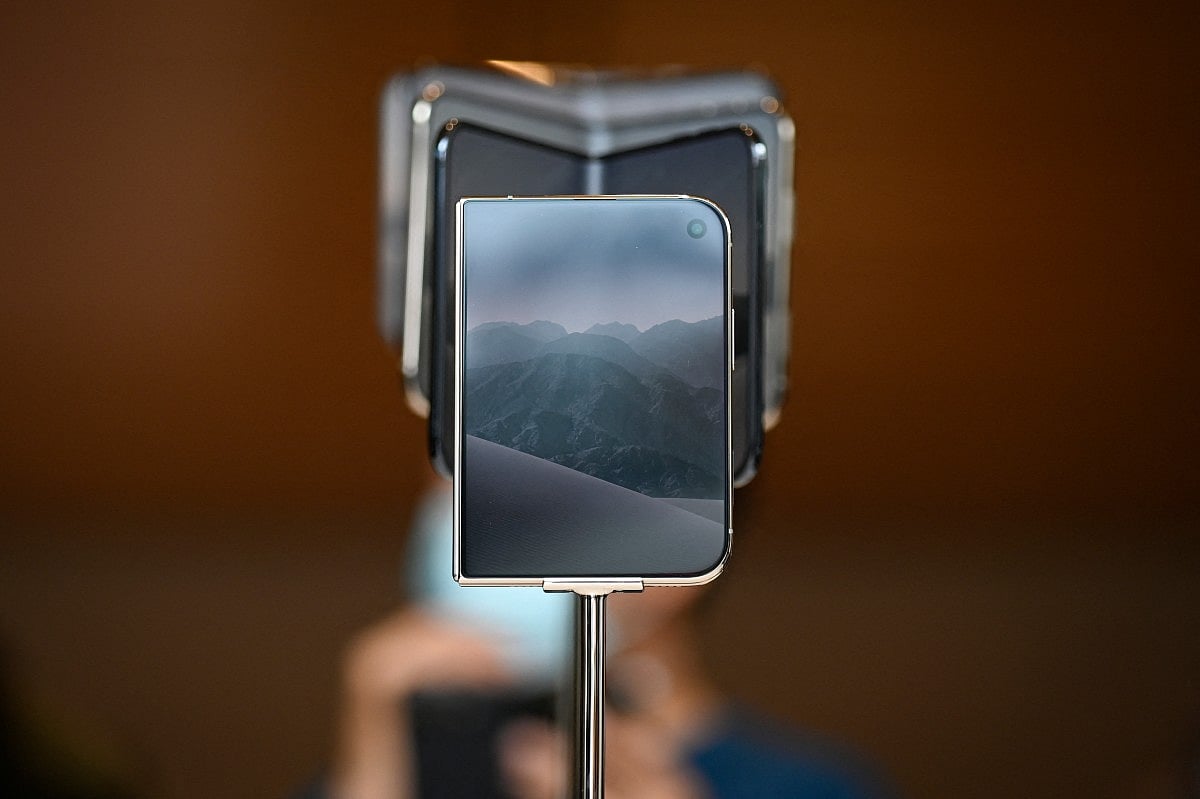
The iPhone Duo’s camera trails the iPhone 18 Pro’s, and reviewers agree on why. Apple’s first foldable drops three things the Pro keeps: a dedicated telephoto lens, the new variable-aperture main camera, and the pro-grade video and control features. In ordinary daylight shots at 1x, the two phones are close. Once you zoom in, want creative control, or start shooting serious video, the gap opens quickly.
The Duo does not have a bad camera. Nearly every reviewer calls its photos excellent. The point is that it is a Dh8499 phone whose engineering budget went into the hinge and the creaseless screen rather than the camera bump. A handful of tricks that only a folding phone can do partly make up for it.
The two camera systems at a glance
The Duo has two rear cameras. Apple calls it a “48MP Dual Fusion camera system,” which means two rear cameras rather than the three on the iPhone 18 Pro and Pro Max.
The ultra-wide is the one camera the phones share. The Duo’s ultra-wide has an f/2.2 aperture and a 120-degree view, and it matches the one on the iPhone 18 Pro Max. Almost every other difference favours the Pro.
Gap one: There is no zoom lens
This is the difference every reviewer mentions first. The Duo has no dedicated telephoto camera. Instead it uses 12MP and 24MP crops from the main camera, which is essentially digital zoom. Apple calls the result “2X optical quality,” but it is not the same as a telephoto lens, because image quality drops the further you zoom.
The 18 Pro goes much further. The Duo tops out at 2x optical-quality zoom, while the iPhone 18 Pro and Pro Max have a dedicated telephoto that reaches 8x optical-quality across five focal lengths. DXOMARK found the 18 Pro’s zoom especially strong at close and medium distances, with detailed, natural-looking images.
The real-world tests confirm it. CNN Underscored said the cost of the missing lens was obvious as soon as it compared the Duo with the iPhone 18 Pro’s better camera array. Tom’s Guide shot the same scene at 2x, 4x, 8x and 10x on the Duo and the 18 Pro Max, and called the lack of a telephoto lens a big deal. CNN’s review found zoomed photos less crisp on the Duo, while unzoomed shots from the two phones looked similar.
This matters for more than distant subjects. Photographers often prefer 2x to 5x for portraits, food and street scenes, because a longer focal length flatters faces and separates the subject from the background. On the Duo, anything past 2x involves a compromise.
Gap two: An older main sensor and no aperture blades
On paper, the main cameras look remarkably similar, but there are a few important differences.
The first is the sensor. The Duo uses a 48MP Fusion camera with a 26mm equivalent focal length and an f/1.6 aperture. However, its sensor is slightly smaller than the one found in Apple's recent Pro models. As PetaPixel notes, the difference in sensor size can affect how much light the camera captures, potentially resulting in more noise and less natural background blur in darker conditions.
The bigger distinction is the iPhone 18 Pro's variable-aperture camera. Its six movable blades allow photographers to choose between four aperture settings, offering greater control over how much of a scene remains in focus. A wider aperture can create a softer background for portraits, while a narrower setting helps keep more of a landscape or group photograph sharp.
The mechanism also makes certain optical effects possible, including the starburst patterns produced when photographing bright lights, something GIGAZINE demonstrated in its testing.
These are not necessarily differences most users will notice in everyday photographs. But for photography enthusiasts, they offer creative control that software alone cannot fully replicate. The improvements have also been well received, with CNET awarding the iPhone 18 Pro Max a score of 9.3 out of 10.
Gap three: pro video, pro controls and the selfie camera
The rest of the gap is in features that matter most to people who edit their footage or film themselves.
On video formats, Apple’s published Duo specs do not include ProRes, Apple Log or spatial video, all of which the iPhone 18 Pro lists. Log and ProRes footage keeps more colour and highlight detail for grading later. Casual users won’t miss these formats, but videographers will.
On manual controls, ProductNation noted that the 18 Pro builds Pro Controls into Apple’s own Camera app, including on the front camera, which removes much of the reason to use a third-party app like Blackmagic Camera. PetaPixel points out that the Duo lacks these Pro controls, along with the variable aperture and the telephoto.
On the selfie camera, the Duo uses a 12MP Center Stage front camera instead of the 18MP one found on nearly every other current iPhone, which PetaPixel called an odd omission. To be fair, Engadget found that all the Duo’s cameras, including the 12MP front one, take sharp, detailed images.
The Duo is still a strong video phone. It records 4K video at up to 120fps and offers the same adjustable Photographic Styles as the main iPhone line. It simply stops short of the professional tier.
For everyday photography, the Duo holds its own surprisingly well. At 1x and on the ultra-wide camera, differences between the Duo and iPhone 18 Pro are often difficult to spot.
CNN Underscored found the 18 Pro's images only slightly more colourful, while TechRadar rated the Duo's cameras 4.5 out of 5, placing their performance alongside earlier premium iPhones, including the iPhone 17 Pro. The Duo also compares favourably with Samsung's Galaxy Z Fold 8. In Engadget's testing, it occasionally came out ahead, particularly in low-light scenes, where its photographs were better exposed and colours appeared more accurate.
But the Duo's real advantage lies in what its folding design makes possible.
Better selfies with the rear camera: Open the phone and you can use its main cameras for selfies while checking your framing on the outer screen. It's a simple way to get higher-quality self-portraits without relying on the front camera.
A tripod when you don't have one: The phone can support itself when partly folded, making longer exposures easier. Photographer Austin Mann demonstrated this in Iceland, placing the Duo on a car roof to capture a five-second Night mode photograph of the northern lights.
Making group and family photos easier: Duo Preview lets subjects see themselves on the outer display, while Kid Cue uses animations to catch children's attention. Smart Take can even capture photographs automatically as people change poses, a feature Tom's Guide found useful during its testing.
These features won't necessarily produce a sharper or more detailed photograph. Their value is more practical: they make certain shots easier to frame, capture and share, particularly when you're travelling alone, photographing children or creating content without someone behind the camera.
Why Apple made this trade-off
The compromise comes down to space. A foldable phone consists of two exceptionally thin halves connected by a hinge, leaving far less room for camera hardware than a conventional smartphone. When unfolded, the Duo is remarkably slim, comparable to the iPhone Air.
That creates a problem for cameras. A telephoto lens needs enough depth to accommodate its optical components, even when using a folded periscope design. Larger sensors require more room, while features such as variable aperture add further mechanical complexity.
Every millimetre devoted to the cameras is space that cannot be used for the battery, hinge or other components. Apple has prioritised the Duo's slim folding design over a more versatile camera system.
It's a compromise shared by Samsung's Galaxy Z Fold 8, which also lacks a dedicated telephoto lens. As TechRadar observed, the Duo represents a rare shift in Apple's priorities, with camera capabilities taking a back seat to design and engineering.
The result is a phone that offers greater flexibility in how photographs are taken, even if it cannot match every capability of Apple's Pro models.
The verdict
If the camera is your main reason for buying, the iPhone 18 Pro or Pro Max is the clear choice. It has a telephoto lens, a newer main camera with real aperture control, and the full professional video and manual-control features. As Engadget put it, if long-range photography or video is your top priority, the Pro still beats the Duo.
If you want the foldable for its screen and design, the camera won’t let you down in everyday use. It is excellent at 1x and on the ultra-wide, competitive with the best foldables, and it adds shooting tricks no regular iPhone can match.
In practical terms:
Choose the 18 Pro if you shoot kids’ sports, concerts, wildlife or distant travel details, want portraits with controlled background blur, or plan to colour-grade and edit video seriously.
Either phone works for everyday family photos, food and scenery at 1x, where results are nearly identical.
The Duo has the edge for selfies, vlogs and group shots without a tripod.
In one line: the Duo puts a very good camera on a phone built for something else, while the 18 Pro puts Apple’s best camera on a phone built for exactly that.
Network Links
GN StoreDownload our app
© Al Nisr Publishing LLC 2026. All rights reserved.