OpenAI launches GPT-6 Sol and Luna as Anthropic releases Claude Opus 5.5
Rival AI labs roll out cheaper, faster models within hours of each other
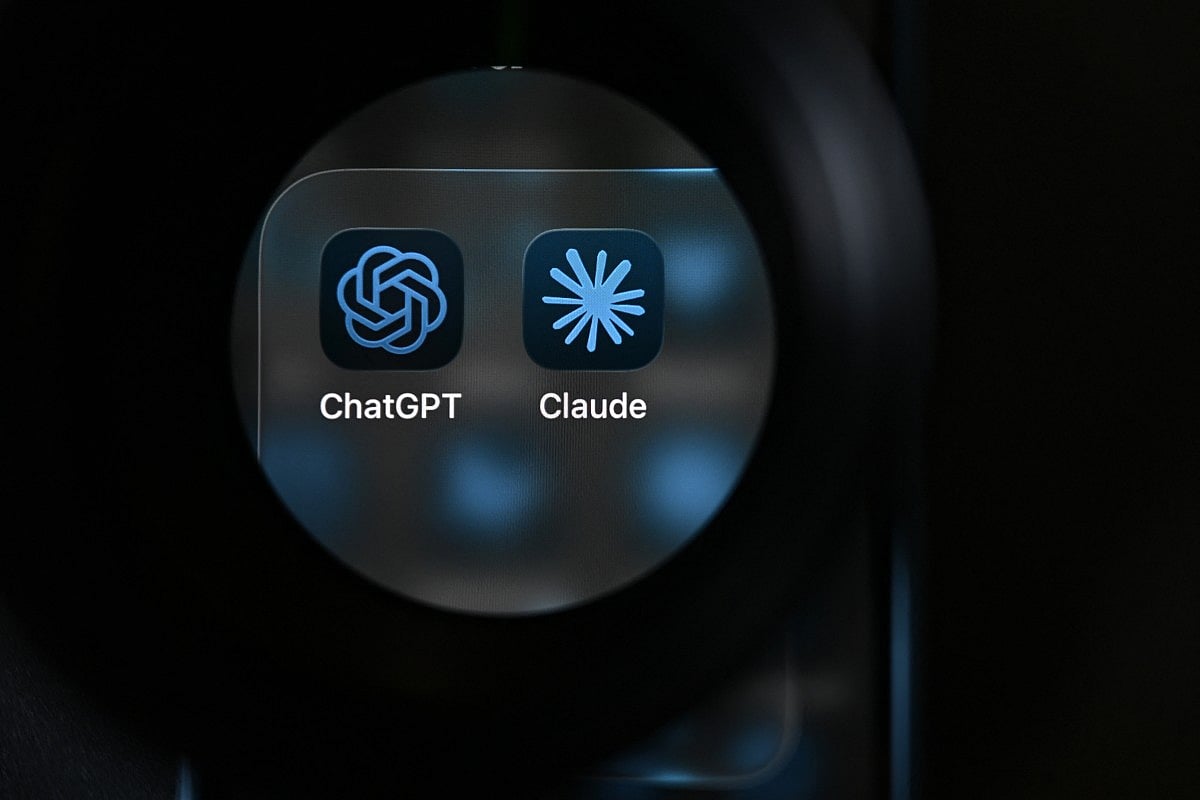
OpenAI and Anthropic unveiled new artificial intelligence models within hours of each other, escalating competition not just over AI performance but also over the cost of putting increasingly powerful models to work.
OpenAI launched GPT-6 Sol and GPT-6 Luna, two more affordable additions to its GPT-6 family, while rival Anthropic introduced Claude Opus 5.5, its latest high-end model focused heavily on coding, autonomous work and professional tasks.
Get updated faster and for FREE: Download the Gulf News app now - simply click here.
The launches come as AI companies increasingly compete on how much useful work their models can accomplish for every dollar spent, rather than on benchmark scores alone.
OpenAI launches GPT-6 Sol and Luna
OpenAI said GPT-6 Sol and Luna build on technology developed for GPT-6 Astra, its most powerful model, while targeting faster and cheaper everyday use.
The biggest change is price.
GPT-6 Sol costs $2 per million input tokens and $10 per million output tokens through the API, while GPT-6 Luna costs $0.10 per million input tokens and $0.50 per million output tokens.
OpenAI says that represents a 50 per cent reduction compared with promotional API pricing for the corresponding GPT-5.6 models.
Sol is positioned for complex coding and agentic workflows, while Luna is designed as a highly efficient model for focused, high-volume tasks.
Both support text and image inputs and have context windows of about 1.05 million tokens.
OpenAI also claims significant improvements in factual accuracy. In an internal evaluation based on real-world conversations where users had flagged errors, the company said GPT-6 Sol made about half as many mistakes as GPT-5.6 Sol.
The models are available through OpenAI’s API and are rolling out in ChatGPT Work and Codex for eligible paid users. GPT-6 Luna is also available for Free and Go users to try through the desktop app.
Anthropic releases Claude Opus 5.5
Anthropic, meanwhile, launched Claude Opus 5.5, the first member of its new Claude 5.5 family.
The company says the model performs at roughly the level of its larger Claude Fable 5.1 model on most tasks while costing 40 per cent less to run on typical workloads than Opus 5.
Opus 5.5 is priced at $4 per million input tokens and $20 per million output tokens, while cache reads cost $0.20 per million tokens.
Anthropic says output generation is also more than 30 per cent faster than Opus 5.
The company is particularly emphasising coding and long-running agentic work. Anthropic says Opus 5.5 leads its previous models across several coding, computer-use and professional-work evaluations. However, benchmark results from AI developers should not be treated as definitive measures of real-world performance.
Safety is another major focus. Anthropic says Opus 5.5 performed better than its previous models in automated behavioural and alignment testing and is more resistant to prompt-injection attacks.
The model underwent external testing by independent AI safety researchers before release and is being deployed with additional safeguards for sensitive cybersecurity and biology capabilities.
Anthropic says Claude Sonnet 5.5 and Claude Haiku 5.5 will follow in the coming weeks.
The near-simultaneous launches underline a shift in the AI race: frontier models are becoming more capable, but the battle is increasingly about making that intelligence cheaper and practical enough to deploy at much larger scale.
Network Links
GN StoreDownload our app
© Al Nisr Publishing LLC 2026. All rights reserved.