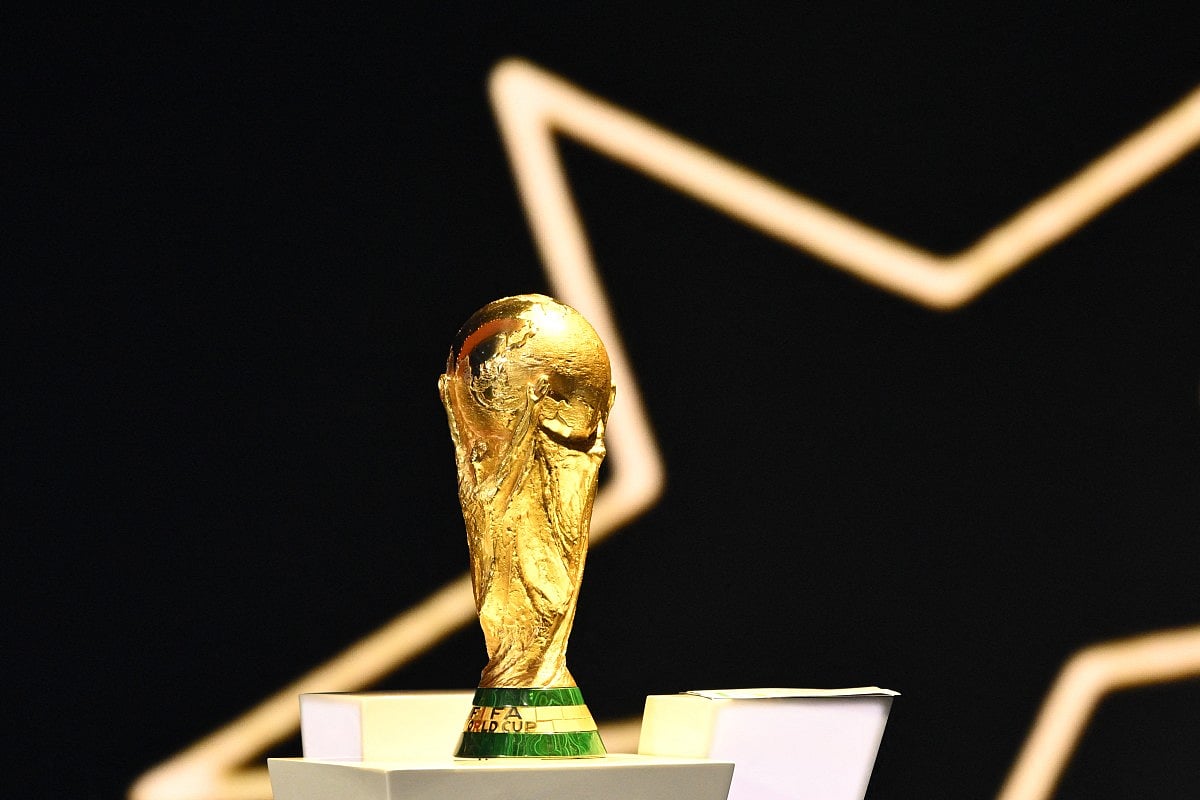
A general view during the FIFA World Cup 2026 Final match between Spain and Argentina at New York New Jersey Stadium on July 19, 2026 in East Rutherford, New Jersey.
UEFA's warning to FIFA's £20bn proposal: 'The soul and governance of football are not assets to trade'
FIFA says the money would grow football, but UEFA argues the sport is not an asset to sell
Last updated:
3 MIN READ
AFP
Dubai: FIFA, the body that runs world football and organises the World Cup, announced on Tuesday that it wants to create a new company to handle the commercial side of its business, everything from ticket sales and sponsorship to broadcasting rights.
The new company would be called FIFA Forward Enterprise, and it would be valued at around $20 billion. Here's the part that's caused the uproar: FIFA wants to sell off small stakes in that company, up to 20 per cent of it, to outside investors, raising roughly $4.2 billion.
In simple terms to explain what's going on, private money would own a slice of the business that runs the World Cup. Among the intended investors is a fund linked to the Kushner family, through Joshua Kushner's founded company Thrive Eternal, although Reuters reported that Jared Kushner is not going to be a potential investor, with JP Morgan advising on the deal.
FIFA insists it would stay firmly in charge. It says it will keep full control over how football is run, the match calendar, and all the sporting decisions, and that the money raised would be reinvested into developing football worldwide. FIFA president Gianni Infantino has framed it as "the democratisation of football," pointing to bigger payouts for the sport's 211 national member associations, rising from $8 million each a year to $20 million.
So who is UEFA, and why are they against it?
UEFA is the governing body for football in Europe. Think of FIFA as running football globally, and UEFA as running it across the European continent specifically, organising competitions like the Champions League and the European Championship. It's made up of 55 national associations, and it wields enormous influence, since Europe is home to the sport's richest leagues and biggest clubs.
UEFA came out swinging almost immediately, and its objection is as much about principle as money. In a blunt statement, it argued that the sport itself isn't something anyone owns or has the right to sell off.
"The soul and governance of football are not assets to trade," it said, adding: "It is not FIFA's to sell." The body also raised concerns about transparency, questioning exactly who stands to profit financially from the arrangement.
FIFA and UEFA's relations
Underneath the principled language, there's a turf war. FIFA and UEFA have long jostled for control and influence over the sport, and their relationship has soured badly in recent years, so much so that UEFA president Aleksander Ceferin skipped the World Cup final earlier this month over a series of disagreements.
This isn't a done deal. The proposal needs approval from a majority of FIFA's 211 member associations, so it's not something Infantino can simply push through alone.
UEFA, for its part, isn't just issuing statements. It's reportedly convening an emergency meeting of its 55 members this week, and one of the options on the table is the most drastic weapon it has: a potential boycott of future FIFA events, including the World Cup.
That threat has worked before. FIFA scrapped a plan to hold the World Cup every two years back in 2021 precisely because UEFA threatened to walk away, and a similar 2018 investment push with SoftBank collapsed under European resistance too.
Whether Infantino's latest idea survives that same pressure is now the question hanging over the sport.
Network Links
GN StoreAbout Gulf NewsTerms & ConditionsReach by GNSitemapContact usPrivacy PolicyGN FocusHave your sayWork with usAdvertise with usGulf News epaperPrinting Services
Download our app
© Al Nisr Publishing LLC 2026. All rights reserved.