Anta Sports hats are seen in an Anta store in the Huangpu district of Shanghai
Nike v Adidas… v Anta
The story of a Chinese sportswear brand which aims to compete with the best in the game
Last updated:
5 MIN READ
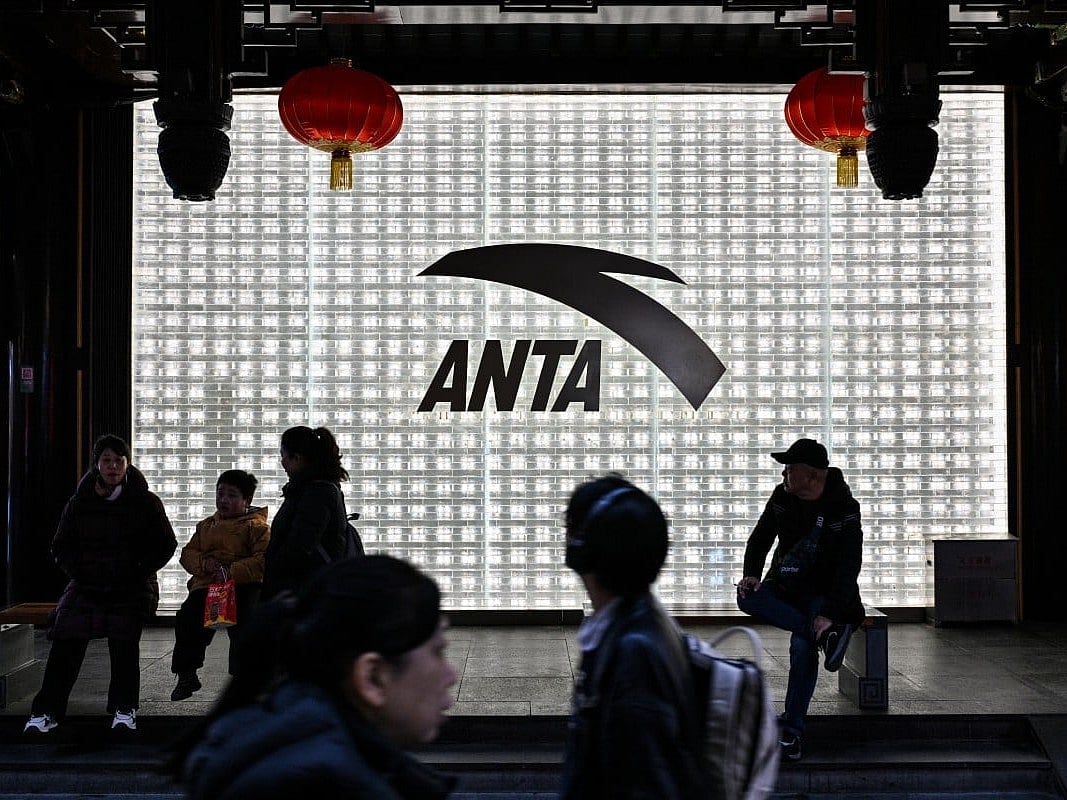
People walk past an Anta store in the Huangpu district of Shanghai
AFP-HECTOR RETAMAL
Dubai: For decades, Nike and Adidas have gone head-to-head for global dominance in the sportswear market, but now Anta Sports has emerged as a rising challenger with both giants firmly in its sights.
Founded by entrepreneur Ding Shizhong in 1991 in Jinjiang, Fujian, Anta started as a small, family-run shoe manufacturer business.
In its early years, Anta focused on producing affordable athletic footwear for the domestic Chinese market, gradually building recognition through local distribution and grassroots sports sponsorships.
As China’s economy expanded, the company scaled rapidly, shifting from a low-cost manufacturer to a fully-fledged sportswear brand with its own identity, investing heavily in marketing, retail networks, and athlete endorsements to compete with global giants.
Now setting its sights on competing with global giants like Nike and Adidas, the ambition was always clear for Shizhong as early as 2005: "We don't want to be the Nike of China, but the Anta of the world."
Dominating the domestic region
Anta’s domestic dominance in China comes from a mix of scale, timing, and deep-rooted control of its home market, allowing it to grow from a small Fujian-based manufacturer into one of the country’s most powerful sportswear brands.
The company's domestic dominance in China comes from a mix of scale, timing, and deep-rooted control of its home market, allowing it to grow from a small Fujian-based manufacturer into one of the country’s most powerful sportswear brands.
Unlike Western brands that entered China as established global giants, Anta built itself from within the country’s industrial heartland in Jinjiang, a region that evolved into one of the world’s most important footwear manufacturing hubs. This gave Anta immediate access to highly efficient supply chains, specialist factories, and low-cost production networks that were already producing for global brands like Nike and Adidas.
However, its real breakthrough came from shifting away from being just a manufacturer and positioning itself as a consumer-facing brand in China. While many factories in the region remained behind-the-scenes suppliers, Anta invested heavily in building its own identity domestically, opening thousands of retail stores across the country and rapidly expanding its presence in both major cities and smaller regional markets.
Customers browse in an Anta store in the Huangpu district of Shanghai
At the same time, Anta strengthened its visibility by aligning itself with Chinese sport on a national level. Sponsorship deals with major domestic events, including basketball and table tennis competitions, helped embed the brand into everyday sporting culture. This consistent exposure made Anta a familiar name to Chinese consumers long before it attempted to compete internationally.
A key part of its domestic strength also lies in its distribution network. Anta built one of the most extensive retail systems in China, with over 10,000 stores nationwide, ensuring that its products were available far beyond major urban centres. This deep penetration into lower-tier cities has been one of its biggest advantages over international competitors.
Crucially, Anta also benefited from understanding a major shift in Chinese consumer behaviour. As domestic buyers became more brand-conscious and less reliant on foreign labels, Anta positioned itself as a national alternative that combined affordability with rising quality and performance credibility.
Over time, the company’s ability to control design, production, and retail within one ecosystem allowed it to move faster than many global rivals in China, responding quickly to trends and scaling products at speed.
How can Anta reach the scale of Nike & Adidas?
Anta is now actively positioning itself to challenge the global dominance of Nike and Adidas, with international expansion and brand elevation at the core of its strategy.
While it already operates more than 12,000 stores in China and over 460 outlets overseas, the company has set ambitious targets to scale its presence to 1,000 stores across South East Asia alone within the next three years.
Nike is one of the world’s largest sportswear brands, with a global presence in over 190 countries
However, matching the global reach of Nike and Adidas remains a significant challenge. Nike, for example, still maintains a far larger global footprint and stronger brand recognition, even with around 1,000 stores worldwide. The difference lies not just in retail scale, but in decades of cultural influence, athlete partnerships, and perception in Western markets.
One of Anta’s biggest hurdles is overcoming perception, Chinese sportswear brands are often still viewed in parts of the West as lower-cost or less premium alternatives. To counter this, Anta has leaned heavily into a “multi-brand strategy”, acquiring and investing in established international names rather than pushing only its own label.
This approach began with the acquisition of Fila’s Chinese operations in 2009, transforming the brand into a major domestic success.
It was followed by the purchase of Amer Sports in 2019, giving Anta control of premium performance brands such as Arc’teryx and Salomon, alongside ownership of Wilson, the US sports equipment giant used widely in the NBA. More recently, Anta also acquired a significant stake in Puma, further strengthening its global positioning.
These moves allow Anta to bypass some of the barriers Chinese brands face internationally by leveraging already trusted Western labels as entry points into new markets, rather than relying solely on its own name.
To truly reach the scale of Nike and Adidas, however, Anta must continue building cultural relevance on a global stage.
Chinese sportswear brand Anta counts Olympic freestyle skier Eileen Gu among its brand ambassadors
A key part of that will be sustained investment in elite athlete sponsorships that resonate internationally. Partnerships with globally recognised stars, such as freestyle skiing sensation Eileen Gu, demonstrate how powerful athlete-led branding can be in shaping perception, especially among younger audiences.
By combining aggressive retail expansion, strategic acquisitions, and high-profile athlete endorsements, Anta is building a multi-layered global ecosystem. If executed effectively, this approach could gradually shift it from a dominant Chinese powerhouse into a genuine global competitor in the sportswear industry.

Rob is an experienced sports reporter with a focus on digital publishing. He holds both an undergraduate and master’s degree in sports journalism and has hands-on experience in presenting and commentary. Rob has previously worked in the communications teams at Premier League clubs Everton and Brentford FC. While football is his main passion, he enjoys all sports and loves sharing his enthusiasm with anyone he meets.
Sign up for the Daily Briefing
Get the latest news and updates straight to your inbox
Network Links
GN StoreAbout Gulf NewsTerms & ConditionsReach by GNSitemapContact usPrivacy PolicyGN FocusHave your sayWork with usAdvertise with usGulf News epaperPrinting Services
Download our app
© Al Nisr Publishing LLC 2026. All rights reserved.