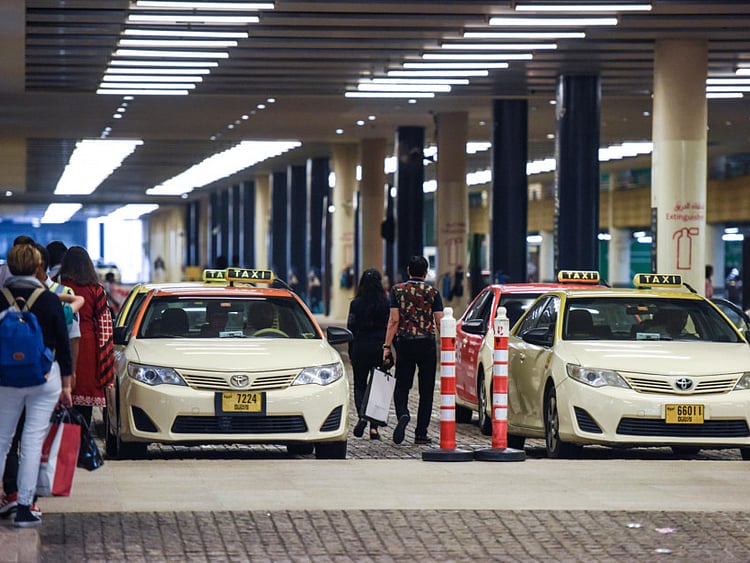
Imagining the future of personal transportation and mobility is the hottest topic in the world of technology and innovation. While there are multiple facets to this ever-evolving industry, let’s look at one specific area, that of car ownership. The traditional concept of owning a vehicle and driving yourself around on a day-to-day basis will come to be widely regarded as impractical, inadvisable and unnecessary.
So, why will this happen? There are a host of reasons to believe that this will be the future we are moving towards.
From a financial standpoint, your car starts losing value the moment you purchase it. And studies show that the average car rarely gets moving, staying parked 95 per cent of the time. Add the annual insurance and registration fee to the equation and the case for owning a car becomes even weaker.
All of this translates into money saved when you have someone else behind the wheel instead — and only when you need it — on demand. Along with owning a car comes another unwelcome and invisible-at-first dilemma — the issue of parking. This is no truer than in Dubai, a city with the highest vehicle density levels of the region (equivalent to one car for every two residents) and, on top of that, more than 450,000 cars enter the emirate every day: All those vehicles make parking highly difficult and frustrating.
Forget the car and it is one more responsibility off your shoulders. Another issue is the expense — prices have increased by as much as 23 per cent for paid parking spots. Then there is the added value of productivity, which in the back of a car can be optimal. You can clear the last of those e-mails, finish reading that important document for tomorrow’s meeting or dial in to that late conference call. Everything aside, you are also safer focusing on other things while a dedicated driver focuses on the driving.
At the forefront of bringing these great benefits to individuals will be ride-hailing services. These services will not only usher us into a future of ‘on-demand personal mobility’, they will also bring in tremendous economic impact to the economies they operate in. Higher mobility will generate hundreds of thousands of jobs and unlock economic output by connecting more businesses to customers.
Buckling up to it
Ride-hailing services that are focused on the country’s local needs and embrace the culture will come out on top and will truly deliver on that promise. That is the future we are stepping into and the sooner we buckle up to it, the faster we can make it work for us.
One might say that the prices offered by ride-hailing services today are not very affordable for the general population of a country. While that might be partially true, it is only a matter of time before that changes. Currently, 79 per cent of UAE residents prefer using their cars to work, but it is highly anticipated that this chunk of the population will decrease rapidly. As more and more people start using these services instead of owning a car, the utilisation of the vehicles on the ride-hailing platform will increase, resulting in cheaper and more affordable rides — fuelling a virtuous cycle. For that to happen, each one of us must play a part and push our thinking towards that future.
In 2009, Finland became the first country in the world to declare broadband internet access a legal human right. Many others have followed since. There is no reason to believe that we will not live in a future where personal mobility is a basic human right as well.
As with most major shifts we have witnessed in the last century, personal mobility will evolve as the thinking around it evolves. It is about time we shift our thinking to ‘buying mobility, instead of buying a car’.
Safe commutes!
Adeeb Warsi is the vice-president of Strategy, Careem.
Sign up for the Daily Briefing
Get the latest news and updates straight to your inbox
Network Links
GN StoreDownload our app
© Al Nisr Publishing LLC 2026. All rights reserved.