‘And so we come to the end of one journey” said Laurent Fabius, Foreign Minister of France and president of COP21, speaking to a final gathering “and no doubt to the beginning of another”.
France has done an impressive job of steering the complex negotiations of the United Nations Framework Convention on Climate Change (UNFCCC) to a successful outcome — the Paris Agreement. This is a major achievement that was supported by tremendous efforts of the UNFCCC Secretariat to ensure a suitable environment for all parties involved in the negotiations.
As Fabius stated, this success is the start of a new phase in addressing climate change, and one in which the UAE, like all other countries, has a major role to play.
The Paris Agreement is robust, flexible and universal. It is the outcome of a four-year process and it will be the basis of international cooperation on climate change beginning in 2020. For the first time, nearly every country in the world is part of a collective effort to cut emissions, adapt to the impacts of climate change and generate the capital and other resources needed by the least developed countries. These actions support the Agreement’s overall objective of keeping global temperature rise to well below 2 degrees Celsius, with the aim of not surpassing 1.5 degrees Celsius, above pre-industrial levels.
COP21 was the biggest climate meeting in at least five years, but in some ways, it was much more. Paris saw almost 150 heads of state come together to produce perhaps the most important multilateral success of any kind in the past decade. It was an extraordinary assertion of the importance given to addressing climate change.
One reason for this success is that countries presented their proposed efforts upfront. By the time COP21 started, 186 countries out of 193 members of the United Nations had submitted Intended Nationally-Determined Contributions (INDCs), detailing the efforts they will take to cut emissions and adapt to climate change. We saw major momentum ahead of COP21 as countries like the United States, China, and India — the world’s largest emitters — committed to climate action, which underscored the seriousness of the international community to reach a comprehensive global agreement to limit the consequences of climate change.
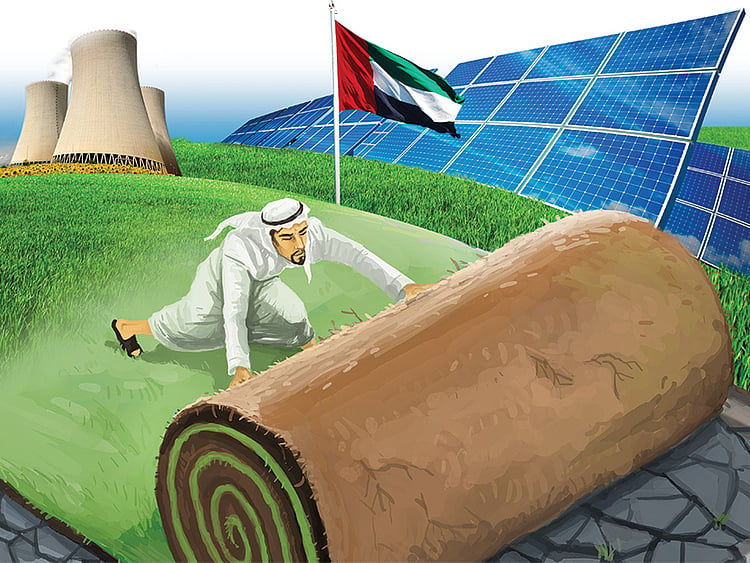
The UAE submitted an ambitious INDC in line with our national goals of driving clean energy adoption and diversifying our economy. A key objective of our INDC is to have clean energy, including nuclear and renewable power, to provide 24 per cent of national energy needs by 2021.
Framework for transparency
The Paris Agreement embeds these efforts into an ongoing framework. Countries will submit new contributions every five years. They will regularly share information on the progress they are making under an agreed framework for transparency. Importantly, developed countries will provide financial support where needed to help developing nations.
This agreement represents a good outcome for the UAE. Our country is playing a large and growing role in driving clean energy and other solutions to tackle climate change. And in fact, addressing sustainability and climate change has long been an explicit part of our economic diversification strategy, the fruits of which are now visible both at home and abroad. That said, we will continue to set goals for ourselves to reduce emissions, adapt to climate change and diversify our economy.
However, the fact that the Agreement works for us is no accident. The UAE has also taken a leading role in the UNFCCC and in working with our Gulf Cooperation Council, regional and international partners to facilitate the Agreement.
The UAE was also one of 20 countries, along with a private sector consortium led by Bill Gates, to commit to Mission Innovation, a partnership to double spending on clean energy innovation and R&D in the next five years. And while in Paris, UAE entities also joined other efforts such as the launch of a new partnership to advance more efficient desalination technology. This is why Fabius said the Agreement is the start of another journey. It is not the end of the story, but the beginning of a new chapter in climate action. With a legal framework in place, attention will now turn to the task of turning political ambition into practical action.
The next meeting of Abu Dhabi Sustainability Week in January will be the first chance after Paris for the world to come together to consider what the new deal means for climate solutions. And it is there that investors, technology-providers, academics, policy-makers and civil society leaders will start the vital job of remaking the world on a cleaner, safer and more prosperous basis.
We can feel proud of all we have achieved in Paris. We will continue to work with our global partners to address climate change and build upon the many accomplishments we have already achieved.
Dr Sultan Ahmad Al Jaber is UAE Minister of State and Special Envoy for Energy and Climate Change.
Sign up for the Daily Briefing
Get the latest news and updates straight to your inbox
Network Links
GN StoreDownload our app
© Al Nisr Publishing LLC 2026. All rights reserved.