Camel racing in the UAE: A living heritage with a global future
Technology and modern institutions are giving an ancient tradition new reach
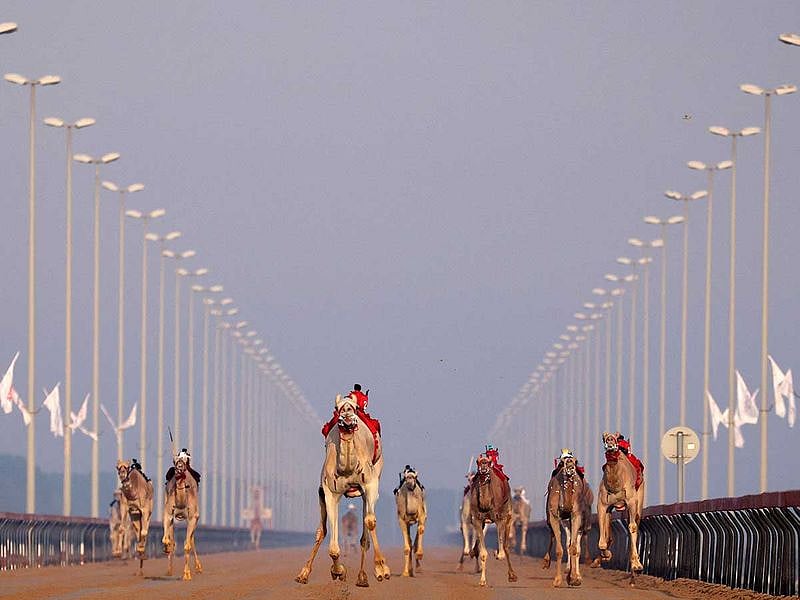
Camel racing in the UAE is far more than a traditional sport. It is a living expression of national identity — one that carries the memory of the desert, the values of earlier generations, and an enduring connection between Emiratis and their land.
For generations, camels have been woven into the social and cultural fabric of the Emirates. The racing tradition embodies patience, determination, generosity and belonging. Today, however, its significance extends beyond preserving the past. Camel racing has become part of a wider national story about how heritage can be protected, developed and presented to the world.
This approach reflects a principle deeply rooted in the UAE’s development journey. The late Sheikh Zayed bin Sultan Al Nahyan, the UAE’s Founding Father, once said: “We are committed to preserving our authentic traditions and heritage, no matter how far we advance along the path of modern civilisation.”
That philosophy remains visible across the country today. As the UAE has emerged as a global economic and cultural hub, it has continued to invest in safeguarding its heritage and transmitting it to future generations.
The country has succeeded in inscribing elements of its cultural heritage on UNESCO’s intangible cultural heritage lists, including falconry, Al Sadu, Al Talli, Al Ayyala, Al Razfa, Al Taghrooda, Al Azi, the Majlis, Arabic coffee, Harees, the date palm, Aflaj, camel racing and Arabic calligraphy.
Camel racing represents a particularly powerful example of how this philosophy works in practice.
From tradition to an organised national ecosystem
The UAE’s leadership has played a pivotal role in transforming camel racing into a sophisticated sporting and cultural ecosystem while preserving its authenticity.
Continuous support for camel owners, investment in advanced racetracks and facilities, major festivals and championships, specialised veterinary services and strong institutional frameworks have enabled the sport to flourish across generations.
At the centre of these efforts is the UAE Camel Racing Federation. Under the chairmanship of Sheikh Sultan bin Hamdan Al Nahyan, Adviser to the UAE President, the Federation supports owners, organises competitions and festivals, develops programmes and promotes greater awareness of the cultural and social significance of camel racing.
The UAE’s racing calendar reflects the scale of this development. Major festivals and championships attract owners and participants from across the UAE and beyond, while Emirati involvement in events held in friendly and brotherly countries has helped expand the sport’s international reach.
Infrastructure has been equally important. Leading venues such as Al Marmoom in Dubai and Al Wathba in Abu Dhabi, alongside other specialised tracks across the country, demonstrate how a heritage sport can benefit from modern management, technology and professional organisation without losing its cultural character.
Yet the significance of camel racing cannot be measured by infrastructure or competitions alone.
To attend a camel race is to experience a social and cultural occasion. Owners, families and spectators come together around a tradition that carries stories of commitment, pride and continuity. The racetrack becomes a meeting point between generations — connecting inherited knowledge with contemporary Emirati life.
Technology can give heritage a new voice
The next chapter offers another opportunity: using technology, particularly artificial intelligence, to strengthen the preservation and global reach of camel racing.
AI can support race management, performance analysis, digital archiving and the organisation of historical records. It can also make information about races, camels, owners, terminology and regulations more accessible to researchers, younger generations and international audiences.
But perhaps its greatest potential lies in storytelling.
Digital platforms, data visualisation, multilingual content and AI-assisted tools can help transform historical records and human experiences into compelling stories capable of reaching audiences far beyond the racetrack.
Imagine a young person being able to explore decades of camel racing history through an interactive digital archive, or an international audience discovering the terminology, traditions and human stories behind the sport through multilingual digital experiences.
Technology, used thoughtfully, does not weaken heritage. It can give heritage a new voice.
This is particularly important at a time when younger generations consume culture differently. Preserving heritage can no longer depend solely on documenting it. Heritage must also be accessible, engaging and relevant.
The challenge, therefore, is not to choose between authenticity and innovation. It is to ensure that innovation serves authenticity.
From national heritage to cultural soft power
This also places greater responsibility on media and cultural institutions.
Coverage of camel racing should go beyond announcing winners and reporting results. There are deeper stories to tell: the people who dedicate their lives to the sport, the knowledge passed between generations, the development of regulations and veterinary practices, the economic activity surrounding major festivals, and the UAE’s experience in building a modern ecosystem around an ancient tradition.
Telling these stories professionally and internationally can transform camel racing into an even stronger instrument of cultural diplomacy and soft power.
The UAE has demonstrated that modernisation does not require abandoning tradition. On the contrary, a nation confident in its identity can use innovation to protect its heritage and extend its influence.
Camel racing is therefore not simply a memory of the UAE’s past. It is a living heritage, a national asset and a cultural bridge between authenticity and the future.
When heritage is protected by vision, supported by institutions, enriched by technology and communicated to the world with purpose, it does more than survive.
It becomes part of how a nation tells its story to the world.
Network Links
GN StoreDownload our app
© Al Nisr Publishing LLC 2026. All rights reserved.