Bab Al Mandab: Houthi aggression threatens a vital gateway for global trade
Houthi control of Yemen’s western coast raises stakes for shipping and regional security
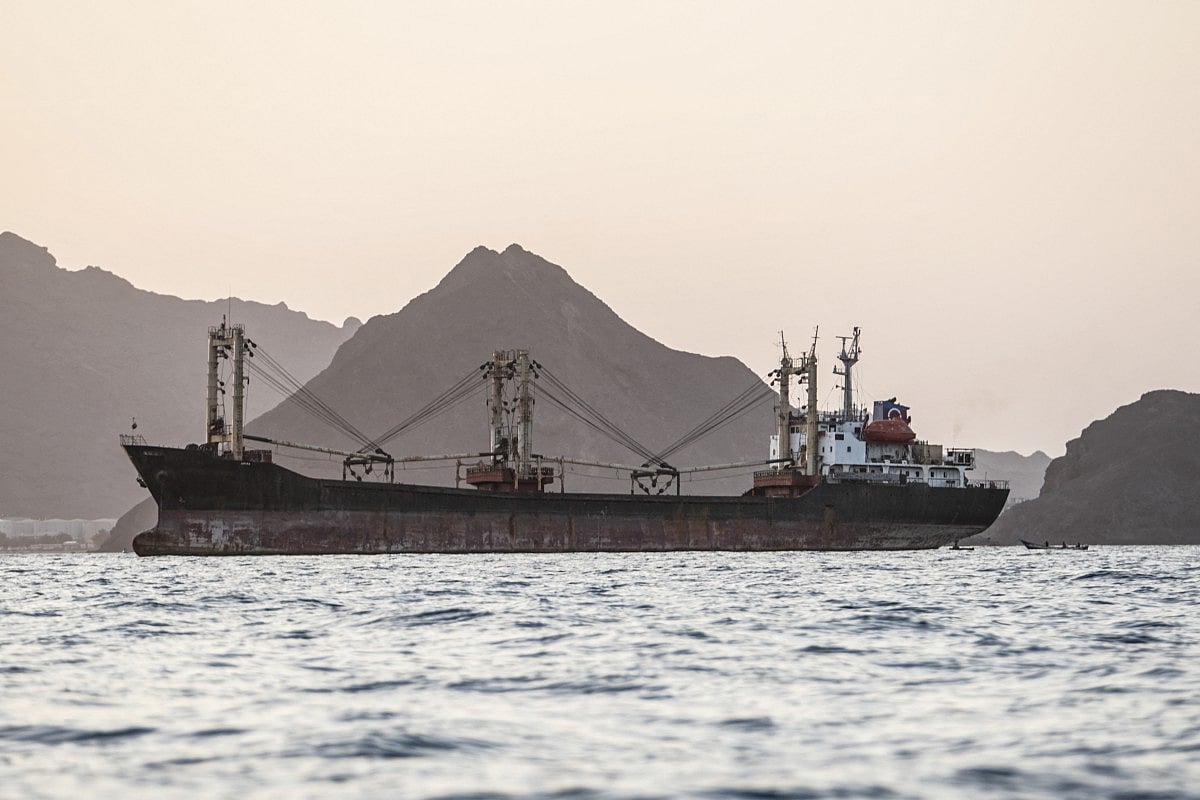
Another global chokepoint is under threat. For more than a decade, the war in Yemen was viewed as a contained regional conflict. Now it has extended into the Bab Al Mandab Strait, disrupting trade, energy flows and threatening freedom of navigation.
At the southern entrance of the Red Sea, a Yemeni armed movement now holds enough leverage to unsettle one of the world’s most important trade routes. Bab al-Mandeb, the strait connecting the Gulf of Aden to the Red Sea and onward to the Suez Canal, has become the latest and most consequential front in a war many had assumed was coming to an end.
Over the weekend of September 11–13, Houthi forces seized the port city of Mocha and the island of Mayyun, giving them control of Yemen’s entire western coastline save for one district near the Saudi border. They don’t control the strait itself, but they no longer need to. Their coastal territory, missile range and maritime disruption capability are enough to make passage through Bab Al Mandab a calculated risk, a direct concern for a country whose economy, like Saudi Arabia’s, depends on that route.
Why the strait matters
Bab Al Mandab is not a border waterway. It links Asian and Gulf markets to Europe via the Red Sea and Suez Canal, historically carrying some 12% of global trade and roughly 11% of maritime oil shipments. Disruption spreads outward: higher insurance premiums, longer transit times, costlier energy, and ships avoiding the route must divert around the Cape of Good Hope, adding thousands of kilometres to a voyage. Suez Canal traffic has already roughly halved since Houthi attacks began in 2023–24 and has not recovered, with Egypt continuing to absorb the lost revenue. Saudi Arabia relies on this corridor as its principal alternative to a restricted Strait of Hormuz; the UAE, having rerouted much of its own exports through the Habshan-Fujairah pipeline instead, is comparatively less exposed on the oil side.
A ceasefire that no longer holds
This escalation wasn’t supposed to be possible under the arrangement that had governed Yemen since 2022. A UN-brokered truce that April froze the front lines and, though it technically expired within months, held in practice for nearly four years — the longest calm since the war began in 2014. That calm broke this September, when fighting erupted on the 3rd and Houthi forces swept west within days to seize the coast. It’s the first real shift in frontline control since 2022, and the most intense fighting since, with over 300 people killed. proof the four-year calm was never a resolution, just a pause. The exchanges have only intensified: the Houthis claim Saudi forces carried out 26 strikes in 24 hours, and roughly 300 over the past week, while Yemen’s government reports killing dozens of Houthi fighters in Taiz.
A new source of leverage for Iran
Iran’s support, political backing, weapons expertise, missile and drone technology, has long extended the range of Houthi operations. The coastal takeover raises the stakes considerably. With Hormuz restricted for months during the wider 2026 Iran war, Saudi Arabia had rerouted much of its crude through the East-West pipeline to Yanbu, lifting exports there from roughly 2 million barrels a day to more than 5 million by June. A Houthi-controlled Bab Al Mandab now threatens that same alternative — pressure Tehran can apply without deploying its own navy. Still, calling the Houthis a simple Iranian proxy oversimplifies things: the movement has its own objectives, and its actions align with Tehran’s interests more often than they’re dictated by them.
Markets have already priced in the risk
Brent crude crossed $105 a barrel the day Mocha fell, rising past $108 as Iranian forces simultaneously struck vessels near Hormuz. Kpler data show daily Saudi crude transit through Bab Al Mandab collapsing from 3.5 million barrels a day in early July to near zero by August, as tankers diverted around Africa or onto Suez and the SUMED pipeline instead. Fuel, not crude, is the bigger concern now: continued Houthi strikes on Saudi Arabia’s Jazan refinery are straining fuel inventories that were already thin. Combined with a Hormuz that remains largely closed off, markets are effectively pricing in the loss of both of the Gulf’s main export routes at once.
A regional reckoning
Saudi Arabia now faces two threats at once, its export route and its own territory, without the protective buffer the 2022 truce once provided. Will Saudi’s Mecca Pact with Pakistan and Turkey activate if the attacks continue? Pakistan has pledged to defend the kingdom “to any extent,” but Islamabad’s own Foreign Office says no military response is currently under discussion, and the Mecca Defence Pact has yet to be made operational. The UN Security Council has condemned the Houthi attacks, affirmed Saudi Arabia’s right to self-defence, and warned the escalation “threatens to widen the conflict, endanger maritime security and international trade.” Europe is responding too: the EU has raised the alert level for its Red Sea naval mission, and Italy is deploying warships to protect shipping through the strait. The US, meanwhile, has held back from striking the Houthis directly despite Saudi appeals, wary of opening a new front while still engaged with Iran.
Beneath the geopolitics, OCHA has classified Yemen a “hunger hotspot of highest concern,” with an estimated 18.3 million people facing acute food insecurity, including more than 2.2 million children under five suffering acute malnutrition. More than 125,000 people have been displaced across Yemen since the start of September alone.
What could come next?
Will the Houthis try to close the strait completely or push their strikes deeper into Saudi territory? Government forces retaking the coast looks difficult given how quickly it fell. The Houthis have reportedly assured Washington that non-Saudi-linked vessels won’t be targeted, but further attacks on ships tied to the US, UK, or Israel could still draw outside powers into direct confrontation. If passage through Bab Al Mandab keeps falling toward zero while Hormuz stays restricted, oil markets face a compounding shock that could send prices well past this year’s already-high levels. The UN’s Special Envoy has warned of a return to large-scale conflict — a signal that renewed diplomacy, not just military containment, may be the only way to keep the chokepoint from becoming permanent. Given the 2022 truce’s collapse, any new deal is unlikely to be the last word.
Network Links
GN StoreDownload our app
© Al Nisr Publishing LLC 2026. All rights reserved.