A historic opportunity to reshape UN leadership
The UAE’s nomination of Lana Nusseibeh brings fresh possibilities to a difficult contest
The United Nations secretary-general has no army and cannot force a government to make peace. Nonetheless, the person holding the job is expected to mediate conflicts, defend international law and speak for people whose own governments fail to protect them.
António Guterres leaves office on December 31. Choosing his successor raises a basic question: What do governments want from the UN?
The UAE’s nomination offers a fresh perspective on that question. The UAE nominated Lana Zaki Nusseibeh on October 21, bringing an experienced Arab woman into a contest struggling to produce an agreed candidate. In the October 16 informal poll, the existing contenders reportedly faced opposition from at least two permanent Council members. These were signals of possible vetoes rather than a final rejection, but they created an opening for another candidate.
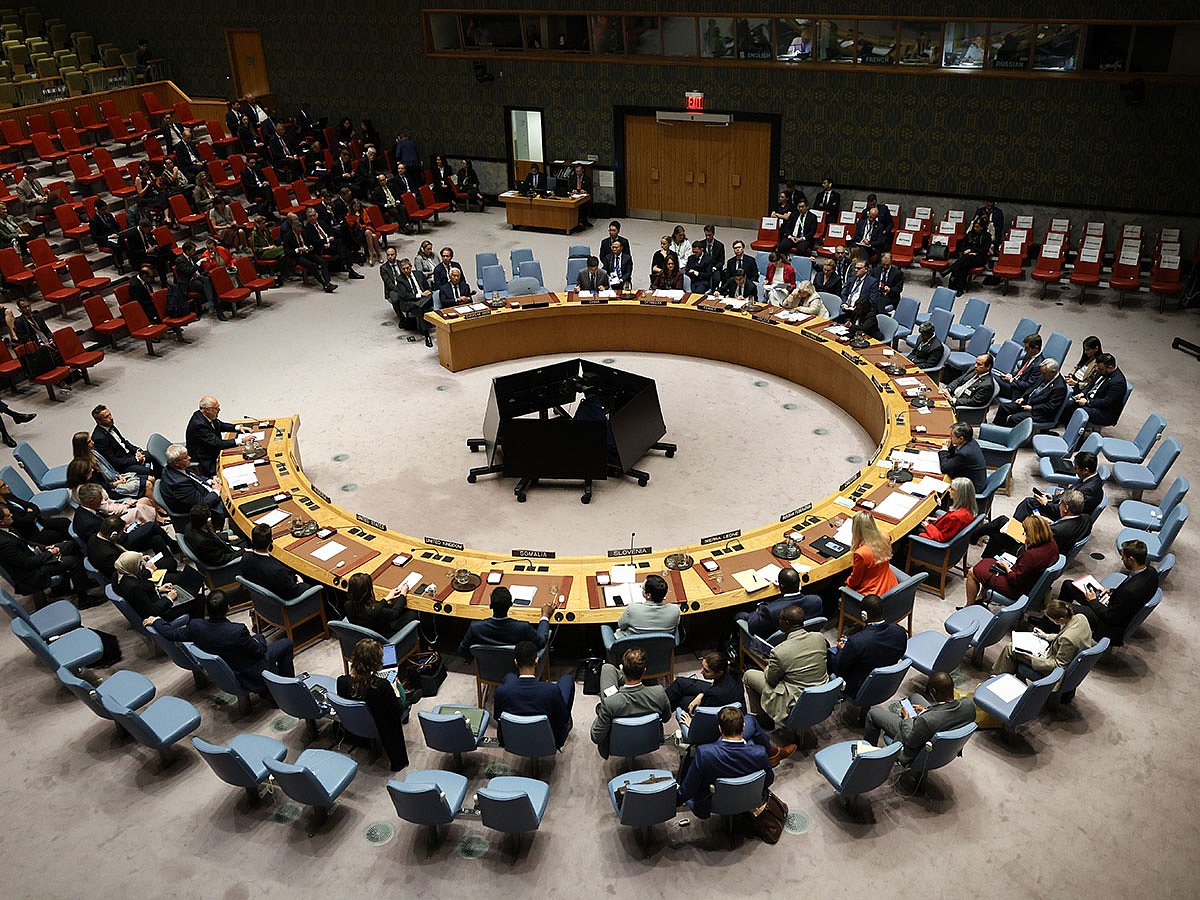
Under Article 97 of the UN Charter, the General Assembly appoints the secretary-general following a Security Council recommendation. A member state must nominate each candidate. Candidates publish their qualifications, plans and campaign-financing disclosures, and answer questions in public dialogues.
The bargaining that decides the outcome still takes place in private. The Council’s 15 members use informal polls to indicate support, opposition or no opinion. Later rounds can use different-coloured ballots to show whether opposition comes from a permanent member. They do not reveal which permanent member cast each vote.
Formal recommendation
To secure a formal recommendation, a candidate needs at least nine votes and no veto from China, France, Russia, the United Kingdom or the United States. A permanent member can abstain without blocking the choice. The 193-member General Assembly can reject the recommendation, although it usually approves the nominee by acclamation.
Nusseibeh’s entry shows why late nominations can matter. This is a bold move by the UAE as it puts forward a candidate beyond the widely expected Latin American and Caribbean field and invites governments to consider whether a different diplomatic background could help break the deadlock. The nomination signals confidence that Emirati diplomatic experience can contribute to the leadership of a global institution.
There is a strong case for choosing a woman. All nine secretaries-general have been men. That record is difficult to defend for an organisation that promotes equal participation. Appointing a woman would matter for the UN’s credibility, even though it would leave the office’s powers unchanged. Diplomatic judgement would still be tested, and the veto would remain.
If appointed, Nusseibeh would become the first woman and the first person from a Gulf state to lead the UN. Her appointment would carry considerable symbolic significance for the Middle East, bringing someone with deep regional experience to the organisation’s highest office. She would, however, serve the United Nations independently, rather than represent the UAE or any regional bloc. Her candidacy combines the prospect of a historic appointment with a substantial record of work within the institution.
UN reforms
The Trump administration wants to reform the United Nations as an institution, reduce its spending and sharpen its focus on peace and security. Reports suggest that Washington is dissatisfied with the previous candidates and wants someone more willing to disrupt established practices. These reports deserve attention, but they do not amount to a declared veto or an official alternative nomination.
Much depends on what governments mean by reform. Reducing duplication and holding officials accountable could improve the UN’s work. Cutting humanitarian coordination or independent reporting could leave it less able to respond to crises. Savings alone are a poor measure of whether reform has succeeded.
Washington has considerable influence but it cannot choose the next secretary-general by itself. Each permanent member can block a candidate. Taken together, their demands risk producing someone who causes little discomfort but achieves little either.
The Charter calls the secretary-general the UN’s chief administrative officer. The job has grown to include mediation, public advocacy and quiet diplomacy. Article 99 allows the officeholder to bring threats to international peace before the Council. Article 100 requires independence from government instructions. There is room to act, although much depends on whether governments cooperate.
Skilled leadership
History shows what skilled leadership can achieve. Dag Hammarskjöld helped establish the first UN Emergency Force after the 1956 Suez crisis, working with Canadian foreign minister Lester Pearson. U Thant contributed to efforts to defuse the Cuban Missile Crisis. Pérez de Cuéllar helped bring the Iran–Iraq war to an end. In each case, diplomacy gained ground when the governments involved became willing to accept an agreement.
The failures also carry lessons. The genocides in Rwanda and Srebrenica occurred while Boutros Boutros-Ghali was secretary-general and Kofi Annan headed peacekeeping. Investigations found failures across the Secretariat, Security Council, missions and member states. Political constraints were severe. There were also failures of judgement and response within the organisation.
Boutros-Ghali lost his bid for a second term to a US veto in 1996. Annan later challenged the legality of the Iraq invasion but could not prevent the war. Ban Ki-moon helped advance the Paris climate agreement and the Sustainable Development Goals, while deep divisions among governments frustrated efforts to end Syria’s war.
Guterres faced a similar limit over Gaza. In December 2023, he invoked Article 99 to warn the Council about the humanitarian emergency. The United States then vetoed the draft resolution demanding an immediate humanitarian ceasefire. He could demand attention but could not force agreement.
Still, failure to stop a war does not make every UN effort pointless. Aid coordination, monitoring and limited agreements can reduce suffering. Guterres’s work with Türkiye on the Black Sea grain initiative showed that useful arrangements could be negotiated even while fighting continued.
UAE permanent representative
Nusseibeh served as the UAE’s permanent representative from 2013 to 2024, including during its 2022–2023 Security Council term. Her experience extends beyond representing national policy. She chaired the UN Women Executive Board and co-chaired negotiations on Security Council reform. These roles required managing competing interests and working through the procedural obstacles that often slow UN decisions.
For the UAE, the nomination marks an ambition to contribute to international leadership as well as regional diplomacy. For the wider Middle East, Nusseibeh could bring close knowledge of regional concerns and established working relationships at the UN. These could help her connect regional mediation with international negotiations, humanitarian relief and reconstruction.
The next UN chief will need access to powerful leaders and the independence to disagree with them. Reform will be part of the job, as will protecting the functions that people in conflict zones depend on. Whether those efforts succeed will also depend on governments accepting that effective leadership will sometimes make them uncomfortable.
Dr Kristian Alexander is a geopolitical analyst and Non-Resident Senior Fellow at the Middle East Institute Switzerland (MEIS). He previously served as Senior Fellow and Lead Researcher at the Rabdan Security and Defense Institute (RSDI) and as Senior Fellow and Head of Strategic Studies at TRENDS Research & Advisory.
Sign up for the Daily Briefing
Get the latest news and updates straight to your inbox
Network Links
GN StoreDownload our app
© Al Nisr Publishing LLC 2026. All rights reserved.