How UAE business leaders blend tradition and innovation for future-ready enterprises
Next-generation leadership is not simply about youth. It is about mindset
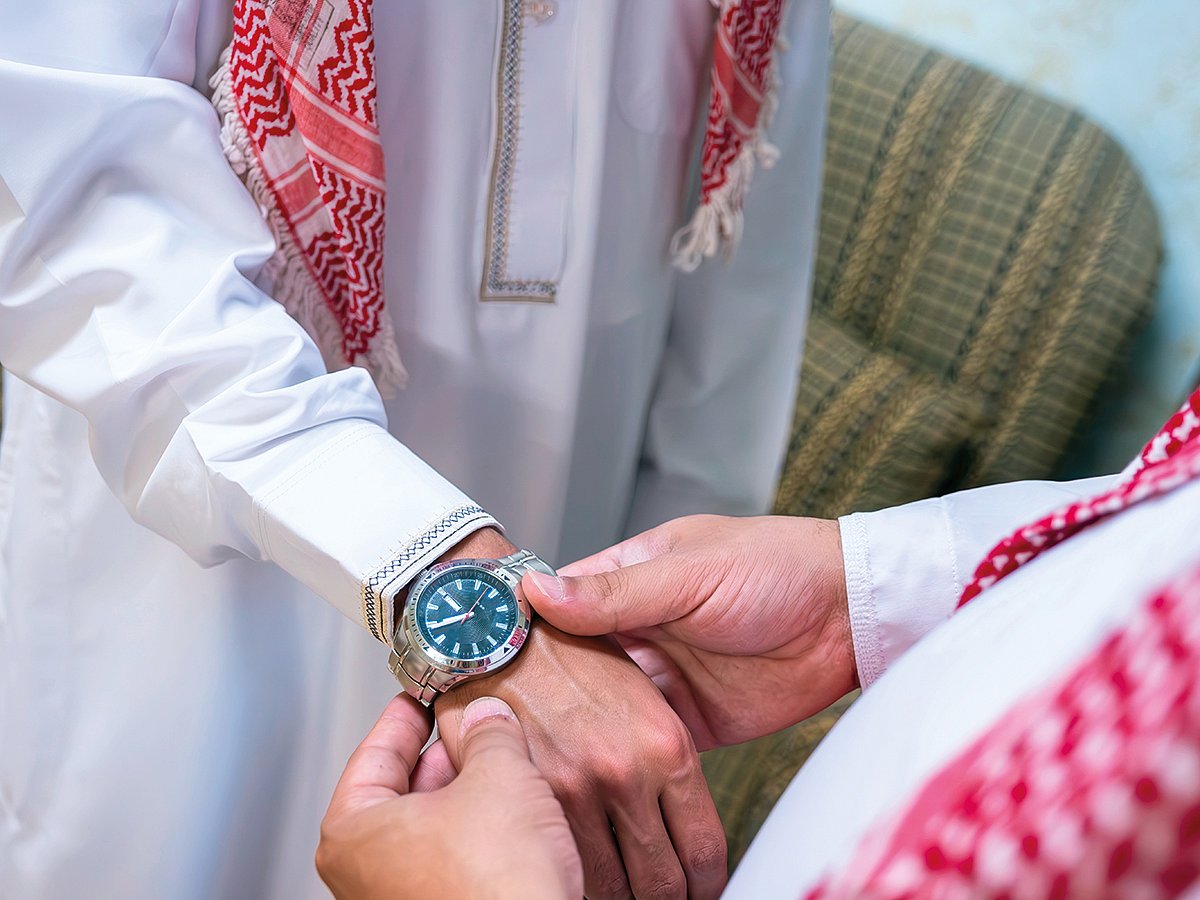
The next era of business leadership is not simply about disruption. It is about continuity. It is about how organisations that were built on grit, relationships, reputation and long-term thinking are now being reshaped to survive in a faster world without losing their identity. And in the UAE and Middle East, across boardrooms, family offices and founder-led companies, this shift is quietly underway, of projecting a new leadership equation where legacy meets next-generation.
The region’s most enduring business stories have never been accidental. They were shaped by leaders who understood fundamentals: trust, cash flow discipline, customer loyalty, risk management, and community presence. Yet modern leadership demands a different operating rhythm. New-age CEOs and successors are stepping into roles where expectations are sharper, timelines are tighter, and markets move faster than the traditional planning cycles that once defined growth.
In the region, where commerce is global by default and competition is intense across sectors, leaders are no longer choosing between tradition and transformation. The real differentiator is their ability to hold both. To protect the core while evolving the edges. To retain what made the organisation credible, while building what makes it relevant now.
At the heart of this evolution is a powerful question: How do leaders modernise without erasing the very values that created the enterprise? The answer, increasingly, lies in balance. And in leadership that understands both the past and the future as strategic assets.
Leadership is no longer inherited, it is earned
In many legacy-driven organisations, leadership transitions were once defined by expectation and structure. The successor stepped in because it was the natural path. The blueprint was already written. The business operated with long-term stability. Relationships mattered more than reinvention. Systems were built around personal accountability and trusted teams.
But the region’s modern business landscape has changed the rules.
Today, succession is no longer a ceremony. It is an audit. It is measured by competence, credibility and outcomes. The successor is not simply a continuation of a story, they are responsible for upgrading it.
This shift is creating a healthier leadership culture. Younger leaders are learning quickly that legacy alone does not guarantee trust. Employees, clients and partners want clarity, consistency and modern governance. They want professional structures, transparent communication and performance-driven strategy.
At the same time, older leaders are recognising that leadership has to evolve to stay powerful. The most effective legacy CEOs are those who mentor successors without controlling them. They provide the values, perspective and patience that can only come from experience, but they allow the next generation to shape execution.
This is a major mindset shift. Because the success of a transition is no longer defined by continuity alone. It is defined by renewal without rupture.
The strongest leadership transitions in the UAE are now built on a new standard: the next generation must not only uphold the family name or founder reputation, but also become the architect of the organisation’s next decade.
Modernisation without losing identity
Modernisation can look glamorous from the outside, with technology upgrades, new offices, new brand identity and new product lines. However, sustainable transformation is rarely loud. It is deliberate. One of the greatest leadership strengths in the UAE’s most resilient enterprises is the ability to modernise without losing identity. This requires leaders to understand the difference between what must change and what must remain sacred.
Some things, for instance should never be compromised:
Integrity and reputation
Relationships built over decades
Service culture and reliability
Long-term thinking over short-term wins
Commitment to community and people
At the same time, other areas must evolve quickly:
Governance structures and accountability
Digital infrastructure and cybersecurity
Customer experience expectations
Data-led decision-making
Talent strategy and culture
What makes this balancing act difficult is the emotional layer. Legacy leadership often carries deep pride. It is personal. It is built on sacrifices and a strong sense of ownership. So when younger leaders arrive with new ideas, transformation can feel like criticism, even when it is necessary. The modern leader understands that transformation is not rejection. It is protection. A business that does not evolve becomes fragile, regardless of how strong its past may be. In a region like the UAE, where market momentum is rapid and cross-border opportunities are immense, agility is no longer optional. It is the price of staying relevant.
The leaders who will dominate the next decade are those who learn to protect legacy values while upgrading operational reality.
Succession a strategy, not a timeline
Many businesses once treated succession as a date on the calendar. A time-bound event. A title change. A new signature on official paperwork. A ceremonial handover. Today, smart organisations treat succession differently. They treat it as a multi-year strategy. This strategy begins long before the transition is announced. It includes structured training, leadership grooming, and exposure to real operational complexity. It includes building credibility inside the organisation, not just in public. Because succession fails when it becomes rushed, forced, or symbolic.
In today’s environment, successors must be operationally fluent. They must understand how the business truly works:
Supply chains and financial discipline
Customer journeys and service delivery
People management and culture
Risk exposure and regulatory compliance
Market trends and competitor behaviour
They must also understand something older leaders often mastered: patience. In legacy enterprises, decisions were often made with long time horizons. Quick wins were less important than consistent stability. Many younger leaders, shaped by fast technology cycles and instant metrics, must learn this skill again. In high-stakes markets, long-term thinking is a competitive advantage.
At the same time, older leadership must embrace faster feedback loops. Waiting too long can become its own risk. In modern industries, speed is a form of intelligence.
So succession becomes the meeting point between experience and speed; patience and urgency; relationship power and digital strategy, and instinct and data. The best business leaders today build succession roadmaps that do not only prepare an individual, but also prepare the organisation.
Because a successor cannot succeed in an outdated system. Leadership transition requires structural transition too.
Generational shift reshapes culture, talent, trust
Perhaps, the biggest transformation triggered by next-generation leadership is culture. Not corporate culture as a slogan, but real culture and how the organisation behaves when no one is watching. Next-gen business leaders often bring sharper expectations of workplace alignment. They understand that talent no longer joins organisations purely for salary or stability.
People join for growth, clarity, and meaning. They stay for trust, opportunity and recognition. This is where legacy enterprises face a choice. They can remain rigid, protecting old structures because they once worked. Or they can become adaptive, protecting core values but rebuilding the environment where people operate.
Next-generation leaders are increasingly focusing on:
Clear performance frameworks
Transparent internal communication
Faster decision-making processes
Skill-based promotions
Learning culture and leadership development
The result is not just a modern workplace. It is a stronger pipeline of future leaders. This matters because leadership is no longer concentrated at the top. The new age of business demands leadership across functions. Sales, operations, finance, digital, customer experience. Leaders must be developed, not discovered. What is changing is trust.
Old leadership styles were often built on authority. New leadership styles are built on authenticity. Employees want to know what the organisation stands for. They want leaders who communicate clearly and make decisions that align with values. This cultural evolution becomes even more powerful in UAE companies because teams are diverse. They represent multiple nationalities, belief systems and professional expectations. Culture cannot be implied. It must be designed.
The next generation, raised in a globally connected world, is often better equipped to lead diverse teams. They understand representation. They understand communication. They understand that culture is not what leaders say, it is what they enforce.
Building a future-proof legacy
The future of leadership in the UAE and region will be defined by a simple principle: legacy is not what you inherit, it is what you build next. The most respected leaders in the coming years will not necessarily be the loudest, the boldest, or the most visible. They will be those who upgrade their organisations with discipline and courage while preserving the foundation that created trust in the first place. Because legacy is not the past. It is a promise. It is the promise that what has been built will not collapse when leadership changes. It is the promise that the organisation can thrive across generations, across market shifts, and across new cycles of disruption.
That is why next-generation leadership is not simply about youth. It is about mindset.
Future-ready business leaders are already proving that legacy and innovation are not opposites. They are partners. One provides credibility. The other provides momentum. When blended well, they create businesses that do not just survive change, but shape it. And that is the ultimate leadership goal, not to protect an empire, but to evolve it into something stronger than what existed before.
Sign up for the Daily Briefing
Get the latest news and updates straight to your inbox
Network Links
GN StoreDownload our app
© Al Nisr Publishing LLC 2026. All rights reserved.