The Ronaldo Effect: How Cristiano redefines fitness and ageing for men over 40
Inside the Poruguese footbal supperstar playbook for staying strong, lean & sharp past 40
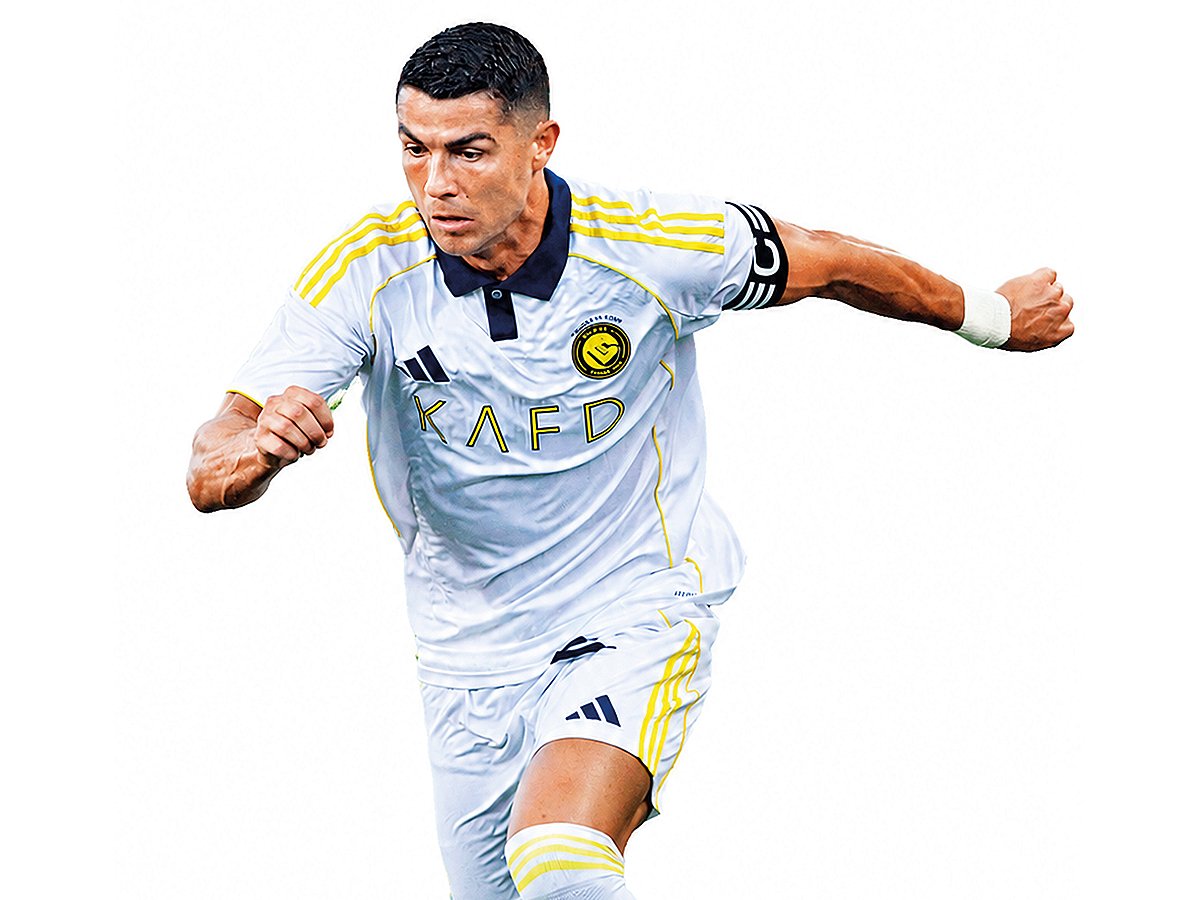
Most men spend their forties negotiating with age. They accept a little weight gain, a little stiffness and a gradual decline in energy as part of the deal. Cristiano Ronaldo has spent the same decade challenging that assumption. At 41, the Portuguese forward continues to compete at the highest levels of professional football, carrying a physique and physical output that would be impressive in an athlete ten years younger. The lesson is not that ordinary men should attempt to live like Ronaldo. Few people have access to elite trainers, nutritionists and recovery technology. The real value lies in the principles behind his longevity. Those principles are surprisingly accessible.
The fascination with Ronaldo’s fitness intensified in 2025 when performance-tracking company WHOOP estimated his biological age at 28.9 years. Ronaldo himself expressed surprise at the result. The figure generated headlines around the world. It also highlighted a larger point. Chronological age and physical age are not always the same thing. Lifestyle, training habits and recovery practices can influence how well the body functions over time.
Strength is the foundation
If there is one habit that sits at the centre of healthy ageing, it is strength training.
Research consistently shows that muscle mass begins to decline from the late thirties onwards. Scientists from Sweden’s Karolinska Institutet have found that strength and fitness begin decreasing from around the mid-thirties, with the rate of decline accelerating later in life.
Ronaldo has never treated strength work as a side activity. Weight training remains a core part of his weekly schedule. Reports on his current programme describe a combination of resistance training, sprint work and functional movement designed to preserve power and muscle mass.
For ordinary men, the takeaway is straightforward. Muscle is a long-term investment. Strength training helps preserve mobility, supports metabolism and reduces the physical decline associated with ageing. Professor Leigh Breen, Professor of Translational Muscle Physiology at the University of Birmingham, tells The Guardian in a 2025 interview that exercise remains highly effective well beyond middle age despite the natural loss of muscle that accompanies ageing. “The idea that exercise becomes pointless past a certain age is simply wrong,” he says. “Everyone responds to structured exercise.”
The goal after 40 is not bodybuilding, but maintaining strength for everyday life.
Recovery a performance tool
Many men focus on workouts and ignore recovery. Ronaldo treats recovery as part of training.
Speaking on the WHOOP Podcast in May 2025, Ronaldo explains that recovery has moved to the top of his priorities as he has grown older. The interview attracted worldwide attention when WHOOP estimated his biological age at 28.9 years. Sleep, he believes, underpins everything else in his routine.
Sleep sits at the centre of that philosophy. Ronaldo calls it his most important performance tool. “Sleep is the most important tool that I have,” he says. “To be consistent in the time that I go to bed and the time that I wake up.”
That emphasis is supported by sports science. Sleep is where muscle repair, hormonal regulation and cognitive recovery take place. Recovery also reduces injury risk and improves exercise performance. Will Ahmed, founder and CEO of WHOOP, tells S&P Global in 2025 that people often place too much importance on daily fluctuations instead of long-term trends. “The future of healthcare is going to be measured,” he says, arguing that recovery, sleep and performance data can help people make better long-term decisions about their health.
Body composition over weight
The number on a scale tells only part of the story. Ronaldo is reported to maintain exceptionally low body fat levels while preserving significant lean muscle mass. His physical profile allows him to generate speed, power and endurance despite his age.
For ordinary men, chasing a target weight is often less useful than improving body composition. A person can weigh the same at 45 as they did at 30 and still carry far more fat and significantly less muscle.
Strength training and sensible nutrition help preserve lean mass while managing fat gain. Researchers increasingly describe skeletal muscle as a key metabolic organ because it influences blood sugar control, energy expenditure and healthy ageing. A 2025 Time report examining the benefits of strength training highlights growing evidence linking muscle mass to metabolic health and physical independence later in life.
The mirror often reveals more than the scale.
Mobility keeps the body moving
Footballers spend their careers moving through demanding ranges of motion. Ronaldo continues to place significant emphasis on flexibility, mobility and movement quality. This matters because ageing is not simply about losing strength. It is also about losing movement.
Dr Peter Attia, physician, longevity researcher and author of Outlive, encourages people to think beyond today’s workout and focus on the physical abilities they hope to retain later in life. His concept of the “centenarian decathlon” asks people to train for the everyday activities they want to be capable of performing in their seventies, eighties and beyond. That mindset places mobility alongside strength and endurance as a pillar of healthy ageing.
Consistency beats intensity
One reason Ronaldo remains an outlier is that he has maintained elite habits for more than two decades.
Most people search for dramatic fitness solutions. Ronaldo’s career suggests that consistency is more powerful than intensity. Training three or four times a week for years will produce better results than a month of extreme effort followed by inactivity.
This principle appears repeatedly in sports science research. Exercise benefits accumulate over time. Studies on healthy ageing consistently show that people who maintain regular physical activity preserve more muscle, cardiovascular fitness and mobility than those who rely on short bursts of intense effort.
Nutrition supports the process
Ronaldo’s nutrition habits have long been discussed in football circles. His approach centres on high-quality protein and controlled portions.
The broader lesson is not dietary perfection. It is nutritional discipline.
Professor Breen, tells The Guardian that nutrition remains a key factor in helping older adults achieve results comparable to younger individuals. “Adequate protein, plus carbs and healthy fats, fuel your exercise, accelerate your recovery and support how your body adapts,” he says.
Avoiding injuries is a skill
Many fitness journeys after 40 are interrupted by injuries. Ronaldo’s longevity is partly a result of his ability to stay available. That requires intelligent training, proper recovery and careful workload management.
Ageing athletes cannot train exactly as they did at 25. Ronaldo understands this. Recovery receives greater attention. Training is adjusted. Performance is monitored. Regular men can apply the same principle. Progress comes from sustainable training. A missed week caused by injury does more damage than a slightly lighter workout.
Ronaldo’s philosophy remains remarkably simple. Speaking on the WHOOP Podcast, he repeatedly returns to the value of consistency and self-care. “If you take care of your body, it will take care of you,” he says.
The real Ronaldo effect is about treating fitness as a long-term project. Strength training, sleep, mobility, nutrition and consistency remain effective long after youth. Ronaldo’s greatest achievement may not be the goals he scores today. It may be the reminder that ageing and decline are not the same thing.
Sign up for the Daily Briefing
Get the latest news and updates straight to your inbox
Network Links
GN StoreDownload our app
© Al Nisr Publishing LLC 2026. All rights reserved.