From spark to screen: Image Nation Abu Dhabi on turning ideas into stories
Pay attention to the stories you can’t stop thinking about says Fatima Al Dhaheri
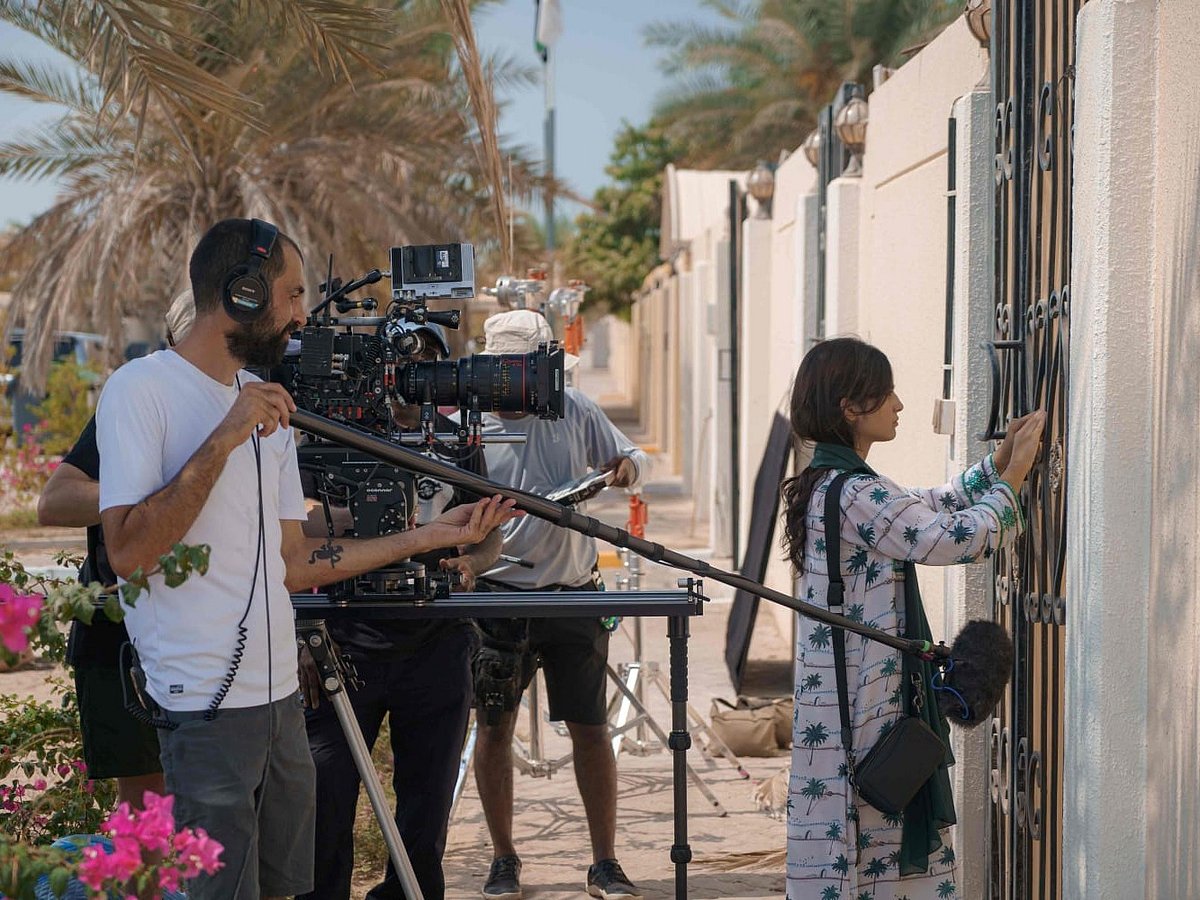
As the Congress of Arabic and Creative Industries brings together creatives and industry professionals to explore the evolving landscape of storytelling and content, Image Nation Studios is contributing to the programme with two practical workshops focused on different stages of the filmmaking journey.
Fatima Al Dhaheri, Development Executive at Image Nation Studios, will lead “From Spark to Screen, exploring how ideas can be developed into compelling stories,” while Khaled Alhosani, Development Coordinator at Image Nation Studios, will present “Story to Screen: The Art of Pitching Film & Television,” offering emerging filmmakers insights into communicating their creative vision and pitching projects effectively. Ahead of the sessions, both spoke to Gulf News about the craft of storytelling, developing original ideas and what it takes to bring a project from concept to screen.
Get updated faster and for FREE: Download the Gulf News app now - simply click here.
1. Tell us about your upcoming workshop. What are three things you want people to leave knowing? And what made you choose this topic for the congress?
My workshop is called From Spark to Screen, and it looks at the journey a story takes from that first tiny idea all the way to something we can actually watch on screen.
There are three things I want people to leave knowing. First, where to look for stories, because I think we sometimes search too far when some of our strongest ideas are already around us. Second, how to take an idea and actually build a story from it through character, conflict, research and rewriting. And third, that filmmaking is collaborative. A script may begin with one person, but a film is built by many.
I chose this topic because I work in development at Image Nation Studios, but I’m also a writer myself. I’ve experienced both sides of that process. I’ve seen ideas that are only a sentence slowly become scripts, and eventually become films.Being part of Image Nation Studios and working closely with the teams developing and producing stories for audiences in the UAE and around the world has given me a close view of how that journey works in practice. I wanted to demystify that journey for emerging filmmakers and show them that every film they admire once started as something very small.
2. What would you consider your most significant achievement in film and content development, and what did you learn from it?
I don’t know if I would define my biggest achievement as one particular title. For me, it has been the opportunity to grow from someone who simply loved stories into someone who understands how stories are developed and made.
I’ve been fortunate to work across development and production on different projects at Image Nation Studios, but creating my own stories comes from a deeply personal experience and then had to become something much bigger than me.
That process taught me one of the most important lessons I’ve learned as a writer: your experience might give you the spark, but craft is what turns it into a story. You still have to research, rewrite, collaborate, take notes and sometimes let go of things you love in order to serve the story.
3. How does an initial idea evolve into a compelling story that works on screen?
I think the first thing is understanding that an idea and a story are not the same thing.
You might have an incredible idea, an interesting world or even a beautiful image, but then you have to ask: Who is this about? What do they want? What’s stopping them? What are they willing to do to get it? And what happens to them because of those choices?
That’s when an idea starts becoming a story.
And then comes the work people don’t always see:research, outlining, writing, getting feedback and rewriting. For me, writing is rewriting. The first draft is where you’re discovering what the story could be. Every draft after that gets you closer to what the story actually wants to become.
4. What makes a cinematic character feel authentic and alive on the page?
Contradiction.
The characters that feel most human to me are rarely just one thing. Someone can be incredibly loving and still hurt the person they love. Someone can be brave in one part of their life and terrified in another.
I studied psychology before I entered film, and I think that has stayed with me as a writer. I’m always interested in why people behave the way they do, rather than simply deciding whether a character is good or bad.
And then I think about what they want. A character becomes alive when they want something badly enough that they start making choices. Those choices are where we begin to understand who they really are.
5. How can writers draw on their personal and cultural experiences while creating stories that connect with a global audience?
I actually think the more specific you are, the more universal a story can become.
Sometimes we worry that people outside our culture won’t understand certain details, so we explain too much or make the story more generic. But audiences don’t necessarily need to have lived your exact experience to understand love, grief, jealousy, ambition, shame, belonging or wanting to be seen.
But that’s what makes the story distinctive.
So I don’t think we need to remove our identity to reach a global audience. We need to tell a truthful, emotionally recognizable story from where we are.
6. What advice would you give young talents who are beginning their journey in screenwriting and storytelling?
Start before you feel ready. A lot of emerging writers spend years waiting for the perfect idea, the right opportunity or for someone to tell them they’re a writer. But you become a writer by writing.
Be curious. Watch people. Read. Research. Ask questions. Watch films you love and then ask yourself why they worked on you.
And don’t be afraid of writing something bad. I think that’s important. Your first draft doesn’t have to prove that you’re talented. It just has to exist. Once it exists, you can work on it.
And finally, pay attention to the stories you can’t stop thinking about. There’s usually a reason they keep coming back to you.
1. Tell us about your upcoming workshop. What are three things you want people to leave knowing? And what made you choose this topic for the congress?
The workshop is called “Story to Screen: The Art of PitchingFilm & Telvesion”, and it’s really about learning how to communicate a film or series idea in a way that makes someone else see what you see.
There are three things I want people to leave with. First, how to identify the core of their idea and explain it simply. Second, how to communicate what makes their project different and why an audience would want to watch it. And third, how to pitch with confidence without feeling like they have to memorise a speech or oversell their project.
I chose this topic because, working in development at Image Nation Studios, I get to see a lot of ideas at different stages. We work across film, television and documentaries, and part of that process is understanding what makes a story connect and how it can be developed for an audience. Sometimes you come across a genuinely interesting idea, but the filmmaker struggles to communicate what makes it exciting. I think pitching is a skill that can be learned, and it’s an important one because a great idea still needs someone else to believe in it before it can become a film.
2. How does an initial film idea evolve into a compelling project that can be pitched to producers?
I think it starts with asking questions. An initial idea might only be a character, a situation, or even a single scene. The development process is about understanding what is underneath that idea. Who is the story about? What do they want? What is stopping them from getting it? Why does this story need to be told?
Then you start finding the identity of the project. What is the tone? What kind of experience are you promising the audience? What makes this different from other films that might have a similar premise?
Before pitching, you should be able to strip the project down to its most essential elements. If you understand the heart of your story, you don’t need twenty minutes to explain why it is interesting. You should be able to make someone understand the potential of the film relatively quickly, and then allow the conversation to expand from there.
3. What do producers typically look for when they hear a new film idea, and what makes a pitch stand out?
One of the first things I look for is what makes the idea distinct. It doesn’t necessarily have to be something that has never been done before. Most stories share elements with stories we already know. What matters is the perspective and what this particular filmmaker is bringing to it.
I also look at the characters, the central conflict, the world of the story and whether there is enough there to sustain a full film or series. But something I think is equally important is understanding why the filmmaker wants to tell this story.
The pitches that stay with you are usually the ones where the filmmaker understands exactly what their project is. Their excitement becomes contagious. You finish the pitch wanting to ask another question, and I think that is one of the best signs that a pitch has worked.
4. What are the most common mistakes filmmakers make when pitching their ideas, and how can they avoid them?
Probably the biggest mistake is trying to tell us everything. People sometimes walk into a pitch and start explaining every character, subplot and scene because they are worried about leaving something important out. Ironically, that can make the main idea harder to understand.
A pitch is not a scene-by-scene retelling of your film. It should give us enough to understand the story, the characters, the conflict, the tone and what makes the project special.
Another mistake is spending too much time trying to make the project sound impressive instead of simply communicating why it is interesting. Clarity is extremely important. If the person listening understands your film and wants to know more when you finish, you have done your job.
5. How can filmmakers develop confidence and communicate their creative vision effectively when presenting a project?
Confidence comes from knowing your project. I don’t think filmmakers should memorise their pitch word for word, because the moment someone interrupts with a question, it can throw everything off. Instead, know your story, your characters and your world well enough that you can talk about them naturally.
It also helps to practise pitching to different people. Explain the film to someone who knows nothing about it and see what they remember afterwards. What confused them? What excited them? What questions did they immediately ask? That feedback can tell you a lot about how clearly you are communicating your vision.
And I think it is important to remember that a pitch meeting should eventually become a conversation. You are not performing a monologue. You are inviting someone into an idea and hopefully making them excited enough to explore it with you.
6. What advice would you give emerging filmmakers on developing their ideas and finding their own creative voice?
Watch films, but also experience things outside of films. Read, travel, meet people, listen to conversations and pay attention to the world around you. Your creative voice is shaped by what you notice and what interests you, not only by the filmmakers you admire.
I also think emerging filmmakers sometimes put too much pressure on themselves to create something completely original. Originality doesn’t necessarily mean inventing something nobody has ever seen before. It can come from taking a familiar idea and telling it through your own perspective.
And most importantly, make things. Write the short film, shoot something with your friends, make mistakes and learn from them. Your creative voice is not something you sit down and decide one day. It develops through the work. The more you create, the more you begin to understand what kinds of stories you naturally gravitate towards and what you actually want to say as a filmmaker.

Sign up for the Daily Briefing
Get the latest news and updates straight to your inbox
Network Links
GN StoreDownload our app
© Al Nisr Publishing LLC 2026. All rights reserved.