Many faces of a showman
James Brown's life and music intersected with some of the 20th century's most significant racial trends
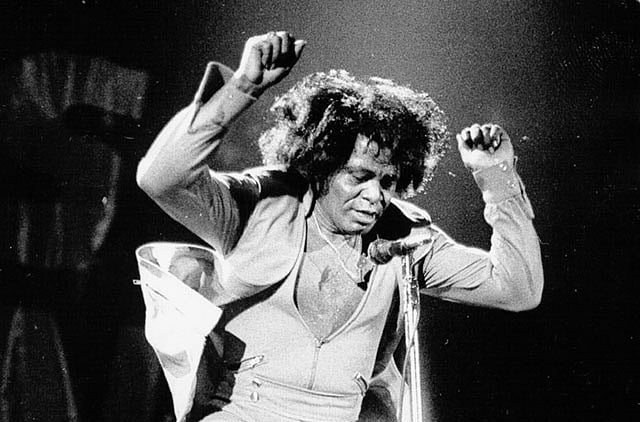
Music is well said to be the speech of angels, the 18th-century Scottish essayist Thomas Carlyle wrote. But then, he never spent any time with James Brown. In a five-decade career as one of the most successful recording artists of all time, Brown influenced generations of musicians and reached millions of fans with his fierce talent. He was also far from angelic — demanding, egotistical and prone to pulling a gun on those who disagreed with him.
Most notably, as R.J. Smith lays out in The One, his digressive but absorbing new biography of the soul icon, Brown was an important social figure. Beneath the cape-wearing, lyrics-belting, hair-coiffing persona was a man whose life intersected with some of the 20th century's most significant racial trends. Brown was, as most of us recognise, a titan of music who created a host of innovations in soul and funk.
He borrowed from earlier black musicians and inaugurated a lot on his own, all the while honing a mesmerising stage act. Though his relationship with white audiences was complicated — first pioneering, later polarising — Brown was more influential than anyone might have dreamt at the time. Smith makes the case that every time a white suburban teenager puts on a hip-hop record, he owes a debt to Brown, who, long before the era of Kanye West and Li'l Wayne, made such an act both musically worthwhile and socially fashionable.
Smith begins at the beginning — in fact, he goes back a lot further than that, starting his story with 18th-century slaves and then continuing to a segregated South in the early part of the 20th century. It was this culture that shaped Brown's upbringing. Born in 1932 in rural South Carolina, Brown spent his childhood in Augusta, Georgia, and was marred by poverty and crime, including a stint in jail.
But a musical future began to coalesce with the formation of his band, the Flames, in the mid-1950s and some lucky breaks filling in for Little Richard. Brown would make unannounced last-minute appearances in place of the newly popular singer. The move would allow him to hone his act and expand his fame, and even when the crowd caught on that this wasn't Little Richard, it didn't matter. "[B]y the time he was done," Smith writes, "the crowd was cheering the impostor." Although music was, like much of the pre-civil rights South where Brown performed, deeply segregated, Brown's songs began a process of commingling audiences in a way that had seldom been done in America before.
The biographer writes vividly about Brown's performance at the 1964 concert film The T.A.M.I. Show. The concert reveals Brown as a harbinger of modern showmanship, while also highlighting, tellingly, that there was a time when musical performance was an act of spontaneity, or at least autonomy, not the product of a team of image-minded American Idol coaches.
The author paints his portrait with the colours of those who worked with, for and against Brown. (These are, it should be said, sometimes all the same people.) Brown had a tendency to alienate even those seeking to help him and was not averse to flashing a piece, as he did when another musician, aggrieved because of a dispute over a woman, mocked him onstage. (No shots were fired — that time.) But Brown also could be generous, stopping his limousine to pick up a young fan who had been following it, to give the fan life lessons and some money.
Possibly because of his diminutive stature and his hardscrabble past, Brown was often on the defensive, a man whose identity was inseparable from his talent. "Instinctively, the singer responded to obstacles in his path with a display of money and aggression," Smith writes of Brown's oil-and-water dynamic next to a pacifist such as the Reverend Martin Luther King Jr. That hardened exterior led later in life to his infamous run from the police and a jail sentence — and an unwillingness to admit he might have had a drug problem.
Predictably, the book offers plenty of airtime to Brown's showmanship, including his trademark cape, his dancing and his hair — oh, yes, that hair — which his former fashion consultant suggests Brown "loved ... better than he loved his women". Which, for Brown, was saying something.
Brown's inner life sometimes feels at a remove from us in Smith's account, possibly because of his reliance on so many outside voices and his penchant for details (there are nearly 50 pages of footnotes) and patience-testing tangents. Do we need several pages, for instance, on the beat measures favoured by various Brown drummers? And the author's attempts at shifting into meditative-critic mode can fall flat.
The author is in peak form, however, when writing about race. To pen the biography of Brown is to tell the history of black-white relations in America, not only because of the star's own rise from shoeshine boy to global symbol, but also because of the many events with which he found himself entangled. Smith evokes colourfully the moment when Brown turns the table on presidential candidate Hubert Humphrey at a public rally, making Humphrey commit to a host of black causes before Brown offers his endorsement.
Initially eschewing racial activism, the musician became a racial lightning rod of sorts. He was accused, Smith writes, of being an Uncle Tom and a bigotry apologist with America Is My Home. Then, confounding expectations, Brown turned around and released Say It Loud - I'm Black and I'm Proud, a song that was widely read as a black power anthem and set the singer on a more ideological course. The book's title, The One, is a triple entendre — a reference to Brown's emphasis on playing the right beat, the anointment of Brown's iconic status and, finally, a wry reference to Brown as the primary advocate of that anointing. It is a fitting choice for this sprawling story, one that convincingly honours the Brown legend while also subtly questioning it.
The One: The Life and Music of James Brown By R.J. Smith, Gotham Books, 455 pages, $27.50
Sign up for the Daily Briefing
Get the latest news and updates straight to your inbox
Network Links
GN StoreDownload our app
© Al Nisr Publishing LLC 2026. All rights reserved.