US blockade: 'Zero ships' have broken through — Iran threatens to shut Gulf, Red Sea as Trump claims 'war nearly over'
Tehran threatens to halt Gulf and Red Sea trade amid mounting naval standoff
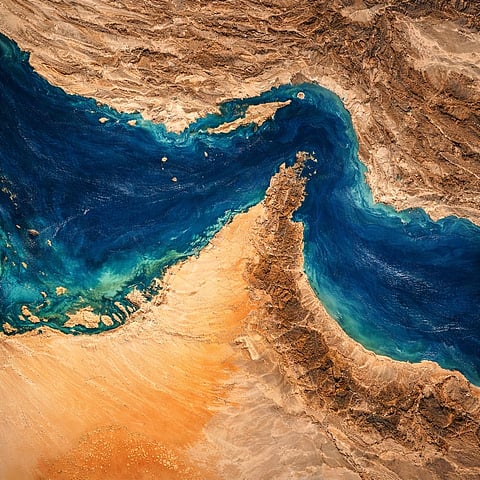
The US Central Command said that it turned back an Iranian-flagged cargo vessel that tried to slip past the US blockade after departing Bandar Abbas port, exiting the Strait of Hormuz and moving along Iran’s coastline.
In a post, the military said the guided-missile destroyer USS Spruance “successfully redirected” the vessel, which was heading back toward Iran.
Central Command added that 10 vessels have now been turned around and that none has broken through since the blockade began Monday.
The development underscores the escalating enforcement effort around the Strait of Hormuz, one of the world’s most important oil shipping routes.
It also highlights the uncertainty faced by commercial shippers as the US seeks to choke off Iranian maritime trade.
Iran has warned it would "retaliate with force" against the US naval blockade, threatening to halt all trade across key regional waterways as tensions rise despite a fragile ceasefire, and plans for second round of talks.
Ali Abdollahi, head of Iran’s joint military command, said the country would block shipping routes in the Arabian Gulf, the Sea of Oman and the Red Sea if Washington does not lift the blockade, according to state media.
Abdollahi's threat puts the US-Iran ceasefire at risk: he warned that a US failure to lift the blockade would constitute "a prelude" to violating the two-week ceasefire.
Abdollahi said unless Washington lifts the naval blockade, Iran's armed forces "will not allow any exports or imports to continue" in the Arabian Gulf.
The US military, through the Central Command, said overnight that American forces "have completely halted economic trade going into and out of Iran by sea".
'Violation' of ceasefire
|Abdollahi described the maritime restrictions as a violation of a two-week ceasefire and said Iran would respond militarily if the blockade continues.
The warning comes as the United States maintains a large-scale naval operation involving more than 10,000 personnel, a move analysts say could cost Iran more than $400 million per day in lost trade.
The blockade is part of a broader US economic pressure campaign aimed at forcing Iran to reopen the Strait of Hormuz and negotiate an end to the conflict.
US President Donald Trump, meanwhile, said the war is “close to over,” even as the standoff shows signs of escalating.
Trump indicated peace negotiations could resume this week. Iran confirmed the sides had kept talking via Pakistan after a first round of negotiations failed.
US Vice President JD Vance, who led the weekend talks, said the Islamic republic was being offered a "grand bargain" to end the six-week war and address the decades-old dispute over Tehran's nuclear programme.
Washington has sought to keep up the pressure on Tehran with a blockade of its ports.
Recent maritime tracking data in the Strait of Hormuz was less clear-cut, and Iran's Tasnim news agency reported Wednesday that shipping had continued from southern Iran.


