Fawad Khan and Mahira Khan in Humsafar.
5 Pakistani drama soundtracks where every note is both wound and balm: Humsafar to Mere Qatil Mere Dildar
When love wounds and heals: the Pakistani soundtracks that score heartbreak
Last updated:
4 MIN READ
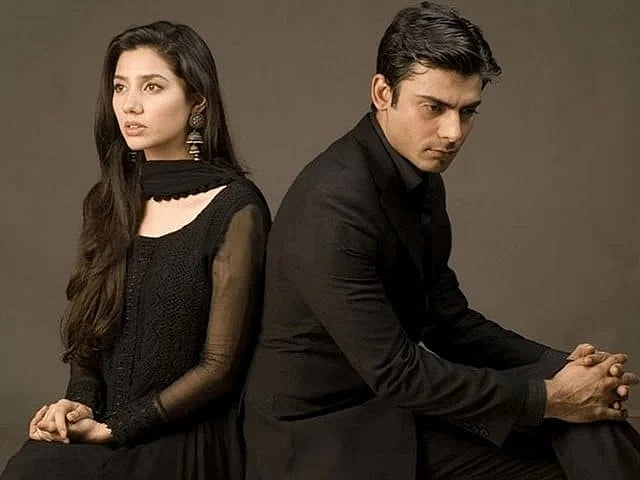
Fawad Khan and Mahira Khan in Humsafar, a raw and painfully honest story about love and separation.
Some OST's sting. Some heal.
Some do both, and at the same time.
Pakistani dramas have always known something Western television often forgets: Heartbreak deserves its own soundtrack. Long before the final twist or the closing scene, it's the title song that tells you exactly what kind of pain you're walking into, grief dressed as melody, longing set to strings. From Humsafar's devastation to Mere Qatil Mere Dildar's searing contradictions, these soundtracks carry its emotional truth in ways dialogue never could. Here are five OSTs that turned heartbreak into something almost sacred, songs that wound you on first listen, and somehow, on the hundredth, still manage to heal.
Humsafar by Quratulain Balouch
Bichadne wale mein sab kuch tha, bewafa na hi thi.
Fifteen years on, the title track still stops listeners cold. Sung by Quratulain Balouch with music by Sahir Ali Bagga, the melody carries an ache that mirrors the drama's own, the grief of two people who were meant for each other but couldn't stay together.
Starring Fawad Khan and Mahira Khan, Humsafar follows Asher and Khirad, pushed into marriage by family circumstance. The marriage of obligation slowly grows into real intimacy, only to be shattered by a cruelly engineered misunderstanding that convinces Asher of Khirad's betrayal. Years later, fate (and their daughter) pulls them back into each other's orbit.
What made Humsafar a cultural phenomenon, not just in Pakistan but across the border in India was the exhaustive restraint, amplified by quiet devastation, dignity in suffering, and a slow, reluctant path back to love.
Mere Qatil Mere Dildar by Sohail Haider and Sara Raza (Khan)
Chahe tum mujkho sawaaro
Chahe barbaad karo
Bhul jao tum, mujhe yaad karo…
Mere qatil, mere dil dildar.
With music composed by Sohail Haider and lyrics written by Sabir Zafar, the title itself says it all: My Murderer, My Beloved. The song's lyrics capture that same contradiction, love as something that can build you up in one breath and destroy you in the next, a devotion so consuming it blurs the line between adoration and ruin.
That's the drama's central wound: Loving someone who ends up breaking you, piece by piece. Starring Mehwish Hayat, Ahsan Khan, and Adnan Siddiqui, the story follows Maham (Hayat), who falls for and marries Umer (Khan) despite fierce parental disapproval. But disapproval turns out to be the least of her troubles, she discovers she's being stalked by her own brother-in-law, who manipulates events until Maham is pushed to her absolute limit, isolated and alone.
Even the love she believed would shield her turns out to be fragile. Cue, a slow-burning story of revenge and self-reclamation. Maham does reclaim her dignity, but at a cost so steep that "happy ending" feels like the wrong phrase for it. The show makes a bold, uncomfortable choice: not every resolution looks like the one we hoped for, but some come close enough to matter.
Mere Qatil Mere Dildar isn't an easy watch. It's raw, unsettling, and unflinchingly honest, performances that make you wince at every wound. This isn't television as escape. It's television as a mirror, forcing you to confront just how much damage love can do.
Mann Mayal — OST Tere Naal Kyun Laiyan Akhiyan" by Quratulain Balouch & Shuja Hyder
Written and composed by Shuja Hyder, the OST pairs his voice with Quratulain Balouch's in a duet that aches with yearning, the sound of a heart giving itself away against its own better judgment.
Starring Maya Ali and Hamza Ali Abbasi, Mann Mayal follows Manahil, a woman whose impulsive nature and search for love repeatedly pull her toward the wrong people. Her connection with Salahuddin (Abbasi) is genuine, but circumstance, misunderstanding, and the interference of those around them keep pulling the two apart, a slow unraveling of trust that mirrors the song's own restless, searching quality.
Where Humsafar found its power in restraint and Mere Qatil Mere Dildar in raw confrontation, Mann Mayal sits somewhere in between: A story about how longing itself can be its own kind of undoing, long before heartbreak even arrives. The OST became a fan favourite in its own right, replayed for its melody as much as for the drama it framed.
Ashk- OST by Sajjad Ali, composed by Waqar Ali
Na jeene de mujhe, na marne de mujhe, palkon pe tera ashk hai.
Ashk wears its heartbreak in its very title, and its slogan says the rest: "Love Perfected Through Pain." The title song is sung by Sajjad Ali and composed by Waqar Ali.
Starring Fawad Khan opposite Resham, Mehreen Raheel, and Neelam Munir, Ashk follows Rohail Hayat (Khan), who returns from abroad to marry his cousin Mehrunissa, a man who has never known the sweetness or pain of love, even as a friend back home has loved him for years. He instead ends up marrying Zaib-un-Nisa after a series of family and emotional upheavals, though it's later revealed she agreed to the marriage only to avenge an insult to her sister and mother, setting the stage for a slow, painful unraveling of trust.
The show was praised for Fawad Khan's brooding intensity and the emotional chemistry between him and Neelam Munir, along with cinematography that captured rural Punjab.
Kaafir
This is searing, from the get-go. Laced with trauma and tragedy, the song itself begins, with the shattered dreams and the line---the eyes that were filled with tears, are filled with blood.
Produced by Samina Humayun Saeed and Shahzad Nasib, and starring Humayun Saeed as Shahan Ali Khan and Ayesha Khan as Izzat, with Samina Peerzada as Mehwish, Kaafir revolves around Izzat, an outspoken, strong-willed woman, opposite Shahan, a powerful channel head who sees himself as untouchable. Things spiral when Shahan is humiliated by Izzat, and he swears cruel revenge against her, setting off one of the most exhaustively painful dramas, and her path to recovery and reclamation.
Network Links
GN StoreAbout Gulf NewsTerms & ConditionsReach by GNSitemapContact usPrivacy PolicyGN FocusHave your sayWork with usAdvertise with usGulf News epaperPrinting Services
Download our app
© Al Nisr Publishing LLC 2026. All rights reserved.