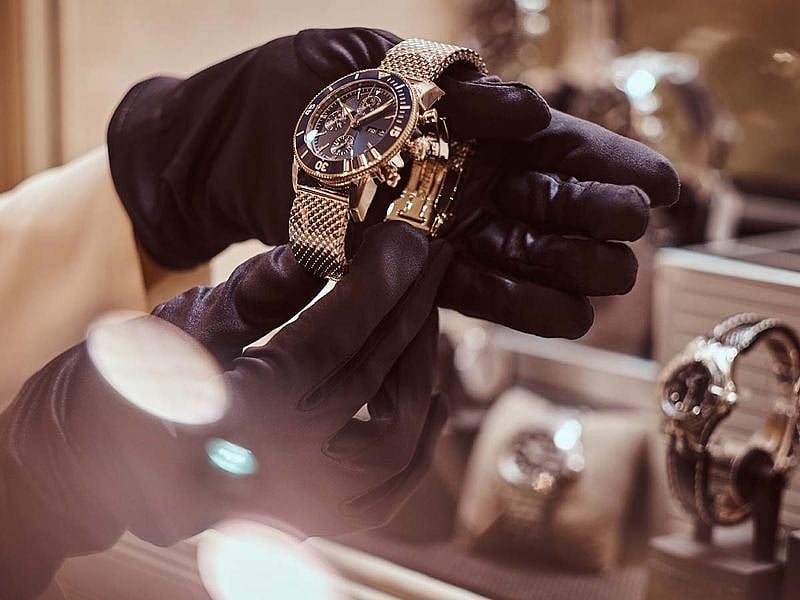
Dubai: Walk into a high-end watch auction in Dubai today and one thing becomes clear almost immediately. Buyers are calm. Phones stay down. Bidding starts late. No one looks surprised when prices climb into seven figures.
These rooms no longer feel speculative. They feel settled. Across the GCC, luxury watches have become deeply personal objects, chosen with care and pursued with conviction. What looks excessive from the outside often reflects years of study and a clear sense of what matters.
Singapore-based FutureGrail expects this behaviour to reshape the global market. The online auction house forecasts that watch auctions worldwide will surpass $1 billion in sales in 2026, with GCC buyers accounting for roughly 20% to 25% of top-value transactions. Over the next 12 months alone, more than $200 million worth of luxury watches is expected to pass into the hands of buyers based in the region.
Put simply, one out of every four important watches sold at auction is likely heading to the Gulf.
Collectors fall in love pre-investing
Collectors in the region rarely describe their purchases as investments at the outset. They talk about design, mechanical complexity, and the history behind a reference. The financial argument comes later, often as reassurance rather than motivation.
Ali Nael, CEO of FutureGrail, explains that sequence directly: “GCC buyers are flocking to luxury watches, firstly because of the desirability of beautiful timepieces and secondly, the performance of watches as an asset class.”
That order explains why buyers here tend to hold through market cycles rather than rush to sell. Emotional attachment creates patience, and patience often supports long-term value. The numbers back up that confidence. A recent Knight Frank Wealth Report states that “luxury watches have delivered average price growth of more than 125% over the past ten years.”
For a collector, that means a watch bought a decade ago for $100,000 could now be worth well over $200,000, without factoring in the personal satisfaction of ownership.
Buyers confident in spending big
That confidence is reinforced by how large and stable the market has become.
According to Statista, the global luxury watch market is expected to generate around $63.7 billion in revenue in 2025, with steady growth projected through the remainder of the decade. MarkNtel Advisors estimates that the UAE luxury watch market was valued at approximately $1.61 billion in 2024 and is forecast to reach around $2.21 billion by 2030, growing at a compound annual rate of about 5.2%.
For buyers, this signals expanding demand in a market where production remains tightly controlled. More buyers are competing for the same finite number of watches, particularly at the high end, which tends to support prices over time.
Who has real skin in the game?
Auction rooms across the UAE and GCC reflect a broad and evolving buyer base. There are collectors focused on building long-term legacy collections. There are family offices diversifying into portable assets. And there is a strong presence of Indian expatriates who approach watches with the same discipline traditionally applied to gold.
FutureGrail’s research highlights the influence of Indian expatriates on auction outcomes, noting their preference for watches as stores of value and hedges against volatility. These buyers tend to acquire selectively and hold patiently, which quietly tightens supply.
When watches do not circulate back into the market, scarcity increases.
What resale market is signalling
While auctions attract attention, the broader secondary market quietly reinforces buyer confidence.
Chrono24’s latest market analysis shows that Rolex, Patek Philippe, and Audemars Piguet continue to dominate transaction volumes globally, even during periods of price correction. Buyers may pause during uncertain moments, but they do not abandon the brands that matter most.
WatchCharts data adds an important layer. It shows that while prices for widely available models have softened from pandemic-era peaks, rare references and limited-production watches remain far more resilient.
In everyday terms, common watches move with the market. Rare watches largely ignore it.
Rarity makes prices move faster
The highest auction results almost always come down to scarcity. When a watch exists in single-digit quantities worldwide, buyers are not comparing it to last year’s prices. They are asking when it will appear again, or whether it ever will.
This is why Dubai auctions have recently seen ultra-rare vintage Rolex models sell for multi-million-dollar sums, including record-setting results of up to $4.7 million, driven by extreme rarity and provenance.
These pieces sit in a category of their own, insulated from broader market fluctuations and driven by rarity, condition, and provenance. For collectors, the risk is not overpaying. The risk is missing the moment.
Dubai’s growing role in auctions
Auction houses have adapted to this reality. Important lots are now frequently previewed in Dubai before appearing elsewhere, reflecting the depth of local demand and the decisiveness of regional buyers.
Nael ties this directly to regional wealth growth: “The growth of millionaires and billionaires within the region has skyrocketed, and whether buyers are purchasing for their own personal collections or as part of a professional investment strategy, demand for luxury watches from the region has never been higher.”
That demand has changed auction dynamics. Estimates are bolder. Bidding is faster. Sellers increasingly look to the Gulf as a place where value is understood quickly.
Next generation leans toward..
Not every trend in the GCC watch market is driven by returns. FutureGrail has identified a growing interest in pocket watches among “younger Emirati and Kuwaiti buyers”, a development that reflects individuality rather than investment logic.
Nael acknowledges the surprise: “Pocket watches have been underrated for decades, but we started to see youth in Geneva reigniting global demand. This spark has caught on amongst GCC millennials and Gen Z.”
For collectors who already own the obvious icons, distinction has become the next currency.
Why paying millions makes sense
From the outside, auction prices can feel extreme. From the inside, they feel intentional.
GCC buyers combine emotional attachment with long-term confidence, supported by data showing sustained value growth, expanding regional wealth, and enduring global demand. They are not chasing trends or short-term gains.
They are securing objects they believe will matter long after the auction room empties. When scarcity, conviction, and patience converge, the price becomes secondary. What matters to them is ownership — and knowing the opportunity may never come again.

Sign up for the Daily Briefing
Get the latest news and updates straight to your inbox
Network Links
GN StoreDownload our app
© Al Nisr Publishing LLC 2026. All rights reserved.