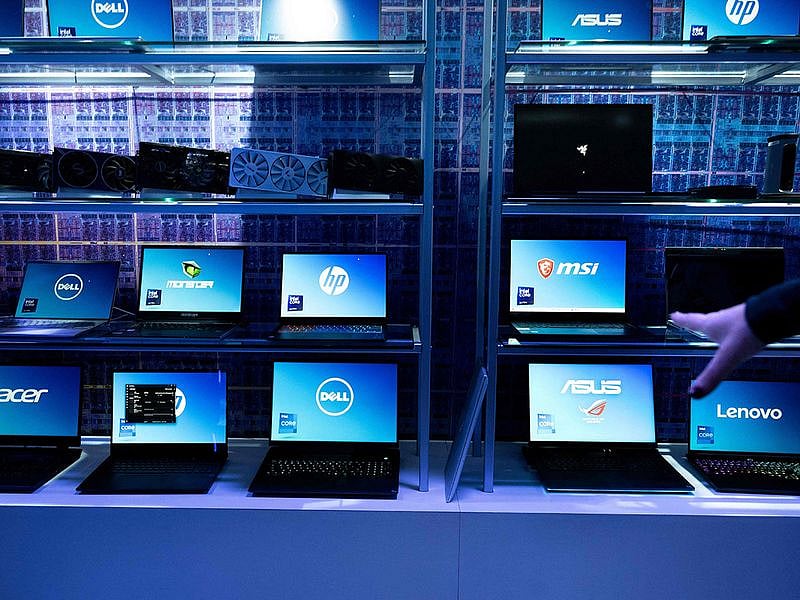
Dubai: The cost of buying a new laptop has surged in 2026 as a global memory shortage, driven largely by artificial intelligence demand, collides with shipping disruptions and rising manufacturing costs.
Get updated faster and for FREE: Download the Gulf News app now - simply click here.
Prices for laptops from major brands including Dell, HP and Lenovo have risen between 15% and 30% this year, according to industry analysts and market reports. The increases stem mainly from sharp inflation in DRAM and NAND memory prices, components critical to every personal computer.
DRAM prices jumped roughly 95% in the first quarter of 2026 alone, with analysts expecting another 63% increase through the second quarter, according to data cited in the report. Memory components now account for about 35% of a laptop’s manufacturing cost, up from historical levels of 16% to 20%.
The spike reflects a broader restructuring of the semiconductor industry as AI infrastructure operators absorb an increasing share of global memory production.
“This sharp increase removes vendors' ability to absorb costs, making low-margin entry-level laptops nonviable,” said Ranjit Atwal, senior director analyst at global research and advisory firm Gartner. “Ultimately, we expect the sub-$500 entry-level PC segment will disappear by 2028.”
AI demand squeeze
The rapid buildout of AI data centers has intensified competition for memory chips traditionally used in consumer electronics.
Large language model operators and AI hardware firms are consuming massive volumes of high-bandwidth memory, or HBM, and server-grade DDR5 chips to power AI workloads. Taiwan-based research firm TrendForce estimates AI-focused systems will consume 70% of global memory hardware production this year.
That has left limited manufacturing capacity for consumer devices such as laptops and graphics cards.
Major memory producers including Samsung Electronics, SK Hynix and Micron Technology have shifted production toward AI-oriented memory products with higher margins. Micron Technology has also exited the direct-to-consumer memory market, shutting down its Crucial consumer memory business, according to the report.
“Nearly all major brands — Dell, Lenovo, HP, Microsoft and Apple — have announced or already implemented price increases. And this is only the beginning,” Universal.cloud said in a March 2026 market analysis.
The shortage has spread beyond RAM into graphics processors and solid-state drives, which also depend heavily on memory components. Prices for GDDR6 and GDDR7 video memory have more than tripled in the past six months, while NAND wafer prices climbed as much as 60% month-over-month last November, according to Procurement Pro data cited in the report.
Supply chain strain
Geopolitical tensions and shipping disruptions have compounded the cost pressures facing electronics manufacturers.
Conflict in the Middle East has forced shipping companies to reroute cargo vessels, increasing voyage times, fuel costs and insurance premiums, according to the report. Maritime war-risk premiums climbed to between 0.7% and 1% of vessel hull values during peak periods.
The disruptions have also affected supplies of semiconductor-grade helium, a critical material used in chip manufacturing. Following strikes at industrial facilities in Qatar, lead times for some components reportedly stretched from six weeks to six months.
“Conflict in the Middle East is no longer causing isolated disruption — it is sending shockwaves through shipping routes, air freight, insurance markets and energy costs,” Dentons said in its March 2026 global supply chain report. “Creating delay, volatility and rising pressure across global trade.”
The supply constraints have prompted some manufacturers to prioritize premium products over lower-margin consumer models.
Analysts expect high-end gaming laptops and workstations equipped with 32GB or 64GB of memory to become substantially more expensive, while affordable laptops increasingly shift toward lower-memory configurations such as 4GB or 8GB systems.
Budget laptops hit
Industry analysts say the era of cheap consumer laptops may be ending, at least in the medium term. Manufacturers are increasingly focusing on premium devices capable of absorbing higher component costs, while entry-level machines become harder to produce profitably.
World-leading gaming laptop brand MSI exec calls 2026 the "most challenging year ever due to the RAM crisis,” according to a March 2026 analysis from TechRadar.
Some manufacturers are still temporarily shielded by older inventory purchased before the latest memory inflation cycle. Apple, for example, has maintained relatively stable pricing on certain models due to existing chip stockpiles, the report said.
Some warn those buffers may not last long as AI firms continue locking in future semiconductor supply through long-term contracts. SK Hynix executives expect the memory shortage environment to persist through 2030, according to the report, suggesting elevated PC prices could remain a long-term feature of the market.

Sign up for the Daily Briefing
Get the latest news and updates straight to your inbox
Network Links
GN StoreDownload our app
© Al Nisr Publishing LLC 2026. All rights reserved.