Completed condominium units in Quezon City. Colliers estimates Metro Manila still has roughly 79,000 to 81,000 unsold condominium units, including about 30,000 ready-for-occupancy (RFO) units, making competition among developers particularly intense.
Buying a Manila condo? Now may be the best time as developers roll out bargains
Bay Area struggles with soaring vacancies while prime CBDs stay resilient
Last updated:
5 MIN READ
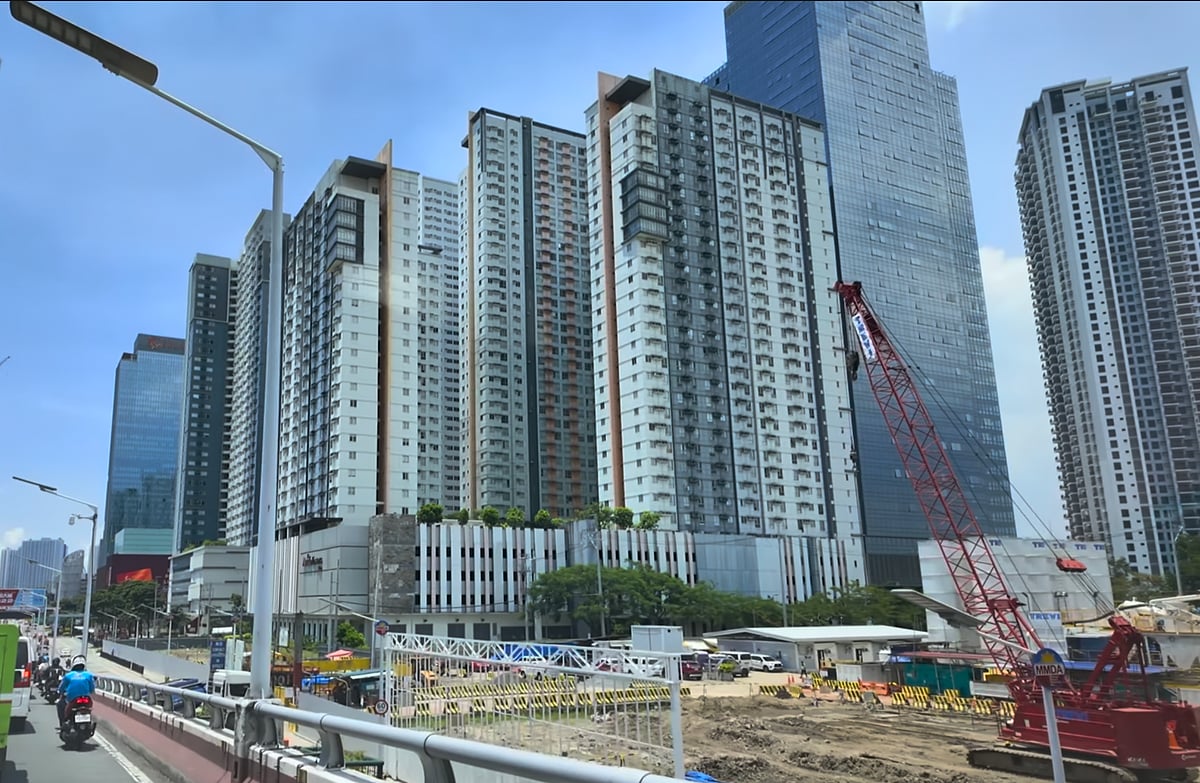
A view of the Vertis North development in Quezon City, one of the 16 cities comprising Metro Manila.
HG Virtual Tour
Makati, Manila: Patrick Balala, 53, a former overseas Filipino worker (OFW) and homeowner here, had been waiting for a renter for his one-bedroom condominium unit in Makati, Manila's financial centre.
No tenant came for more than two years.
Now, his property agent came up with a piece of good news: a long-term renter signed a contract for his 27-sqm (290.63 sqft) unit for ₱17,000/ month.
The new tenant had asked for furnishings, and got them. It's a sign of the times.
Buyers' market
The condominium market here remains firmly in buyers' territory in 2026, with elevated vacancy rates, tens of thousands of unsold units and aggressive promotional offers continuing to define the sector even as demand begins to recover.
Industry trackers point to current data showing the Manila condominium market remains a "buyer's market", with developers expected to continue offering promotional pricing and flexible financing.
Leechiu Property Consultants says that while the market is emerging from its deepest post-pandemic slump, a full recovery is likely to be gradual.
A recent report shows developers work through a large inventory of completed units while navigating higher financing costs and changing buyer preferences.
Key factors driving oversupply
The oversupply stems from a combination of factors, including:
the pandemic-era slowdown
the departure of many Philippine offshore gaming operators (POGOs)
elevated interest rates in recent years
surge in condominium completions that outpaced demand.
According to Colliers Philippines, Metro Manila is expected to post a record residential vacancy rate of 25.6% by the end of 2026, up from 24.7% in 2025, as nearly 13,000 condominium units are scheduled for completion this year.
30,000
Estimated number of unoccupied ready for ready-for-occupancy condominium units available in Manila as per Colliers.
While sales have begun to improve, supply continues to outstrip demand.
Despite the challenges, there are early indications that the market is stabilising.
Colliers reported that net condominium take-up in the first quarter of 2026 climbed to about 2,000 units, a tenfold increase from the same period a year earlier.
Unsold inventory has also begun to decline from its peak, suggesting developers' aggressive discounts, flexible payment schemes and rent-to-own offers are attracting buyers back into the market.
The consultancy estimates Metro Manila still has roughly 79,000 to 81,000 unsold condominium units, including about 30,000 ready-for-occupancy (RFO) units, making competition among developers particularly intense.
Bay Area: high vacancy rates
Not all parts of Metro Manila face the same conditions.
The Bay Area in Pasay City — covering developments near the Mall of Asia complex and Entertainment City — continues to experience the highest vacancy rates in the capital, with vacancies projected to approach 60% as additional towers are completed.
The area expanded rapidly during the POGO boom but has struggled to replace demand after many offshore gaming firms exited the Philippines.
By contrast, established business districts such as Makati Central Business District, Bonifacio Global City (BGC), Rockwell Center, and parts of Ortigas Center have remained comparatively resilient supported by stronger demand from professionals, expatriates and higher-income buyers.
Vacancy levels in these prime locations remain significantly lower than the metropolitan average.
QC, C5, Pasig, Mandaluyong, Alabang
Other active residential markets include Quezon City (QC), particularly the Cubao-New Manila and Katipunan areas.
Also on the active markets list is the C5 Corridor, where a substantial portion of new supply is scheduled for completion; Pasig, Mandaluyong, Alabang, and Las Piñas, where developers continue to launch projects targeting mid-income buyers.
Buyers hold the advantage
The current market has shifted negotiating power toward buyers.
Developers are offering discounts, extended payment terms, waived fees, furnished units and rent-to-own packages to reduce inventories.
Some ready-for-occupancy projects are also being marketed with free appliances and lower reservation fees as companies compete for a limited pool of qualified buyers.
Industry analysts note that affordability remains the biggest challenge.
While mortgage rates have eased slightly following monetary policy adjustments, financing costs remain relatively high, limiting demand among first-time homebuyers.
At the same time, rental yields have compressed in several oversupplied districts, prompting investors to become more selective.
Gradual recovery
Looking ahead, property consultants expect Metro Manila's condominium market to recover gradually rather than rebound sharply.
Developers have become more cautious about launching new projects and are increasingly focusing on locations with stronger end-user demand instead of speculative investment.
Future supply is also expected to moderate significantly compared with pre-pandemic levels, which should eventually help absorb excess inventory.
A night-time view of the Makati skyline: Luxury residential projects in Makati, Bonifacio Global City and Alabang are expected to remain relatively resilient, while mid-income developments near transport hubs and employment centers are likely to account for most future demand.
Fringe growth corridors such as the C5 corridor are also expected to benefit from continued infrastructure investments and improved connectivity.
For now, analysts say Metro Manila remains a buyer's market.
Homebuyers enjoy greater negotiating power than at any point in years, while developers face the challenge of balancing new construction with the need to clear existing inventory before the condominium sector can return to sustained growth.
Highlights: Metro Manila's Condo Market in 1Q 2026
Condo glut remains significant: Metro Manila has about 81,000 unsold condominium units across 621 active projects, equivalent to roughly 31 months' worth of supply at current sales rates.
Oversupply isn't uniform: While the metro-wide inventory remains high, the excess supply is concentrated in specific areas rather than spread evenly across all central business districts.
40% of inventory is ready for occupancy: About 32,400 units are completed but remain unsold, while 48,600 units (60%) are still under construction with turnover dates extending through 2032.
RFO units favor buyers: Developers holding completed units are more likely to offer discounts, flexible payment terms and other incentives to move inventory.
Demand shows early improvement: Sales reached 7,732 units in the first quarter of 2026, up 19% year-on-year, although analysts caution it is too early to call it a sustained market recovery.
End-users, not investors, are driving sales: Most buyers are purchasing homes to live in rather than as investments, as lower rental yields have dampened investor appetite.
Rental yields remain compressed: Average rental returns stand at around 3.8% in the primary market and 4.6% in the secondary market, making many new condominium investments less attractive.
Prime CBDs remain relatively tight: Contrary to popular perception, Bonifacio Global City (BGC) and Makati have among the lowest levels of unsold inventory in Metro Manila.
Quezon City carries the largest inventory: The city has approximately 19,300 unsold units, several times more than Makati or BGC, making it the biggest contributor to Metro Manila's condo overhang.
Affordability gap is emerging: Demand for lower-middle-priced condominiums (around ₱1.8 million to ₱2.3 million) surged in early 2026, but developers launched virtually no new projects in that segment due to rising land and construction costs.
Supply shifting upscale: Developers continue to prioritise higher-priced projects, leaving limited new inventory for first-time and budget-conscious homebuyers.
Growth is shifting outside Metro Manila: Residential markets in nearby infrastructure-driven growth corridors continue to outperform the capital, supported by new transport projects and attractive financing packages.
Market outlook
Analysts expect the recovery to be gradual rather than rapid, with sustained improvement dependent on lower borrowing costs, stronger buyer confidence, improving rental yields and continued economic stability.
For prospective buyers, property industry experts say 2026 remains one of the most favourable periods in years to negotiate prices and payment terms, particularly for ready-for-occupancy units.
Sign up for the Daily Briefing
Get the latest news and updates straight to your inbox
Network Links
GN StoreAbout Gulf NewsTerms & ConditionsReach by GNSitemapContact usPrivacy PolicyGN FocusHave your sayWork with usAdvertise with usGulf News epaperPrinting Services
Download our app
© Al Nisr Publishing LLC 2026. All rights reserved.