Why the world can’t bypass the Strait of Hormuz — even with pipelines and $200b plans
Iran blockade traps 10m bpd as Saudi, UAE bypass routes hit limits at $112 crude
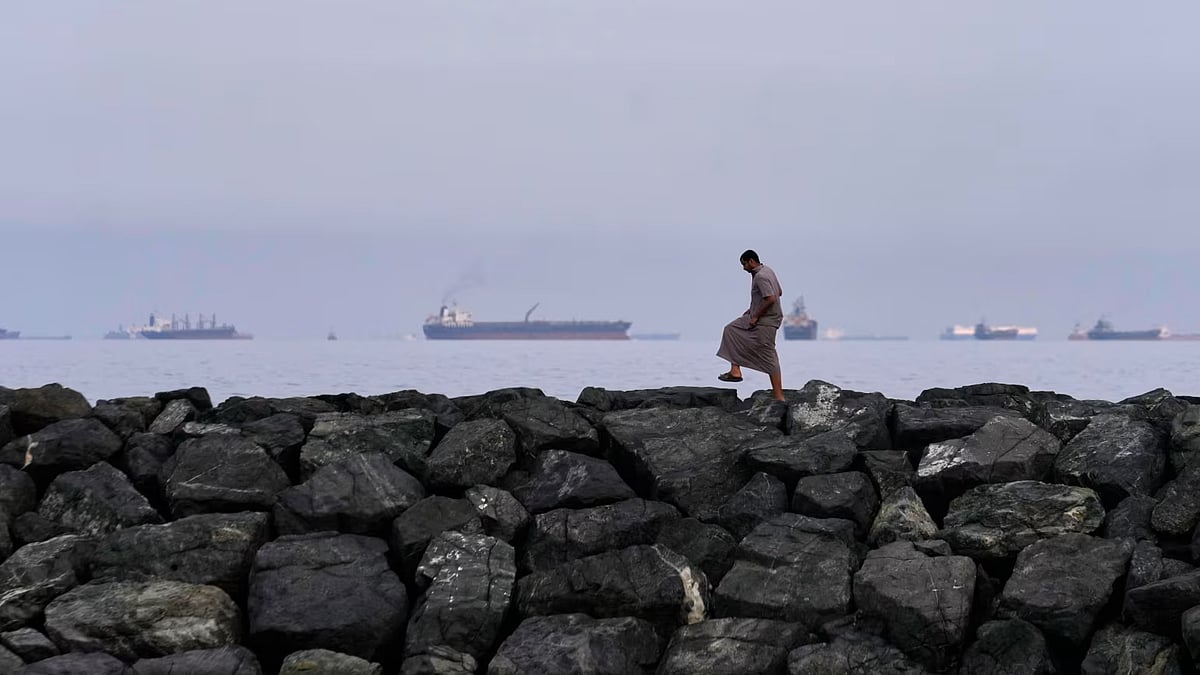
Dubai: As tensions escalate in the Gulf, a familiar question is back: if the Strait of Hormuz is so risky, why not just move oil another way? The scale makes that far harder than it sounds.
Roughly 20 million barrels of oil — about 20% of global supply — pass through the strait daily, making it the most critical energy chokepoint in the world. And as the U.S. Energy Information Administration puts it, “some chokepoints have no practical alternatives.”
The concentration is even sharper when you look at producers. Major exporters in the Gulf — including Saudi Arabia, Iraq, Kuwait and the UAE — rely heavily on the route for seaborne shipments, leaving limited flexibility when disruptions occur.
New route won’t remove risks
A single supertanker can carry about 2 million barrels of oil. Replacing just one of those shipments would require around 10,000 trucks, turning any land-based workaround into a massive logistical operation.
Scale that up to daily traffic through Hormuz, and the numbers quickly become unrealistic — hundreds of thousands of trucks, long-distance routes, and heavy fuel use just to move the same oil.
Air transport is even less viable. Large cargo aircraft can carry only a fraction of tanker volumes, making costs prohibitively high and operations impractical for bulk crude movement.
Stay updated: Get the latest faster by downloading the Gulf News app - it's completely free. Click here for Apple or here for Android. You can also find it on the Huawei AppGallery.
Pipelines can’t replace Hormuz
The UAE and Saudi Arabia have already invested in bypass routes to reduce reliance on the strait. These pipelines provide some flexibility, but they carry only a fraction of total volumes.
Even at full capacity, they fall well short of replacing the roughly 20 million barrels per day that move through Hormuz. “Available capacity on alternative export routes is limited,” the International Energy Agency notes, underscoring why most flows still depend on maritime routes.
Pipelines also face operational constraints. Crude oil requires continuous pumping across long distances, supported by multiple stations that can become points of failure if disrupted.
$200b idea keeps coming up
The idea of bypassing Hormuz with a new sea route is not new. A Saudi-backed study proposed a 950-kilometre canal linking the Gulf to the Arabian Sea, cutting through Saudi Arabia and Yemen and potentially halving shipping distances.
The project envisioned a 150-metre-wide, 25-metre-deep channel that could allow Gulf producers — including the UAE and Qatar — to export oil without passing through Hormuz.
The proposal also highlighted broader economic ambitions, including new coastal developments and industrial zones along the route. But it flagged major engineering hurdles, including elevations of up to 700 metres above sea level, which would complicate construction.
Canal still doesn’t solve problem
The constraints remain largely unchanged. Building a canal through mountainous terrain would require years of excavation and massive capital. Even if completed, the result would likely be another narrow transit corridor — one that could be blocked by a single stranded vessel or targeted during conflict.
Recent disruptions to global shipping routes have shown how vulnerable narrow passages can be, even without conflict, reinforcing concerns about creating new chokepoints rather than eliminating them.
History shows escorts not enough
The region has faced similar risks before. During the 1980s Tanker War, the US Navy escorted oil shipments through the Gulf. Despite that, vessels were hit by missiles and mines, including incidents involving US warships and escorted tankers.
Recent developments show how quickly disruption can return. As reported by Reuters, tensions in the region have “rattled markets and choked trade,” with some shipments delayed rather than rerouted.
Analysts note that modern threats — including drones and precision-guided weapons — have expanded the range of risks facing both ships and fixed infrastructure.
No real substitute — for now
Despite pipelines, rerouting efforts and repeated mega-project proposals, the core reality has not changed. Most of the world’s oil still depends on a narrow, 21-mile-wide passage.
That is why, even today, there is no fast or scalable workaround — only partial solutions to a structural constraint that continues to shape global energy markets.

Sign up for the Daily Briefing
Get the latest news and updates straight to your inbox
Network Links
GN StoreDownload our app
© Al Nisr Publishing LLC 2026. All rights reserved.