Japan nuclear crisis reignites safety debate in India and China
Accidents may force rethink on ambitious plans to tap atomic energy
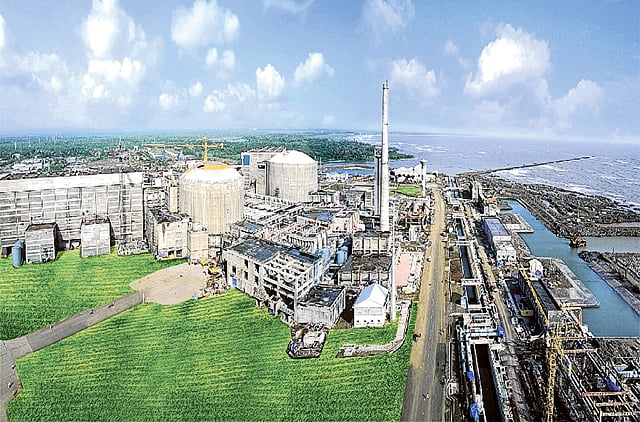
Mumbai: Japan's worst nuclear accident in at least 33 years has compelled China and India to review plans for atomic energy that were set to provide a boon for suppliers including Areva and General Electric.
The potential meltdown at a nuclear plant struck by Japan's record temblor may be "a big dampener" on India's programme, Shreyans Kumar Jain, chairman of the Nuclear Power Corp of India, said in Mumbai.
The accident may become a factor in the drafting of China's energy plans, Xie Zhenhua, vice-chairman of the National Development and Reform Commission, said in Beijing.
India plans to spend $175 billion (Dh642.58 billion) by 2030 on nuclear generation while China is adding 27 reactors in five years as the two most-populous nations seek cleaner energy sources to propel economic growth. Japan's accident, a month shy of the 25th anniversary of the Chernobyl disaster, may spark renewed debate about the safety of atomic energy, Nuclear Power's Jain said.
"The Japan accident has created a very, very tough situation for India, actual implementation of nuclear power projects will now certainly take a backseat," said Debasish Mishra, Mumbai-based senior director at Deloitte Touche Tohmatsu. "It will be very difficult to sell the idea of nuclear power to people for any political party after the Japan disaster."
No change in GE plans
General Electric, which is talks to sell reactors to India, won't change its plans for the country after the Japan accident, Chief Executive Officer Jeffrey Immelt said in New Delhi yesterday. Immelt expects the Fairfield, Connecticut-based company's Indian operations to grow 30 per cent this year.
State-owned Nuclear Power has sought details about the accident from the World Association of Nuclear Operators, the International Atomic Energy Agency and its own official stationed in Tokyo, Nuclear Power's Jain said.
"This event may be a big dampener for our programme," Jain, chairman of India's state-run monopoly producer, said in a telephone interview yesterday. "We and the Department of Atomic Energy will definitely revisit the entire thing, including our new reactor plans, after we receive more information from Japan."
Areva's reactors are expected to be the first overseas units to be built in India after it rejoined the international nuclear trade after almost four decades.
France and India signed an agreement on December 6 that will allow Paris-based Areva to build two nuclear reactors for $9.3 billion to help meet soaring energy demands in Asia's second- fastest growing major economy.
Patricia Marie, spokeswoman for Areva, declined to comment.
In China, the government won't change its plans to develop nuclear power, Zhang Lijun, vice-minister of environmental protection, said a day after the 8.9-magnitude earthquake hit off the eastern coast of Japan. Local media said the death toll from the quake and ensuing tsunami may exceed 10,000.
Energy mix
China has pledged to cut carbon emissions by switching to clean energy such as nuclear and wind power. It wants at least 15 per cent of its energy mix to come from non-fossil fuels by 2020 and is building more atomic plants to help meet that goal.
The nation's energy planners say they aim to have 40 reactors by 2015 and, by 2030, enough additional reactors to generate more power than all 104 reactors in the US, the leader in nuclear energy. China National Nuclear, the country's largest reactor builder, and rival China Guangdong Nuclear Power Group are looking to foreign companies such as Toshiba's Westinghouse Electric Co. and Areva for reactor technology and components, as well as help with construction.
The nation's nuclear power capacity may reach 40 gigawatts by 2015 and exceed 70 gigawatts by 2020, Han Wenke, head of energy research at the NDRC, said. China had 10.82 gigawatts of nuclear power capacity as of the end of 2010, the state-owned China Electricity Council said in February.
"The accident in Japan may trigger increased public concerns over building atomic plants," said Dave Dai, a Hong Kong-based analyst at Daiwa Securities Capital Markets.
Sign up for the Daily Briefing
Get the latest news and updates straight to your inbox
Network Links
GN StoreDownload our app
© Al Nisr Publishing LLC 2026. All rights reserved.