How this Pakistani entrepreneur went from farming to owning eight businesses in Dubai
The lure of the UAE was simple, he says, ' safety, stability and support for business'
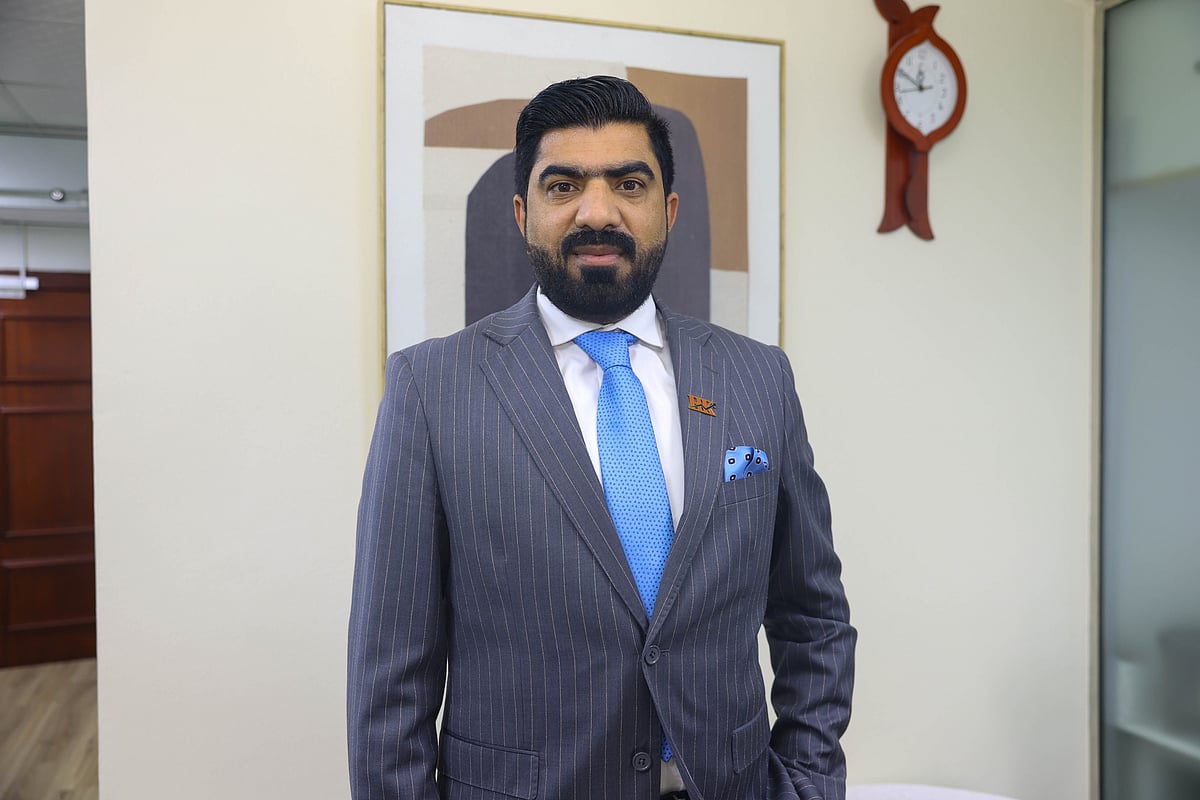
Dubai: When Muhammad Abu Bakar Imtiaz arrived in Dubai in 2014, he was 26 years old and starting from scratch. He had left behind a small farming life in Punjab, Pakistan, hoping that the UAE could offer him an opportunity.
“Like many people, I came here thinking about a better future,” he said. “Back home, there were very limited options. I believed that if I worked hard, I could build something of my own.”
His father was a government schoolteacher, teaching mathematics. Abu Bakar helped support the family by working on their small farm. The idea of running multiple companies was distant then. The goal was to find stability, earn consistently and, if possible, build something of his own.
“The UAE always attracted me because of safety, stability and support for business,” he said. “Here, the system works. Salaries are paid on time. Laws protect both employees and employers. That gives confidence to people who come with nothing.”
Starting from the lowest rung
Initially, Abu Bakar wanted to enter the transport business and drive trucks himself, but the cost of a UAE driving licence put that plan out of reach. Borrowing money was not an option, and asking his parents for help was something he chose not to do.
His first job was as a building cleaner. Three months later, a contact offered him work as an office assistant on Sheikh Zayed Road. The role involved opening the office and serving tea, but it placed him in a professional environment for the first time.
“It was not about the salary,” he said. “It gave me exposure and confidence.”
The office belonged to a real estate firm. When the company needed someone to collect property inventory in Sonapur and Al Muhaisnah, Abu Bakar stepped forward. The task was simple on paper, but it placed him directly inside the market.
Management noticed his discipline and willingness to learn. His role shifted from office assistant to real estate agent.
The first few months were difficult. Leads were inconsistent and communication was a challenge. Colleagues told him real estate was not suited to him and advised him to look for delivery work instead.
“I decided I would give it everything I had,” he said.
Then came a call from a client looking for multiple units in Muhaisnah. Abu Bakar arranged viewings the same evening. The deal closed the next day and became the largest transaction the company had completed at the time.
“That deal changed how I saw myself,” he said. “I knew I could survive in this industry.”
Choosing independence at the worst moment
After disagreements over commissions, Abu Bakar moved between firms before deciding to start his own venture. In October 2020, during the height of the Covid period, he launched Inspire Properties Management.
The timing brought intense pressure. Buildings required security, maintenance and utilities even when occupancy was low. Revenue dropped sharply while costs continued to rise. In 2021, the business recorded a loss of Dh400,000.
“That was the hardest period,” he said. “I had responsibilities, salaries and commitments.”
Instead of walking away, Abu Bakar sat down with the property owner and explained the situation. He asked for time, not concessions.
“I promised I would pay the full amount,” he said. “I only asked for eight months.”
Eight months later, the losses were fully cleared.
“That moment reset everything,” he said. “I was back to zero, and then growth started.”
Also Read
My Business: How a long search for a home in Dubai sparked the idea behind MiftaMy Business: How a Dubai-based founder is simplifying personalisation for everyday brandsMy Business: How a 21-year-old Emirati built a mobile learning app from his bedroomMy Business: How a father-son team turned a hospital-bound dream into Dubai’s leading VR academyBuilding scale across the UAE
Inspire Properties expanded across Dubai, Sharjah and Ajman, managing more than 2,000 residential units today. Clients followed, including Emaar, ENOC, RTA and Amlak.
In 2021, Abu Bakar launched Home Keys Real Estate, building a full brokerage operation with sales, marketing, HR and finance teams. What began with one person now employs more than 25 staff.
Growth created new requirements. Abu Bakar responded by building vertically. Technical services, facilities management, contracting, marketing, tax advisory, document clearing and tourism businesses followed. A sports events company grew from his interest in cricket and community engagement.
Today, Abu Bakar oversees eight companies operating across multiple sectors.
People over profits
Abu Bakar measures success through people, not balance sheets. His first employee is now his business partner. Several early team members hold equity across his companies.
“If someone stood with me when I had nothing, they deserve to grow with me,” he said.
Teams are built through a mix of local hires and overseas recruitment, with an emphasis on market experience and long-term loyalty.
“You need local knowledge,” he said. “You cannot build a business without understanding the ground reality.”
Why Dubai made the difference
Abu Bakar credits the UAE’s stability, safety and leadership vision for making his journey possible.
“This country gives opportunity with structure,” he said. “That combination allows people to recover from mistakes and grow.”
Now 37, Abu Bakar continues to expand carefully, aware that setbacks are part of the journey.
“Challenges never stop,” he said. “But if you stay focused and honest, this place gives you room to build.”
Sign up for the Daily Briefing
Get the latest news and updates straight to your inbox
Network Links
GN StoreDownload our app
© Al Nisr Publishing LLC 2026. All rights reserved.