UAE, Gulf urged to accelerate renewables, grids and storage as energy security risks rise
IRENA says renewables are becoming central to Gulf energy security as power demand rises
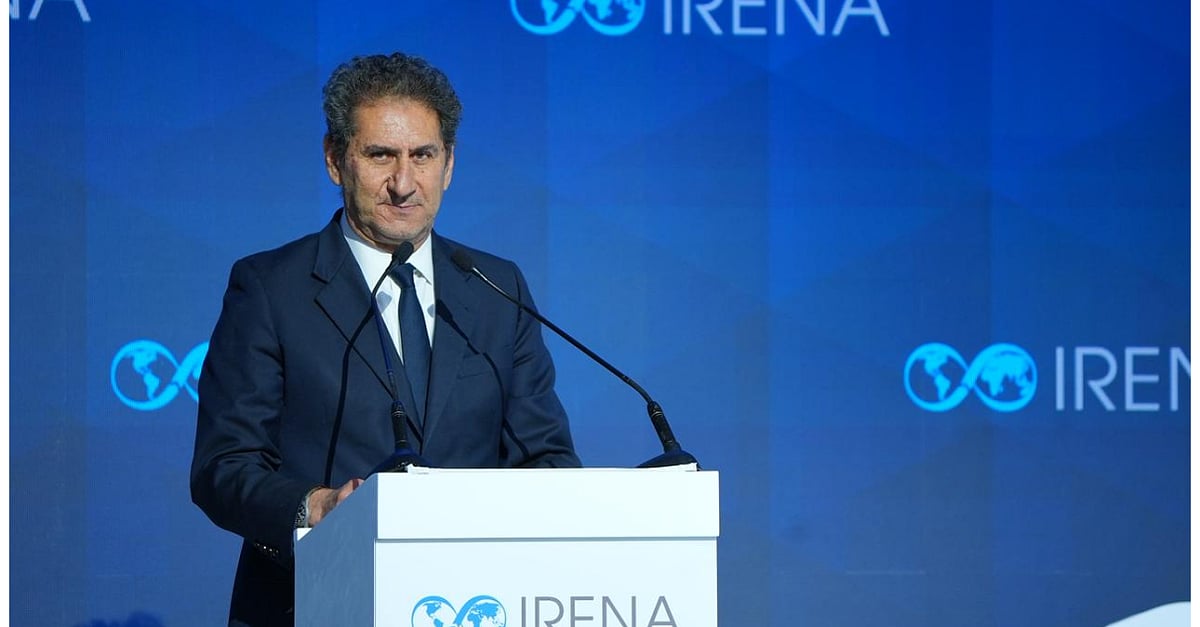
Dubai: The Gulf's abundant solar resources are giving the region an opportunity to strengthen energy security while building new industries around renewable power, the head of the International Renewable Energy Agency (IRENA) said in Dubai, as geopolitical tensions expose vulnerabilities in global energy supply chains.
Francesco La Camera, Director-General of IRENA, said, while speaking at the 50th edition of Middle East Energy, that events in the Middle East had demonstrated how quickly energy disruptions can affect economies, industries and households — making diversification, grids, storage and flexibility increasingly important.
"The energy system is only as secure as its exposure to disruption beyond its control," La Camera said.
He said the energy transition was no longer simply about adding renewable generation, but about creating "more resilient, flexible, and secure energy systems".
Renewables lead
According to IRENA's latest analysis cited by La Camera, the world added a record 692GW of renewable capacity in 2025, taking renewables to 49 per cent of global installed power capacity and 85 per cent of new additions.
Existing renewable capacity also avoided around $480 billion in fossil-fuel costs and 8.4 gigatonnes of carbon dioxide emissions during the year, he said.
"Renewable energy is no longer an alternative," La Camera said. "It has become the leading source of new power generation and the key driver of sustainable development worldwide."
He said the economics of renewables were increasingly strengthening their role in energy security as well as decarbonisation.
Gulf advantage
The Gulf is becoming an increasingly important part of that shift, with La Camera highlighting the region's exceptionally strong solar resources.
GCC countries receive average annual global horizontal irradiation of between 1,700 and 2,500 kilowatt hours per square metre, according to IRENA.
By the end of 2025, the Gulf had almost 24GW of installed renewable energy capacity, led primarily by Saudi Arabia and the UAE, he said. But La Camera said the opportunity extends beyond generating electricity.
"The Gulf region has the potential to become a major centre for renewable-based industrial development, system integration, and energy-intensive industries," he said.
That could create opportunities in grid infrastructure, storage, system integration, operations, recycling and workforce development.
Grids crucial
For La Camera, however, adding solar capacity will not be enough.
Every new renewable project needs infrastructure capable of connecting it to consumers and balancing supply and demand. "In the medium term, the focus must shift to removing structural bottlenecks by accelerating investment in grids, storage, and system flexibility," he said.
He also stressed that policies and regulation need to keep pace with the changing electricity market.
"Every new renewable deployment also needs a plan for connection, balancing, and system security to ensure reliable electricity for industry, cooling, water services, and transport," he said.
La Camera said global grid investment would need to average more than $1.2 trillion a year between now and 2035, more than double current investment levels.
Electrification push
IRENA is also calling for faster electrification across transport, buildings and industry. La Camera said electrification must reach 35 per cent of total final energy consumption by 2035 and more than 50 per cent by 2050 to remain on a 1.5°C pathway.
But he stressed that electrification cannot happen in isolation.
"Renewables, grid, storage, flexibility, and sustainable fuels must scale up at the same time," he said.
For the Gulf, the shift could also create an opportunity to move beyond its traditional role as a major energy supplier and become a hub for technologies, industries and services supporting the new energy economy.
EU partnership
Also speaking at the event, EU Ambassador to the UAE Lucie Berger, said the energy-security challenge facing Europe and the Middle East had become increasingly interconnected.
"Geopolitics and energy security are interconnected. They always have been, but they are even more so today," Berger said.
She pointed to the vulnerability created by global energy supply chains, contested waterways and a limited number of major suppliers.
"The Strait of Hormuz represents the same vulnerability," she said, comparing its strategic significance with the disruption caused to European energy security by Russia's war on Ukraine.
Berger said renewable energy could provide greater resilience, but only if supported by modern and interconnected grids and compatible regulatory frameworks.
"Renewable energy is the answer, as the renewable energy systems are fundamentally more resilient to the kinds of shocks that destabilise traditional energy infrastructure," she said.
Gulf-Europe
Berger said the Middle East and Europe had complementary strengths that could support greater investment and cooperation.
She put the Middle East's renewable energy potential at 2,300GW, highlighting abundant solar resources and renewable energy costs that she said are 30 to 40 per cent lower than in Europe.
Europe, meanwhile, brings experience in renewable deployment, battery and grid technologies, financing frameworks and market development.
"This is not technology transfer from Europe to the Middle East," Berger said. "This is not the EU imposing solutions on the region. This is mutual learning and co-investment, a partnership built on shared interest and mutual benefit."
She called for deeper regulatory cooperation, greater grid coordination and more private-sector investment.
Sign up for the Daily Briefing
Get the latest news and updates straight to your inbox
Network Links
GN StoreDownload our app
© Al Nisr Publishing LLC 2026. All rights reserved.