Bailout ‘won’t save Greece’
Investors warn terms of aid may be violated as recession continues
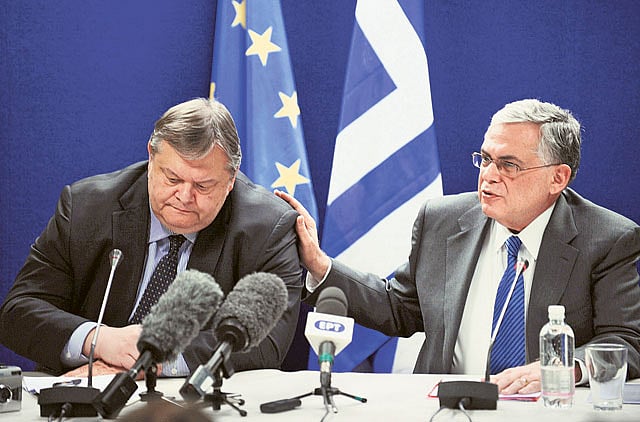
Brussels: Europe is still struggling to avoid the threat of default as investors warned Greece will soon risk violating the terms of its second bailout in three years.
Seven months of negotiations ended in the pre-dawn hours in Brussels with Greece winning €130 billion (Dh633 billion) in aid it needs to avoid a March bankruptcy.
Any respite may prove temporary after it signed up to a programme of austerity and economic reform aimed at slashing debt to 120.5 per cent of gross domestic product by 2020 from about 160 per cent last year.
Even with investors and central bankers chipping in to relieve the debt burden, economists from Citigroup Inc. to Commerzbank AG concluded Greece may again fail to deliver amid a fifth year of recession, looming elections and social unrest. The upshot could be the removal of aid and renewed debate over the merits of fresh assistance before year-end as policy makers shift towards doing more to inoculate the rest of Europe from contagion.
"The bailout bandage is on, but it won't take much to unravel," said David Miller, partner at Cheviot Asset Management in London. "The Eurozone has done its best to ensure that Greece will deliver on promises, but there is considerable scope for backtracking on deficit reduction."
Financial markets signalled doubt the accord will fix Greece's travails permanently or spell an end to the two-year debt crisis. The Euro surrendered initial gains against the dollar and European stocks fell from a six-month high.
By supporting Greece, Europe's high command chose the financial and political cost of awarding fresh money over the risk of a bankruptcy that could splinter the 13-year-old Eurozone. At least €386 billion has now been committed to save Greece, Ireland and Portugal, with investors predicting the government in Lisbon at least will need more support.
To tackle future fiscal emergencies and limit contagion, officials held out the prospect of boosting their firewall to €750 billion from a planned limit of €500 billion when a permanent aid fund is paired with the temporary facility starting in July. They also cajoled investors into providing more debt relief in an exchange meant to tide Greece past a March bond repayment.
In return for the new cash, Greece signed up to cuts in pensions, the minimum wage, health-care and defence spending, as well as layoffs of state employees and asset sales, all done with an unemployment rate above 20 per cent.
Inside
Greece agrees with creditors on biggest sovereign restructuring
Legislation to be introduced for ‘collective action clauses'
Bailout helps stabilise sentiment
Euro likely to be held up, analysts feel
Athens unlikely to manage debt cut
Country's banks may need as much as €50b of extra capital
Sign up for the Daily Briefing
Get the latest news and updates straight to your inbox
Network Links
GN StoreDownload our app
© Al Nisr Publishing LLC 2026. All rights reserved.