Emirates Group releases 6th annual environmental impact report
Challenges such as regional volatility and airspace closure impacted the airlines’ fuel efficiency and emissions figures
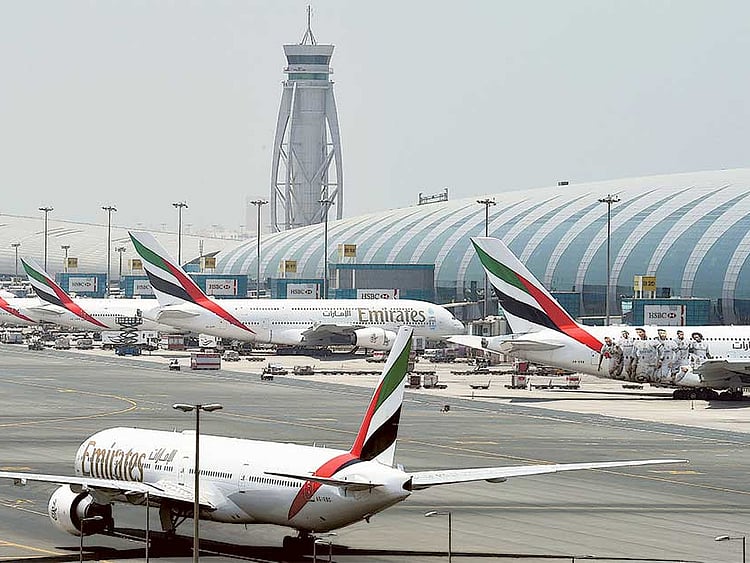
Dubai: Data released by the Emirates Group in its sixth annual environmental report showed total diesel and petrol consumption increased by a combined 42.6 per cent, while jet fuel consumption increased by 12.8 per cent.
Regional volatility and airspace closure in several regions due to security concerns are believed to have had an adverse impact on fuel consumption as a result of flights requiring longer flight paths to avoid these areas.
The Emirates Group, which comprises Emirates Airline and dnata, published its PricewaterhouseCoopers (PwC) audited report on Monday, outlining the group’s environmental performance for the financial year 2015-16.
The airline added 29 new aircraft to its fleet last year, contributing to an 12.8 per cent increase in C02 emissions.
Despite carbon monoxide (C0) and nitrogen oxide (N0x) levels increasing year-on-year (YOY) by 14.6 per cent and 12.2 per cent respectively, the airline was still a combined 67 per cent below regulatory limits for emissions.
Emirates Airlines maintained a 100 per cent rate of aircraft compliant with applicable environmental standards.
“As we head towards 2017, agility will be the defining characteristic of our approach, both to react quickly to challenges and to make the most of opportunities,” Shaikh Ahmed Bin Saeed Al Maktoum, Chairman of Dubai Civil Aviation Authority and Chairman of Emirates Group, said in a statement.
“Working together with our partners across the industry, we will continue to invest in technologies and processes that enable us to deliver our services effectively, efficiently, and with the minimum environmental impact”, he said.
In terms of innovation, one of the most significant developments of the year was the installation of a one megawatt array of solar panels at the Emirates Engine Maintenance Center, in partnership with Dubai Electricity and Water Authority (DEWA), saving around 800 tonnes in carbon dioxide emissions.
The report mentions challenges the airline faced in 2015-2016: a decline in overall load factor, in other words how efficiently a transport provider fills seats and generates fare revenue, of 1.8 percentage points to 65.5 per cent, partly reflecting global market dynamics.
As a result of these challenges, the airline’s passenger fuel efficiency reached 4.20 litres per 100 passenger kilometres, compared with 3.99 for the year before, while overall fuel efficiency reached 0.3269 litres per tonne kilometre, compared with 0.3057 the previous year.
Emirates Airline promised to “[redouble] our efforts on fuel efficiency in the coming year, looking at all aspects from pilot operating techniques … to maintenance and weight reduction opportunities, as well as continuing our cooperation with authorities and air traffic management providers around the world to ensure that we can fly the most fuel-efficient flight paths”.
Sign up for the Daily Briefing
Get the latest news and updates straight to your inbox
Network Links
GN StoreDownload our app
© Al Nisr Publishing LLC 2026. All rights reserved.