Dubai International has served 1.5 billion passengers since opening in 1960
Passenger traffic is expected to reach about 70 million in 2026 before rising further
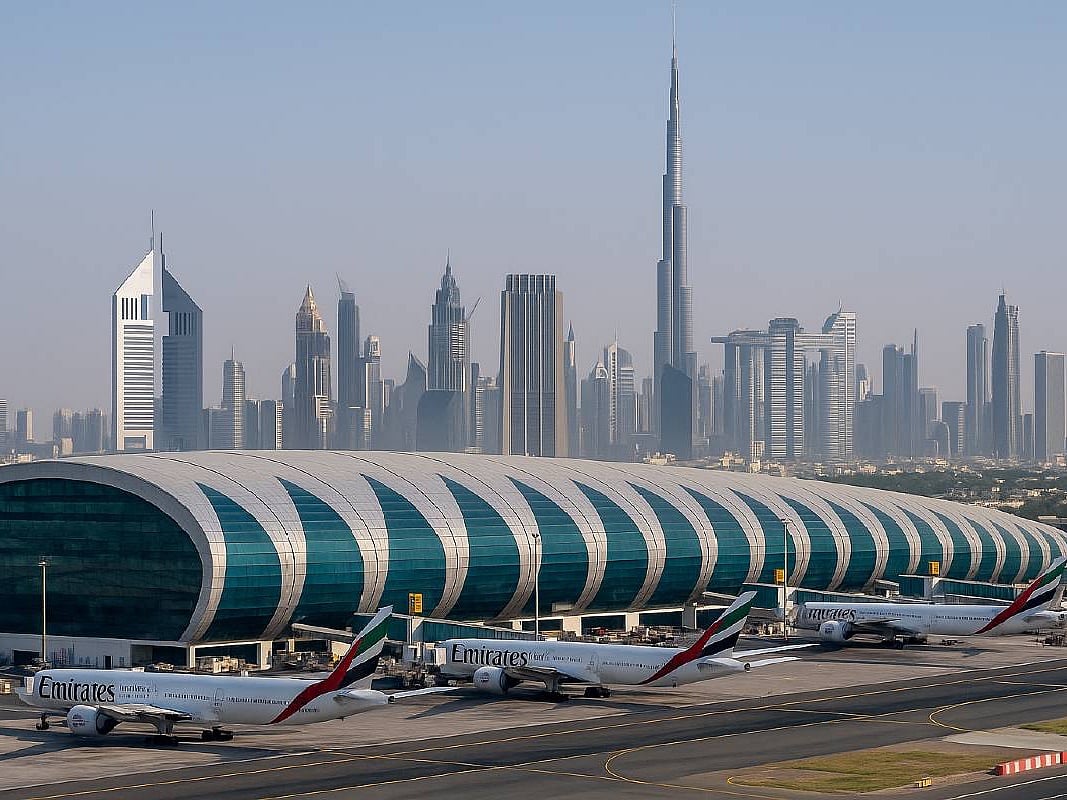
Dubai: Dubai International Airport has handled 1.5 billion passengers since opening in 1960, the Government of Dubai Media Office said on Friday, marking another milestone in the growth of one of the world’s busiest international aviation hubs.
The figure was highlighted during the second session of the Government of Dubai Media Office’s International Media Briefings, which hosted Paul Griffiths, chief executive of Dubai Airports, for an in-depth discussion on the resilience of Dubai’s aviation sector and the long-term development plans shaping its future.
Get updated faster and for FREE: Download the Gulf News app now - simply click here.
The session was moderated by Hind Fikri, Director of Strategic Media Affairs at the Government of Dubai Media Office.
Griffiths said recent growth at DXB underscored the strength of demand for Dubai both as a destination and as a major global transit hub.
DXB received 31.5 million passengers in the first half of 2026, while monthly traffic rose from 5 million passengers in June to 6.3 million in July, an increase of 26 per cent in a single month.
“The signs of our ability to grow during that period were really quite remarkable,” Griffiths said, describing the pace of the rebound as strong and suggesting traffic could eventually move beyond previous levels.
Airline capacity has recovered to about 84 per cent of previous levels, while passenger traffic has returned to about 78 per cent, he said. Some airlines are still rebuilding their operations, with most expected to return by the start of the coming winter season, providing further momentum.
Dubai International expects to handle about 70 million passengers in 2026, Griffiths said, while reiterating projections that annual traffic could reach 100 million passengers by the end of 2027 as capacity and demand continue to recover.
Dubai’s aviation model
Griffiths said Dubai’s aviation sector had benefited from the close relationship between the emirate’s economic growth and its international connectivity. Aviation supports tourism, trade and investment, while Dubai’s continued expansion generates additional demand for air travel.
The balance between transfer passengers and those beginning or ending their journeys in Dubai has remained broadly stable at about 50 per cent each, despite recent regional conditions, he said, highlighting the strength of both transit and origin-and-destination traffic.
Al Maktoum International plans advance
Development of Al Maktoum International Airport is moving ahead at full pace, Griffiths said, with the first major phase expected to become operational at the beginning of the next decade.
That phase will have capacity for 150 million passengers a year, compared with DXB’s maximum capacity of about 115 million. Once fully developed, Al Maktoum International is planned to handle as many as 260 million passengers annually.
The next major infrastructure milestone will be the opening of the airport’s second runway by the end of 2027.
The airport will eventually be developed around eight main operating nodes, each with capacity for about 32 million passengers, allowing infrastructure to be added gradually as demand increases.
At full development, the airport will have five runways, four in regular use and a fifth providing reserve capacity. Griffiths said two runways would be sufficient to support the first phase of 150 million passengers, with more brought into service as capacity expands.
But he said the ambition went beyond size.
The goal, Griffiths said, was not simply for Al Maktoum International to be known as the world’s largest airport, but to be regarded as the best.
Gradual move from DXB
The transition from Dubai International to Al Maktoum International will take place gradually as new capacity becomes available.
Flydubai could be among the first airlines to expand operations at Al Maktoum International, with the possibility of moving five or six aircraft from DXB beginning next year. That would create additional room for both flydubai and Emirates to expand as Dubai International moves closer to its capacity limits.
The broader transfer will take place in phases over a period of months. Once the initial 150 million-passenger capacity is available at Al Maktoum International, the current plan is for operations ultimately to shift from DXB to the new airport.
A new passenger experience
Griffiths said Al Maktoum International offered an opportunity to rethink the passenger journey from the ground up, using technology to reduce traditional processing requirements and eliminate bottlenecks.
The aim is to transform conventional check-in, allowing passengers to drop off luggage and move through the airport using facial recognition and other technologies, creating what he described as a “queue-free” experience closer to arriving in a hotel lobby.
Technology shapes the future
Artificial intelligence and emerging technologies will play an increasingly important role in shaping the passenger experience, Griffiths said, adding that airports must be designed with enough flexibility to adapt to future innovations.
Advances in aircraft technology could also expand Dubai’s global network, he said, noting that Dubai Airports was already in discussions with airlines about launching new direct routes to cities in Europe and Africa.
Network Links
GN StoreDownload our app
© Al Nisr Publishing LLC 2026. All rights reserved.