Trump’s ‘economic D-Day’ for Iran: A path to peace or the war’s next phase?
Washington shifts from bombs to financial pressure. Will that bring conflict to an end?
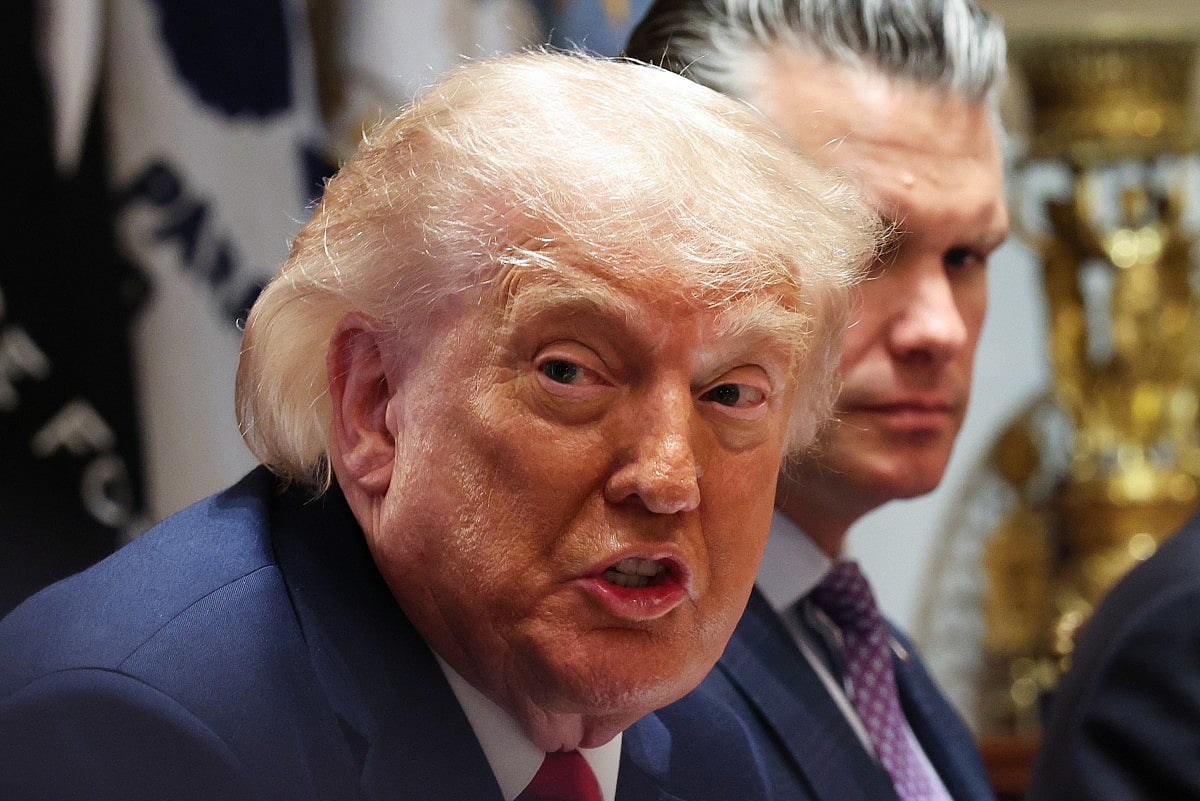
Nearly six months into the Iran war, US President Donald Trump is reaching for a different weapon.
After months of air strikes, threats of massive attacks and faltering attempts at diplomacy, Trump has promised an “economic D-Day” against Tehran — an unprecedented campaign of financial pressure intended to cripple Iran’s economy, choke off its remaining sources of revenue and force its leaders to accept US demands.
On the surface, the language suggests escalation. But behind the threats lies a potentially more significant development: Washington appears, at least for now, reluctant to return to large-scale military action.
That raises a bigger question. Is Trump’s economic offensive the beginning of an attempt to end the war — or simply the start of another phase in a conflict that neither side has been able to resolve?
From military threats to economic warfare
Trump announced the new campaign this week, promising “Economic Warfare and Isolation on an unprecedented scale” against Iran.
“These maniacs are on the ropes, and these HISTORIC MEASURES will cripple them and their ability to project terror worldwide,” Trump wrote on Truth Social, according to The New York Times.
The administration says the objective remains to force Tehran to end its nuclear programme and fully reopen the Strait of Hormuz, the crucial waterway through which about a fifth of the world’s oil normally passes.
But Treasury Secretary Scott Bessent provided a revealing indication of what the change in tactics could mean.
“If we are doing the maximum economic pressure, then that means that likely there will not be a large-scale kinetic restart,” Bessent told CNBC on Thursday, according to the Times.
Then came the important qualification: “But I would emphasise, that is for now.”
The distinction matters.
Trump has repeatedly threatened massive new attacks during the conflict, only to step back and give negotiations more time. Earlier this month, he said a plan had been prepared for what he called “the biggest attack since World War II”, but held it back after appeals from Gulf leaders and to allow diplomacy to continue.
The latest shift towards financial warfare could therefore indicate that Washington is searching for leverage that does not require another major bombing campaign.
Why change course now?
The military campaign has inflicted extensive damage on Iran, but it has not produced the political outcome Washington sought.
Iran has survived months of US and Israeli attacks and has continued to impose costs of its own. The Strait of Hormuz has not fully returned to normal commercial traffic, while attacks and threats against shipping have helped keep energy prices elevated.
There are pressures on Washington as well.
The Associated Press reports that stocks of some key US weapons have diminished as the conflict approaches the six-month mark. Trump acknowledged earlier this month that while the United States had large weapons inventories, supplies of some munitions were “a little bit tighter”.
The political clock is also ticking. The November midterm elections are approaching, and Trump faces an unpopular war alongside the domestic consequences of higher energy prices.
That combination makes another sustained military escalation increasingly costly.
The pivot towards sanctions therefore offers Trump another route: intensify pressure on Tehran without immediately committing the United States to another round of large-scale strikes.
What is Trump’s ‘economic D-Day’?
The administration has so far provided few details.
Bessent, however, has indicated that the next phase could involve much tougher use of secondary sanctions — penalties against companies and countries that continue doing business with Iran.
“If you insist on doing business with them, then the US Treasury and US government will put its full might and force against you,” Bessent told CNBC, according to AP. “It’s time for our allies and the rest of the world to make a decision.”
That represents an important shift in where the pressure would fall.
Iran’s energy, banking and transport industries are already covered extensively by American sanctions. Squeezing Tehran much harder therefore means targeting the international connections that still allow it to sell oil, conduct trade and obtain foreign currency.
In other words, Washington may increasingly have to punish other countries to punish Iran.
The China problem
And that brings Trump to perhaps the biggest obstacle in his strategy: China.
China buys most of Iran’s oil and represents Tehran’s most important remaining financial lifeline, according to The New York Times.
“No substitute can absorb Iranian crude at China’s scale,” Miad Maleki, a senior fellow at the Foundation for Defense of Democracies who previously worked on sanctions policy at the US Treasury, told the Times.
Edward Fishman of the Council on Foreign Relations made the same point.
“Iran has been under comprehensive sanctions for years,” he told the newspaper. “The only major thing left to do is aggressively target Iran’s trading partners — above all, China.”
But doing so carries substantial risks.
Trump has been trying to improve relations with Chinese President Xi Jinping, who is expected in Washington for talks in September. Aggressively penalising Chinese companies or financial institutions over Iranian oil could turn pressure on Tehran into a much wider economic confrontation with Beijing.
That leaves Washington facing an awkward calculation: the more comprehensive its economic blockade of Iran becomes, the greater the potential cost to America’s relations with other major economies.
Can sanctions succeed where bombs have not?
Trump’s argument is that Iran is now more vulnerable than it was during previous rounds of US sanctions.
Supporters of the strategy say the cumulative effects of military attacks, the naval blockade and economic restrictions have created conditions unlike those during Trump’s first-term “maximum pressure” campaign.
Richard Goldberg, who worked on Iran policy during Trump’s first administration and is now at the Foundation for Defense of Democracies, told AP that the United States is entering “uncharted waters”.
But there is another way to read Iran’s response.
Nearly five decades of American sanctions have failed to force the Islamic Republic to surrender its core strategic positions. Critics of Trump’s approach argue that greater pressure could harden Tehran’s resistance rather than produce capitulation.
Ali Vaez, Iran director at the International Crisis Group, told AP that the administration may be overlooking a fundamental calculation inside Tehran.
“I think (Trump’s) blind spot is the fact that the only thing that the Iranian regime views as more dangerous than suffering from US sanctions is surrendering to US terms,” he said.
That problem is compounded by mistrust.
Iranian leaders may believe that even if they concede under economic pressure, Washington could simply demand more.
“Pressure without an open door is an exercise in futility,” Vaez said.
Could economic pressure actually increase the risk of war?
There is another paradox.
The clearer Washington makes it that it wants to avoid renewed large-scale fighting, the more Tehran could conclude that it has room to increase military pressure.
“They read him now as not wanting to escalate militarily,” Dennis Ross, a veteran former US Middle East negotiator, told The New York Times. “That creates an incentive for them to show that they may escalate militarily.”
Iran has already demonstrated that it retains the ability to threaten shipping and disrupt the Strait of Hormuz despite months of attacks on its military infrastructure.
That gives Tehran leverage over an issue with direct consequences for the American economy: oil prices.
Trump therefore faces a difficult balancing act. He needs economic pressure severe enough to convince Tehran that prolonging the confrontation is unsustainable, while avoiding measures that trigger another Iranian military response — or damage US relations with countries whose cooperation is needed to make the sanctions work.
So, is the war nearing an end?
Trump’s “economic D-Day” does suggest that the centre of gravity in the US campaign may be shifting — at least temporarily — from military force towards economic coercion.
Bessent’s comments are particularly significant because they suggest Washington does not currently envisage an immediate return to large-scale bombing.
But economic warfare is not the same as a peace process.
For the new strategy to become an exit from the conflict, sanctions would eventually have to produce negotiations capable of resolving the two central disputes: Iran’s nuclear programme and the future of the Strait of Hormuz.
There have already been repeated attempts to reach such an agreement. Earlier this month, Trump called another round of negotiations Iran’s “last chance”, with discussions expected to focus first on reopening the strait and then on the nuclear issue.
So far, a comprehensive settlement has remained elusive.
That leaves both sides in an uncomfortable position.
Iran is under extraordinary military and economic pressure but has shown that it can continue imposing costs on Washington. The United States possesses overwhelming military and financial power but has yet to translate either into an agreement on its terms.
Trump’s “economic D-Day” may therefore be less a declaration that the war is ending than an acknowledgment of the limits encountered so far.
The bombs may be quieter for now. The confrontation is not.
With inputs from AP

Sign up for the Daily Briefing
Get the latest news and updates straight to your inbox
Network Links
GN StoreDownload our app
© Al Nisr Publishing LLC 2026. All rights reserved.