Hormuz, Lebanon test Trump’s fast-tracked Iran deal
Last-minute scramble to sign MOU emerges as renewed tensions threaten implementation
Dubai: Just days after President Donald Trump fast-tracked a memorandum of understanding (MOU) with Iran, the accord is facing its first major challenge, with disputes over the Strait of Hormuz, renewed fighting in Lebanon and Trump’s threat to impose US tolls on shipping raising fresh questions about its durability.
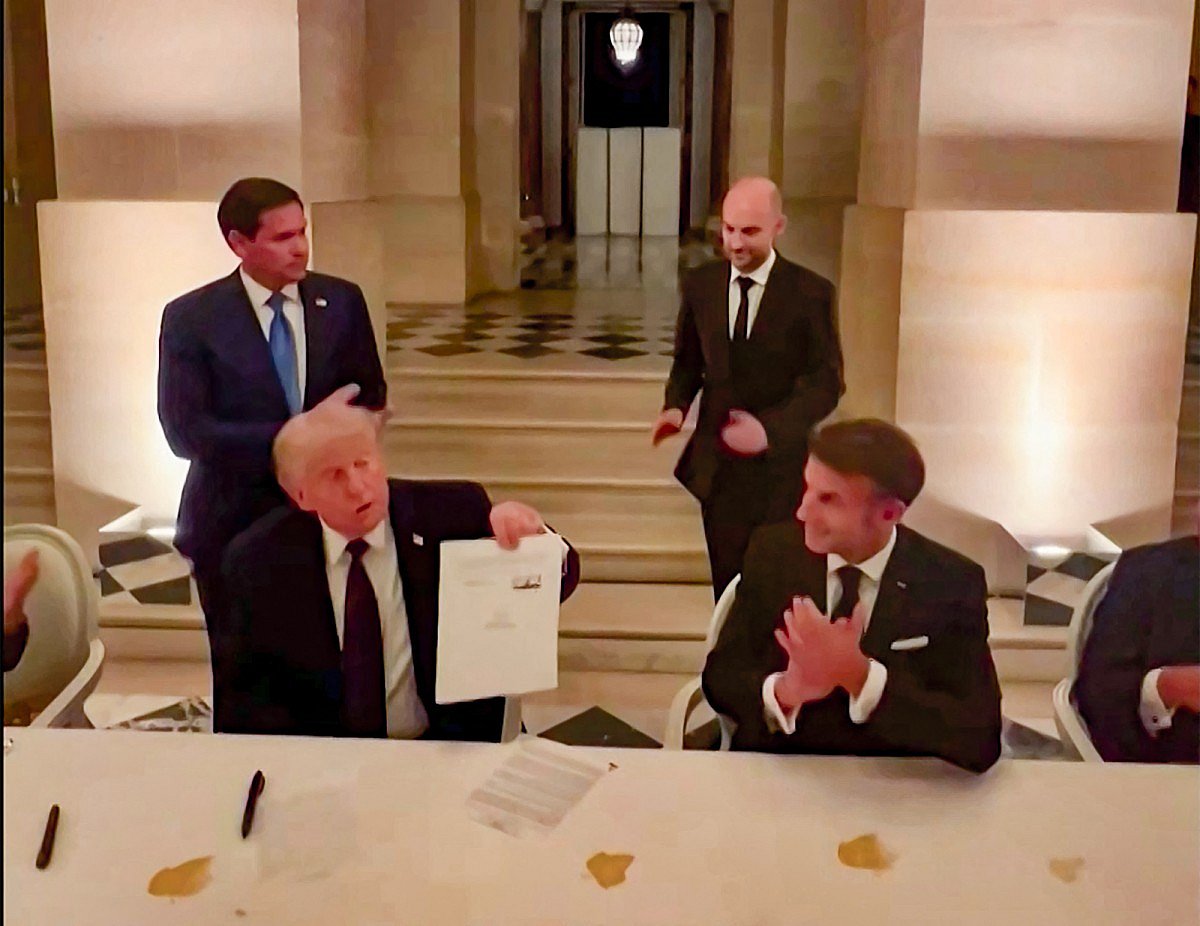
The 14-point MOU, intended to open a 60-day window for negotiations on Iran’s nuclear programme while reducing regional tensions, was originally expected to be signed on Friday in Switzerland. But according to CNN, Trump insisted on signing it immediately after learning during a dinner at Versailles that the document had been finalised.
The move triggered a scramble among US and French officials. CNN reported that Secretary of State Marco Rubio worked with French counterparts to obtain a printed copy of the document while preparations for a later signing ceremony in Switzerland were overtaken by events.
Growing pressure
The urgency reflected growing pressure within the administration to secure an off-ramp from a conflict that had weighed on energy markets, raised concerns over global oil supplies and become a growing political burden in Washington.
Yet before technical talks could formally begin, fresh disputes emerged over two issues that remained unresolved when the MOU was unveiled: The future of the Strait of Hormuz and the conflict between Israel and Hezbollah in Lebanon.
On Saturday, Iran announced it had closed the strategic waterway, citing continued Israeli military operations in Lebanon and what it described as failures to fully implement commitments linked to the interim accord, according to the Associated Press.
Trump responded by escalating the rhetoric, warning that the United States could impose its own tolls in the Strait of Hormuz if a final agreement with Iran is not reached within the MOU’s 60-day negotiating window. In a social media post, Trump said the charges would compensate Washington for acting as the region’s “guardian angel” and noted that the accord envisioned toll-free passage during the negotiating period.
WHY THE MOU IS UNDER PRESSURE
MOU was originally expected to be signed in Switzerland
Trump instead pushed for an immediate signing at Versailles
Iran has linked Hormuz reopening to developments in Lebanon
Israel and Hezbollah are not parties to the accord
Technical talks on Iran’s nuclear programme have yet to begin
Fresh fighting in Lebanon threatens ceasefire efforts
Trump has warned of US tolls if no final deal is reached within 60 days
THREE RISKS TO THE 60-DAY MOU
Hormuz: Iran says reopening the waterway depends on wider regional developments, while Washington insists shipping continues normally.
Lebanon: Neither Israel nor Hezbollah is party to the MOU, yet fighting between them threatens implementation.
Nuclear talks: Technical negotiations have yet to begin, leaving the most difficult issues unresolved.
'Clear breach'
Iran’s joint military command said the move was a response to a “clear breach” of commitments intended to halt fighting across multiple fronts. Tehran also warned that the MOU itself could be jeopardised if key obligations were not honoured.
The United States disputed Iran’s assertion that shipping had been halted.
“Iran does not control the Strait of Hormuz. Traffic continues to flow,” a spokesperson for US Central Command said, adding that 55 merchant vessels carrying more than 17 million barrels of oil had transited the waterway on Saturday.
The dispute underscored the fragility of a framework accord that sought to halt direct hostilities between Washington and Tehran but left several regional flashpoints unresolved.
According to AP, a Hezbollah official said Iran had informed the group that Hormuz would not be fully reopened until Israel publicly committed to a comprehensive ceasefire in Lebanon and ended military operations there.
That position places Lebanon at the centre of the MOU’s future despite the fact that neither Israel nor Hezbollah are signatories to the accord.
Hours after reports of a ceasefire arrangement surfaced, Israeli strikes in southern Lebanon killed at least 16 people, according to Lebanese authorities. Israel said it was responding to attacks by Hezbollah and accused the group of launching more than 50 projectiles at Israeli forces.
The renewed violence has complicated efforts to move quickly into the next phase of negotiations envisioned under the MOU.
US Vice-President JD Vance said American negotiators were preparing for technical talks with Iranian officials in Switzerland. Those discussions are intended to focus on Iran’s nuclear programme and other elements of a potential final agreement.
However, the planned Swiss gathering has already encountered difficulties. CNN reported that Vance delayed his trip after Iran pulled out of the meeting amid the latest flare-up between Israel and Hezbollah.
Concerns
The developments have also drawn attention to the unusually rapid path the MOU took to completion.
CNN reported that Trump personally pushed for an immediate signing at Versailles, abandoning plans for a later ceremony in Switzerland. The network said senior administration officials had voiced concerns about whether Iran would ultimately fulfil future commitments but eventually backed Trump’s determination to bring the conflict to an end.
According to CNN, US negotiators also moved ahead with the MOU before some more detailed proposals had received full Iranian sign-off, arguing that further delays could hinder the next phase of diplomacy.
Trump has defended the accord, arguing that US military pressure forced Iran to negotiate. Critics, including some Republicans, have questioned whether Washington offered too much in exchange for a preliminary framework whose long-term success remains uncertain.
For now, the MOU faces a challenge that became apparent almost immediately after it was signed: ending direct US-Iran hostilities may prove easier than resolving the wider network of regional conflicts surrounding them.
With Hormuz once again a point of contention and Lebanon still gripped by violence, the next 60 days could determine whether the framework accord evolves into a broader settlement or becomes merely a temporary pause in a conflict that remains far from resolved.

Sign up for the Daily Briefing
Get the latest news and updates straight to your inbox
Network Links
GN StoreDownload our app
© Al Nisr Publishing LLC 2026. All rights reserved.