European Commission President Ursula von der Leyen speaks during a press conference at University College Cork (UCC) in Cork, Ireland on July 3, 2026, as Ireland take on the rotating EU presidency for a six-month period.
Summer holiday havoc: EU Entry/Exit System under pressure as airport delays hit Schengen travellers
Biometric border checks spark hours-long queues and missed flights across Europe
Last updated:
5 MIN READ
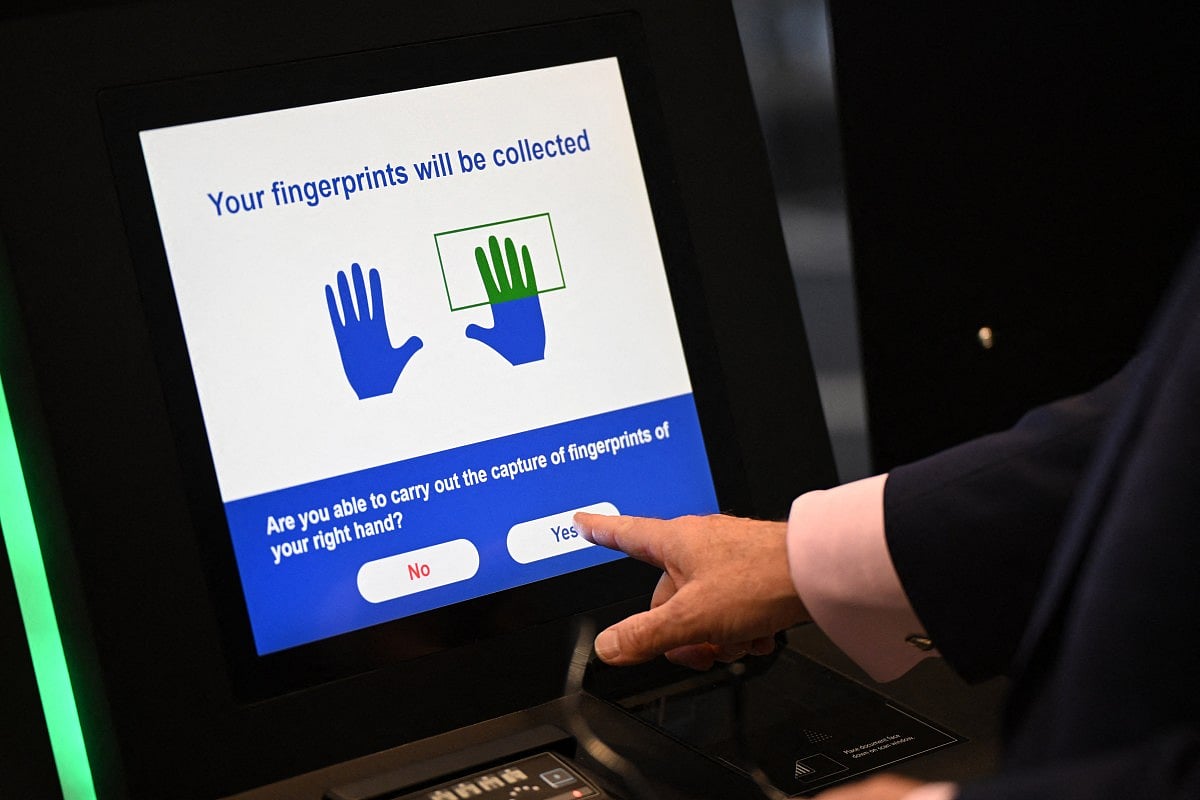
Airlines warn of missed flights and mounting chaos at Schengen checkpoints
AFP
Europe’s peak travel season is under pressure as the new Entry/Exit System (EES) creates long queues, processing delays and operational bottlenecks at airports across the Schengen Area.
Designed to replace passport stamping with biometric checks, the system is intended to modernise border control. But during the summer rush, it is struggling to cope with surging passenger volumes — leaving travellers facing extended waits and, in some cases, missed flights.
Airlines and airports warn the disruption could intensify in July and August as holiday traffic peaks across Europe.
Get updated faster and for FREE: Download the Gulf News app now - simply click here.
Travellers are reporting extended waiting times at major hubs, while airlines and airports warn that congestion could worsen further in July and August as holiday traffic peaks.
For passengers, the impact is already being felt on the ground: longer border checks, tighter boarding windows and growing uncertainty around travel schedules during one of Europe’s busiest summer periods.
EU acknowledges ‘technical problems’
European Commission President Ursula von der Leyen has acknowledged that there is “still quite a lot of work” to resolve disruptions linked to the EU’s Entry/Exit System, AFP news agency reported.
She said the rollout, introduced to register non-EU travellers entering the bloc, is still facing technical challenges that must be resolved with member states.
“There’s still quite a lot of work to do to have these technical issues solved together with the member states,” she said.
Airlines warn of worsening summer disruption
European airports and airlines report border queues reaching up to five hours in some locations, with growing concerns about missed departures and disrupted schedules.
Industry bodies are urging the EU to allow temporary suspension of checks during peak travel periods, warning that infrastructure is not ready for simultaneous biometric processing and high passenger volumes.
Airports are expected to handle around 40 million additional passengers during the holiday season, further stretching capacity.
Millions processed, thousands refused entry
According to Euro News, around 108 million travellers have used the system to enter or exit the EU since October 2025, officials said.
During the same period, around 44,000 people were denied entry, mostly due to missing or invalid documents or visa issues.
Pressure mounts
Aviation groups — including ACI Europe, Airlines for Europe (A4E) and the International Air Transport Association (IATA) — have called for flexibility during peak months.
They say many airports lack the infrastructure and staffing needed to handle biometric checks alongside high passenger volumes.
The European Commission is expected to meet industry representatives on July 7 to review the situation.
Limited flexibility, no full suspension
While acknowledging operational challenges, the Commission says the impact remains limited at most airports and stresses that member states agreed to the system.
Officials have also pushed back against calls for full suspension, maintaining that only limited adjustments are possible during congestion.
An urgent meeting with industry representatives is expected as pressure builds ahead of the peak summer travel period.
What is causing delays?
Despite its goals, the rollout has been affected by:
Technical issues at border points
Staff shortages at peak times
Longer processing for biometric registration
Passengers have reported delays of up to five hours, with some missing flights due to slow border clearance. Temporary suspensions and congestion have already been reported at several European airports during busy periods.
What happens if travellers miss flights?
According to The Guardian, airlines may not be required to compensate passengers if delays are classified as “extraordinary circumstances” under travel guidance.
Insurance providers have also indicated that losses linked specifically to EES-related disruptions may not be covered, unlike delays caused by weather or strikes.
Travellers are being advised to arrive earlier than usual, although congestion at border control points remains a major concern across airports.
Meanwhile, the BBC reported that Ryanair and the head of Berlin Airport have warned of severe disruption linked to the system. Ryanair said families could face “queue chaos” and called for postponing the rollout until after the holiday season.
Von Massenbach told the BBC’s Today programme that at one terminal in Berlin, where Ryanair and Wizz Air operate, waiting times can range between “one hour to two hours”.
Europe’s new border system explained
What is the Entry/Exit System (EES)?
A new digital border control system, the Entry/Exit System (EES), began rollout in October to replace traditional passport stamping for non-EU travellers entering the Schengen Area.
It records entry and exit data electronically and collects biometric details such as fingerprints and facial images, alongside passport information. The system is now active across 29 Schengen countries, covering most EU states except Cyprus and Ireland, plus non-EU members like Switzerland, Norway, Iceland and Liechtenstein.
Who is affected by the checks?
The system applies to non-EU and non-Schengen travellers visiting for short stays of up to 90 days within any 180-day period.
Travellers from countries including the UK, US, Australia and parts of Latin America must register biometric data, even if they do not require a visa. EU and Schengen citizens are exempt, along with residents, long-term visa holders and transport crew.
Who must register under EES?
All non-EU nationals entering the participating countries — whether visa-required or visa-free for short stays — must register under the system.
Entries, exits and refusals are now logged digitally, replacing manual passport stamping in most Schengen countries. Cyprus and Ireland continue to use traditional stamping.
Why the system was introduced
The EES is designed to modernise border management, improve security and speed up processing across Schengen countries.
Authorities say biometric tracking will help identify overstays, reduce identity fraud and strengthen controls against irregular migration and cross-border crime.
What travellers need to know this summer
Arrive earlier than usual: Travellers are advised to reach airports at least three hours before European flights during peak season.
Expect longer first-time registration: First-time EES users must provide fingerprints and facial scans, increasing processing time.
Keep documents ready: Passports, visas and travel itineraries should be easily accessible to avoid delays at checkpoints.
Monitor airline updates: Schedules may change due to congestion, so passengers should track airline and airport alerts closely.
Know compensation limits: Some delays linked to border processing may be treated as “extraordinary circumstances,” which can affect compensation and insurance coverage.
What happens next?
With peak summer travel approaching, European authorities are under increasing pressure to improve system performance or introduce temporary flexibility.
Industry groups are urging urgent action to prevent further disruption.
For now, passengers are being told to plan ahead, expect delays and allow extra time at airports across Europe.
Sign up for the Daily Briefing
Get the latest news and updates straight to your inbox
Network Links
GN StoreAbout Gulf NewsTerms & ConditionsReach by GNSitemapContact usPrivacy PolicyGN FocusHave your sayWork with usAdvertise with usGulf News epaperPrinting Services
Download our app
© Al Nisr Publishing LLC 2026. All rights reserved.