Delhi pollution: No fuel without PUC, parking fees to double
Capital imposes first anti-smog curbs of season after air quality deteriorates sharply
Dubai: Delhi has imposed its first anti-pollution restrictions of the season after air quality deteriorated sharply on Wednesday, triggering emergency measures across the National Capital Region (NCR) as the city braces for its annual winter smog crisis.
The Commission for Air Quality Management (CAQM) activated Stage 1 of the Graded Response Action Plan (GRAP) with immediate effect after Delhi’s Air Quality Index (AQI) jumped from 179 on Tuesday to 244 at 2pm on Wednesday.
The rise pushed the capital’s air quality from the moderate to the poor category, prompting authorities to intensify action against dust, vehicle emissions, open burning and industrial pollution.
Forecasts by the India Meteorological Department (IMD) and Indian Institute of Tropical Meteorology (IITM) indicate that air quality is likely to remain poor in the coming days, according to the CAQM.
Tougher checks on vehicles
Delhi Environment Minister Manjinder Singh Sirsa announced additional measures aimed at reducing pollution from traffic and construction.
Vehicles without valid Pollution Under Control (PUC) certificates will be denied fuel, while parking charges across Delhi will be doubled, except at Metro parking facilities, the minister said.
Staggered working hours and work-from-home arrangements will also be introduced for Municipal Corporation of Delhi and government offices to reduce traffic congestion and vehicle emissions.
Sirsa said outdoor construction and demolition activities would face restrictions, while open burning would be strictly prohibited.
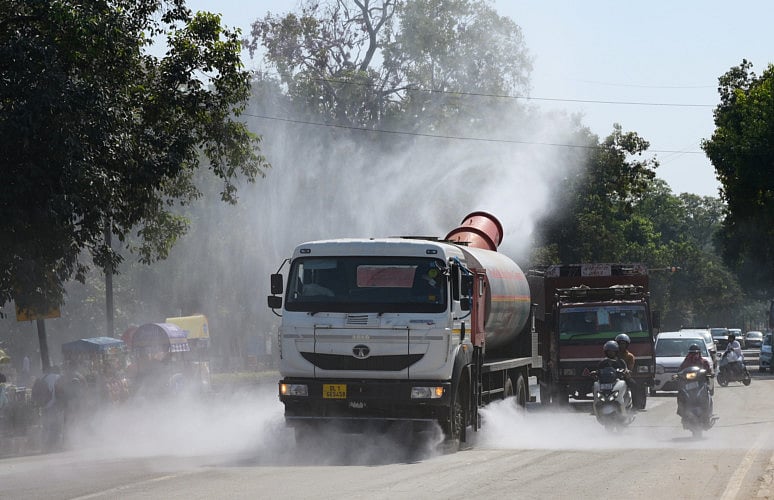
Authorities have deployed 608 anti-smog guns and 1,150 mist-spray units across the capital to suppress road and construction dust.
An Integrated Command and Control Centre has also been established to monitor construction-related pollution, while an artificial intelligence-based traffic management system is being used to improve traffic flow and reduce emissions.
What changes
Fuel restrictions: Vehicles without valid PUC certificates will be denied fuel
Parking charges: Fees to double across Delhi, except at Metro parking facilities
Office timings: Staggered hours and work-from-home arrangements for civic and government offices
Construction: Tighter dust-control measures and restrictions on outdoor construction and demolition
Open burning: Strict prohibition on burning waste in the open
Road dust: Mechanised sweeping, water sprinkling and anti-smog operations intensified
Vehicle emissions: Stricter checks on polluting vehicles and improved traffic management
GRAP pollution levels
Stage 1: AQI 201–300 — Poor
Stage 2: AQI 301–400 — Very poor
Stage 3: AQI 401–450 — Severe
Stage 4: AQI above 450 — Severe plus
What GRAP Stage 1 means
Under Stage 1, agencies must intensify mechanised road sweeping, water sprinkling and dust-control measures at construction sites.
The restrictions also require stricter monitoring of polluting vehicles, improved waste management, better traffic regulation and emission controls at industries, power plants and brick kilns.
The CAQM directed all implementing agencies across the NCR to enforce the measures immediately and prevent air quality from deteriorating further.
“All implementing agencies shall keep strict vigil and intensify measures,” the commission said in its order.
Residents have also been urged to follow the pollution-control guidelines issued under GRAP.
Delhi air pollution: AQI nears 500, residents struggle to breathe as emergency GRAP-4 curbs enforced
Why the restrictions matter
Delhi’s pollution-control framework operates in four stages, depending on the severity of air pollution.
Stage 1 is triggered when the AQI reaches 201–300, classified as poor.
Stage 2 applies at 301–400 (very poor), Stage 3 at 401–450 (severe), and Stage 4 when the index exceeds 450 (severe plus).
Each successive stage introduces tougher restrictions to reduce emissions and limit public exposure to harmful air pollution.
The latest measures mark the beginning of heightened pollution-control efforts ahead of winter, when Delhi frequently experiences prolonged periods of hazardous smog.
Government claims improvement
Sirsa said this was the first time in several years that GRAP restrictions had been introduced so late in the season.
He claimed Delhi had recorded 214 days of good or moderate air quality this year, describing it as the highest such figure in 12 years when the Covid-19 period was excluded.
The minister credited the improvement to government measures and public participation.
He also criticised the previous administration for failing to take effective action despite years of severe pollution.
Sirsa said the government’s 11-point action plan focuses on controlling dust, promoting electric vehicles, reducing traffic emissions and identifying local pollution sources.
Longer-term measures include paving roads to reduce dust and gradually replacing conventional vehicles with electric alternatives.
More curbs possible
The CAQM said its GRAP sub-committee would continue monitoring air quality and reviewing forecasts before deciding whether additional restrictions were necessary.
With pollution already in the poor category and forecasts pointing to continued deterioration, authorities face an early test of their ability to prevent Delhi’s familiar winter smog from intensifying.
For residents, the immediate changes mean stricter vehicle checks, enhanced dust-control operations and closer enforcement of pollution rules across the capital region.
-- With ANI inputs

Sign up for the Daily Briefing
Get the latest news and updates straight to your inbox
Network Links
GN StoreDownload our app
© Al Nisr Publishing LLC 2026. All rights reserved.