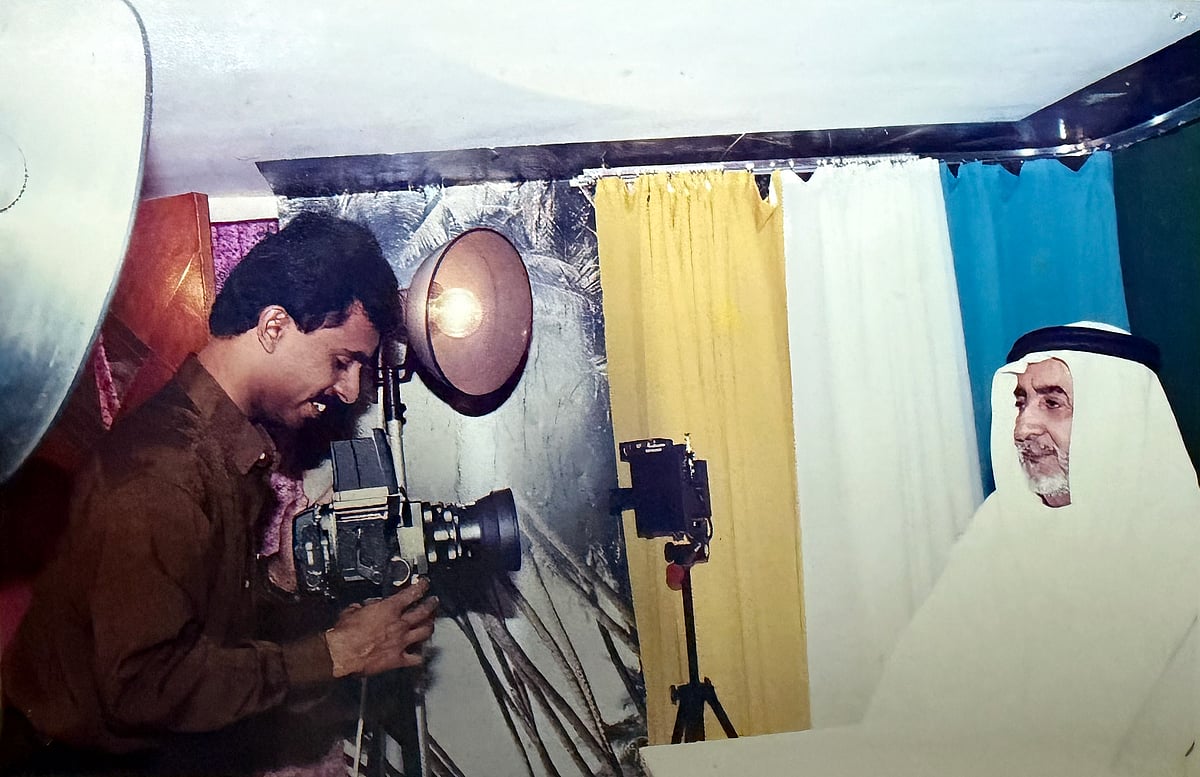
The memories are lingering the lanes of the studio streets in Abu Dhabi
A portrait studio is a small room where time learns to linger. People step before the camera for only a heartbeat, yet what they carry away can outlive fashions, addresses and even the cityscape beyond the door.
For the generation now, the only reason to visit a studio is probably to get a passport-size photos for their visas. But there existed a time, when wedding guests used these studios for pre-event shoots, well dressed.
Rima Dandan started holding a camera as a hobby. It later became a profession that she built over time. When she established her first photo studio in Abu Dhabi in 1995, she set out to bring a distinct vision to the business.
She remembers her initial conversations about how her studio came into being.
I wanted to make it a ladies' studio, ladies' branch, and this is my decision alone.Rima Dandan, owner of Golden Camera photography
Another studio in Abu Dhabi reflected the stories they built for more than four decades of family history. Birthdays and beginnings, official photographs and carefully posed portraits, faces returning older and sometimes accompanied by a new generation.
Established since 1985, Jerry Jose Vazhapilly spoke of his father’s studio and the vision behind it.
In those days, photography was a much more traditional and personal process. Looking back, what makes the journey special is that Vivi Studio has continued to be part of Abu Dhabi’s story for more than four decades.Jerry Vazhappilly, the current owner of Vivi Studio
For his father, the photography studio was more than just starting a business. It was about creating a place where people could preserve their important moments.
Jose Vazhapilly at the inauguration of Vivi Studio, 1985, Abu Dhabi
As he counts his privileges of capturing countless milestones and special moments of individuals and families, he speaks of the journey his old studio witnessed.
“We have witnessed Abu Dhabi grow and transform, while photography itself has evolved from traditional film to modern digital technology,” Jerry said.
That transition has come at a cost. Rima noted that film-processing equipment is now scarce in Abu Dhabi and across the UAE, estimating that only one or two such facilities remain in the country.
Every frame used to count
Portrait photography in the 1980s was very different from what we know of photography today. The photographer had to carefully prepare the camera, arrange the lighting and position the subject before taking the photograph.
1985 studios portrait more than simply a camera, they displayed art
“We worked in the era of film photography, when every frame counted. Photographers had to consider exposure, focus, lighting and composition before pressing the shutter. There was no digital screen to check the result immediately,” said Jerry, emphasising on the role of a photographer in the studio: to make people feel comfortable in front of the camera.
The decades of photography was a tale of film, handled with care, patiently developed and processed. The meticulous art came with no instant preview or a way to rewind a mistake.
Changing focus
Photography shifted from manual retouching, film, and printing to digital tools. Rima said the current technology, including AI, makes photography easier but increases competition from freelancers offering lower prices.
For Jerry, photography offers a unique record of a city’s transformation. “Over the decades, the city has changed, technology has advanced and people’s lifestyles have evolved," he said, "Yet the need to preserve important moments has never disappeared.”
It was this enduring desire to preserve personal milestones that shaped Rima’s own path. She began working as a freelance photographer in 1993 and, two years later, established a studio. From the outset, she insisted that the studio serve women and families.
Losing the shot
Born in Lebanon, Rima moved to the UAE with her family at the age of seven in 1977. She became the only photographer in her family. But the industry that enabled her to build a career has become increasingly difficult to sustain.
Since the COVID era, fewer events, changing customer expectations and resistance to earlier prices have placed growing pressure on traditional studios.
Through the archives of Rima Dandan, saving the portraits of Abu Dhabi residents since 1995
With the growing demand for the podcast culture, she converted one of her studio rooms into a podcast room which can be booked and used for shooting. “So, freelancers cannot do this,” she added.
Staffing declined from more than 25 employees to two or three. She is considering closing down her studio.
“Small albums or photo packages that once cost Dh3,000 to Dh4,000 now may not sell for more than Dh1,000,” she said.
Her old cameras are now stored in her studio rusting away, as film and processing are difficult to obtain. She described the changing landscape of photo studios.
Rima Dandan shares her collection of old cameras
Buildings rise and technology moves on, but a photograph still asks us to pause. For one held breath, the city stops and remembers.
Sign up for the Daily Briefing
Get the latest news and updates straight to your inbox
Network Links
GN StoreAbout Gulf NewsTerms & ConditionsReach by GNSitemapContact usPrivacy PolicyGN FocusHave your sayWork with usAdvertise with usGulf News epaperPrinting Services
Download our app
© Al Nisr Publishing LLC 2026. All rights reserved.