Eataly World, a ‘Disneyland of Italian food’, opens
Is the ‘Disneyland of food’ in bad taste?
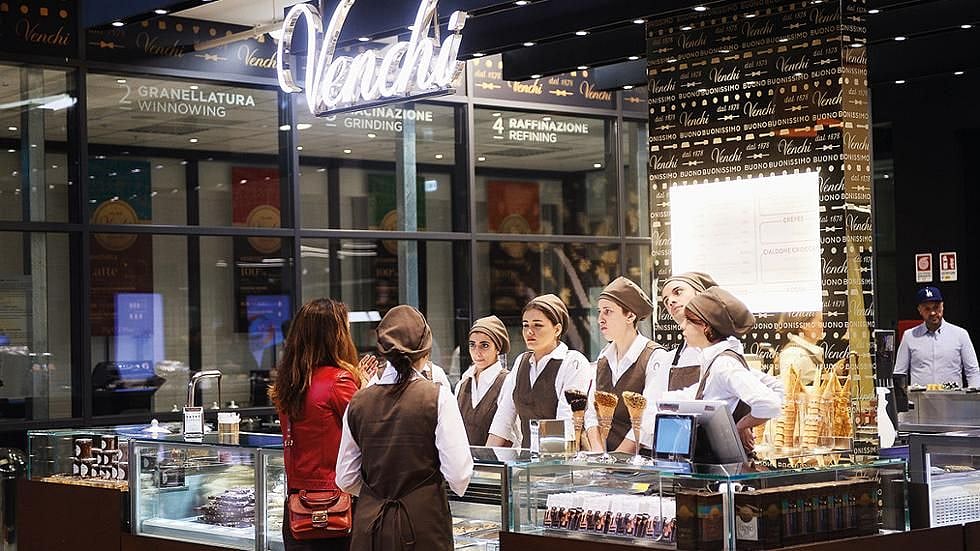
Italy’s ‘City of Food’ has a new attraction. After wandering the alleyways of Bologna’s Mercato di Mezzo – which is filled with local, family-owned grocers such as the well-known Atti & Figli bakery, or Tamburini of tortellini fame – visitors can now take a 20-minute shuttle bus from outside the central station to Fico Eataly World, where food from all over Italy is on show.
Inaugurated by prime minister Paolo Gentiloni on November 15, Eataly World claims to be the world’s largest agri-food park, and promises visitors ‘a discovery of all the wonders of Italian biodiversity’ under one vast, 100,000sqm roof. However, many are struggling to make sense of a project that stands in direct contrast to the traditional allure of Italian gastronomy – the pleasure of farmers’ markets in Renaissance towns, or sampling the delights of small producers in remote hilltop towns.
To enter Eataly is to step into what can only be described as a US-style megamart, a Wholefoods on steroids. The site used to be a wholesale market; the L-shaped walkway stretches for more than a kilometre.
Inside are more than 45 branded Italian eateries, which according to Fico are ‘bonded by a passion for excellence and the role they play in producing and promoting the best of Italian food and wine’. The kitchens in the restaurants are visible behind glass panelling, and host over 30 daily sessions to educate the consumer on food production, be it how to make William Di Carlo sugared almonds from Abruzzo, or how Olio Roi presses olive oil using its in-store press.
There is a multitude of pop-up-style stores, selling Italian produce and kitchenware; six experiential educational pavilions; several classrooms, sports and play areas dotted throughout the space; as well as a cinema and 1,000-capacity congress space. It’s all surrounded by a pristine outdoor area, with several hectares of animals and vegetable plots.
The organisation behind Eataly, Fico – Fabbrica Italiana Contadina (Italian Farming Factory) – is the result of a collaboration between Bologna’s mayor, Virginio Merola, and Oscar Farinetti, the mastermind behind the successful Eataly food hall brand, which is big in USA, Asia as well as Italy (there are also two in the UAE). The public donated the defunct hall, and Oscar, along with the Italian Consumer Cooperative (Coop) and several other private investors, funded its transformation. The project took four years to complete, at a cost of €120m (Dh517 million), works with over 150 Italian large and small companies, and has created over 3,000 jobs. If all goes to plan, Fico predicts it will attract 6 million visitors a year, a substantial boost in tourism for the whole area.
On one hand, Eataly can be rightly lauded as an interactive museum and education centre. There is an outstanding display of producers, offering adults and children classes in the history of food, and in food production ‘from the field to the fork’ (€20). ‘Environment carousels’ recount the relationship between humankind and nature, and the importance of eating well, using a high-tech approach to learning – touch screens, holograms and interactive multimedia. Moreover, with the backing of four universities, the Fico Foundation for Food Education and Sustainability hopes to be at the forefront of research for food sustainability.
But, on the other hand, the quantity of branded restaurants, and the way in which visitors are directed through the areas past Lamborghini memorabilia, as if at an airport, highlights the mass consumer culture behind the project.
Fico caters for every taste and budget, from the most expensive, Amerigo, a longstanding Michelin-starred trattoria from Bologna’s hills, to Il Barbecue, a stand offering burgers for EUR5.
Carlo Facchini, an employee at the Ceccarelli Amadeo delicatessen in town, known for its produce from the surrounding region of Emilia-Romagna, has worked in the salumerias of Bologna for 40 years and summed up the general feeling among locals: ‘Eataly has nothing to do with the city of Bologna. It’s like Ikea – an outlet in the outskirts where you might go for a one-off day trip.’
There is a tension between the old and the new, whereby traditional practices are exhibited in a space that feels incongruous. Before leaving the park, I grabbed an espresso, because – just like after an outing to Ikea – my body felt assaulted by sensory overload. The girl at the cashier rightly pointed out that even though Eataly aims to celebrate the history of Italian food ‘it is doing so in a distinctly un-Italian way’.
Despite many of the restaurant spaces being beautifully conceived, and the presence of a strong educational and ethical impulse, the reality of watching mozzarella being made under strip lighting, or eating Michelin-quality cooking while shoppers whiz by on Bianchi-sponsored tricycles, makes me think Oscar Farinetti has conjured a dystopian vision of the future, rather than a homage to Italy’s rich food heritage and culture.
Sign up for the Daily Briefing
Get the latest news and updates straight to your inbox
Network Links
GN StoreDownload our app
© Al Nisr Publishing LLC 2026. All rights reserved.