What do astronauts eat on the way to the Moon? Inside the Artemis II menu
What’s for dinner on the Moon? The surprising 189-item menu aboard Artemis II
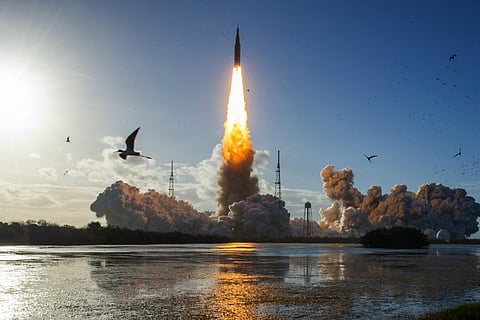
Dubai: NASA’s ambitious Artemis II mission, which launched on April 1, is sending four astronauts on a historic 10-day journey around the Moon aboard the Orion spacecraft.
The Space Launch System (SLS) rocket lifted Orion and its four-person crew - Reid Wiseman, Victor Glover, Christina Koch, and Jeremy Hansen, from Nasa’s Kennedy Space Centre in Florida, carrying them beyond Earth’s atmosphere and marking the start of the mission.
While the journey itself is historic, every aspect of life onboard has been carefully planned, including what the astronauts will eat.
What is on the Artemis II menu
The Artemis II crew has access to 189 menu items and more than 10 types of beverages.
Beverage options include coffee, green tea, mango-peach smoothie, chocolate breakfast drink, vanilla breakfast drink, lemonade, apple cider, pineapple drink, cocoa, and strawberry breakfast drink.
Among the most common food items are tortillas, wheat flat bread, vegetable quiche, breakfast sausage, couscous with nuts, mango salad, granola with blueberries, almonds, cashews, barbecued beef brisket, cobbler, broccoli au gratin, spicy green beans, macaroni and cheese, tropical fruit salad, butternut squash, and cauliflower.
To enhance flavour, five different hot sauces are included on the journey around the Moon. Additional culinary flavourings available to the crew include maple syrup, chocolate spread, peanut butter, hot sauce, spicy mustard, strawberry jam, honey, cinnamon, and almond butter.
To satisfy sweet cravings, astronauts also have access to a range of treats, including pudding, cookies, candy-coated almonds, cake, and chocolate.
What a typical day of meals looks like
On a typical mission day - excluding launch and re-entry, astronauts have scheduled time for breakfast, lunch, and dinner. Each astronaut is also allotted two flavoured beverages per day, which may include coffee.
However, beverage options are limited due to upmass constraints, which restrict how much food and drink can be carried onboard.
Carefully designed meals for space
The food flying aboard Artemis II is designed to support crew health and performance during the mission around the Moon. With no resupply, refrigeration, or late-load capability, all meals must be carefully selected to remain safe, shelf-stable, and easy to prepare and consume in Orion.
Food selections are developed in coordination with space food experts and the crew to balance calorie needs, hydration, and nutrient intake, while also accommodating individual preferences.
Key considerations include shelf life, food safety, nutritional value, crew preference, and compatibility with Orion’s mass, volume, and power requirements.
Meals must also be easy to prepare in microgravity, minimise crumbs, and remain stable throughout the mission. The crew provided input well before the meals were packed for the test flight.
How food is prepared in space
Food aboard Orion is ready-to-eat, rehydratable, thermostabilised, or irradiated. Astronauts use the spacecraft’s potable water dispenser to rehydrate meals and beverages, along with a compact, briefcase-style food warmer to heat food when needed.
How Artemis II menus differ from past missions
Apollo missions relied on early food technologies with limited variety, while space shuttle missions expanded menu options and onboard preparation. The International Space Station benefits from regular resupply and occasional fresh foods.
In contrast, Artemis II uses a fixed, pre-selected menu designed for a self-contained spacecraft with no opportunity for resupply.
Adapting food to different mission phases
Menus are tailored based on the spacecraft’s food preparation capabilities during each phase of flight.
Certain foods, such as freeze-dried meals require hydration using Orion’s potable water dispenser, which is not available during some phases, including launch and landing. As a result, foods selected for these periods must be ready-to-eat and compatible with operational constraints.
A wider range of food options becomes available once full food preparation systems are operational.
The challenge of feeding astronauts in Orion
Designing food systems for Orion involves balancing nutrition, safety, and crew preferences within strict limits on mass, volume, and power inside a compact, shared cabin.
Meals must be easy to store, prepare, and consume in microgravity while minimising crumbs and waste. Preparation is intentionally simple to ensure it does not interfere with crew operations or spacecraft systems.


