As Iran chases the World Cup, its US diaspora is divided between protesting and cheering
Iranian Americans split between stadium protests and World Cup celebrations
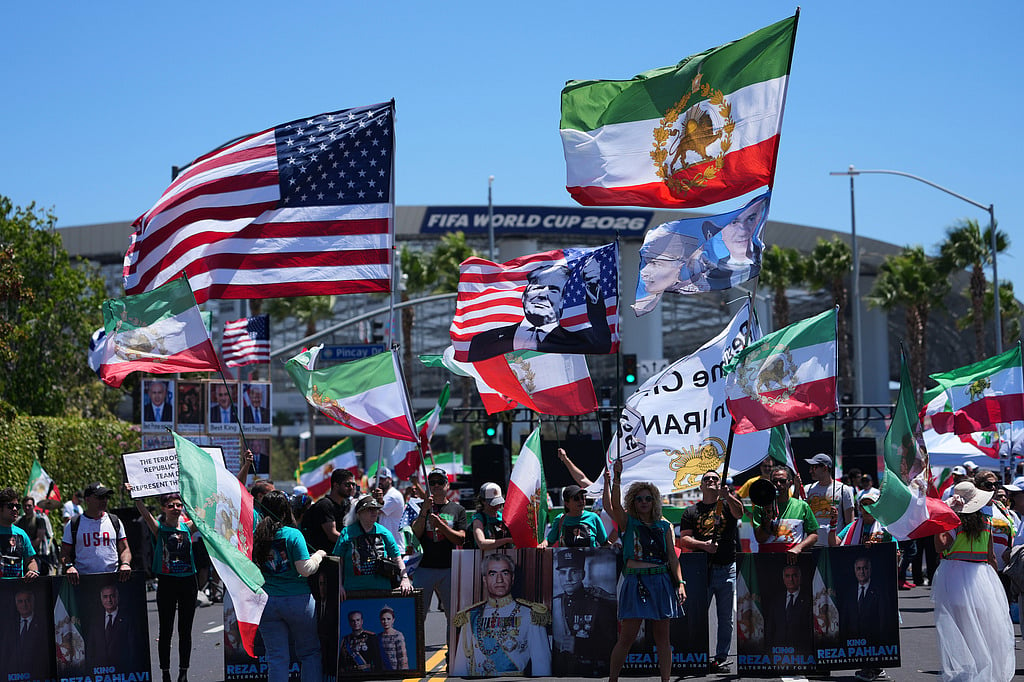
INGLEWOOD, California: Iranian Americans are torn over Iran's participation in the World Cup, as some community members plan to watch Monday's match and others are protesting outside the stadium where the team will play.
A rally was taking shape outside the stadium near Los Angeles, home to the largest Iranian community outside Iran.
Many of Southern California’s Iranian Americans arrived after the 1979 Islamic Revolution, and a hub of eateries, shops and markets about 10 miles (16 kilometers) from the stadium is known as “Tehrangeles.”
Draped in red and green flags emblazoned with the golden lion and sun, demonstrators gathered outside the stadium where Iran will face New Zealand. Just hours before kickoff, a Los Angeles judge upheld FIFA's ban on the pre-revolutionary flag at matches, The Athletic reported.
INGLEWOOD, Calif. (AP) — Several hundred Iranian Americans protested outside Iran's first World Cup match Monday, calling for change in Tehran and waving the pre-revolutionary lion-and-sun flag, while thousands of fans poured into the stadium in the heart of the largest diaspora community to see the team play.
Iran's participation in the World Cup has been beset by challenges since the war's outbreak, dividing the community in the United States. Fans cheered and booed loudly while Iran's national anthem was played at the game against New Zealand, and some spectators held large lion-and-sun flags in the front rows just hours after a court upheld FIFA's ban on the flags.
Outside the stadium, demonstrators contended the team is synonymous with Tehran's government, while fans, their cheeks striped with red-and-green face paint, filed past, saying they were separating soccer from politics. At one point, protesters snatched an official Iran flag from a fan and stomped on it and ripped it.
Southern California is home to the largest Iranian community outside Iran, many who arrived after the 1979 Islamic Revolution. Rameileh Jaffrey, 46, of Los Angeles, left Iran a dozen years ago and said she feels the team’s players are aligned with the current government in Iran.
“They are not my team. They are a government team,” she said.
As kickoff neared, event security broke up shouting matches between protesters and fans and were eventually joined by sheriff’s deputies. A woman protesting jeered Kia Keanh and his family as they walked by wearing T-shirts supporting the team.
“I’m just here to watch the sport, it’s not about the regime,” he said. “I’m just here for a World Cup game, to enjoy it with my family.”
Some of the demonstrators also went inside the stadium to see the team play, like 42-year-old Ella Bah, who brought extra clothing to conceal the lion-and-sun flag she wore tied around her like a dress.
“We’re not here to cheer them on,” she said. “We’re here to be the voice for the people inside Iran.”
Iran's participation in the tournament has been fraught with conflict because of the country's war with U.S. and Israeli forces. Late Sunday, President Donald Trump announced that the U.S. had reached a deal with Iran to end the war and open the Strait of Hormuz. The war launched by the U.S. and Israel on Feb. 28 has rattled the region and virtually shut down oil and natural gas shipments from the Persian Gulf.
After the war's outbreak, the team moved its training base to Mexico from Tucson, Arizona, and some of the country's soccer officials were not granted visas to enter the United States. Many in the diaspora have mixed feelings over how to show their support of the Iranian people, but not the government.
“We play for every Iranian, be it in the diaspora or in Iran. People have different opinions, but we are here to unite people and we will try to bring joy to all Iranians wherever they live,” team captain Mehdi Taremi said at a press conference Sunday.
Kourosh Safavi, 42, traveled to see Iran play from Dallas, Texas, with his 11-year-old son Jibreel. While he was born in the U.S, Safavi said he wanted to cheer on the country of his ancestors, where soccer means so much.
“They’re playing for the people, and I just hope and pray that they have success, that they can bring the people in Iran happiness,” he said.
Still in their street clothes, many of the Iranian players walked onto the field nearly two hours before kickoff. Thousands of fans already in the building greeted them with loud cheers and whistles.
Some fans said the large Iranian American crowd in Los Angeles made it feel like Iran had the support of a home team. New Zealand fans were also in attendance, and other spectators wore soccer jerseys from countries spanning from Mexico to Croatia.
Some Iranian American soccer fans said they don't support the squad because they believe it is tied up in politics. In the past, Iranian athletes have faced serious consequences for speaking out. In 2022, a prominent former member of the national team was arrested for allegedly protesting against the country’s leadership, and star striker Sardar Azmoun wasn’t selected for this year's World Cup squad, reportedly because of a social media post that angered authorities.
The controversy also has been playing out in a push by Iranian Americans to be allowed to carry the lion-and-sun flag at World Cup games. The Iranian American Institute for Voices for Liberty filed a lawsuit last week to try to circumvent FIFA's ban on the pre-revolutionary flag at matches.
Despite a judge upholding the ban, fans held up large lion-and-sun flags in the front rows of the stadium during Monday's game. Others carried the official flag of Iran.
Parsa Ezati, 21, and his mother brought the official Iranian flag to the protest outside the stadium so people could stomp on it. Many passersby took the opportunity to walk over it, some giving it an extra scuff or taking a minute to spit on it.
“It represents the ayatollahs that killed so many Iranians and have massacred people in my generation,” Ezati said. “FIFA only accepts this flag on the floor.”
___
AP Sports Writer Greg Beacham contributed to this report.
___
AP World Cup coverage: https://apnews.com/hub/fifa-world-cup
Sign up for the Daily Briefing
Get the latest news and updates straight to your inbox
Network Links
GN StoreDownload our app
© Al Nisr Publishing LLC 2026. All rights reserved.