Why UAE travellers now face longer wait for new Schengen travel permit for Europe trips
Visa-exempt visitors do not need to apply yet as EU scraps ETIAS launch date open
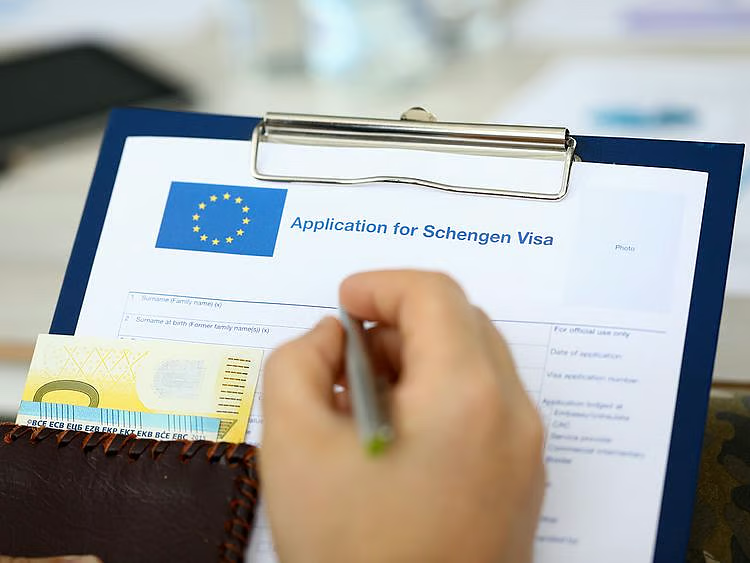
Dubai: UAE travellers who can visit Europe’s Schengen area without a visa will have to wait longer for a new travel authorisation requirement to take effect, with the European Union scrapping its 2026 launch date for ETIAS on Tuesday.
Europe has long been planning to introduce the European Travel Information and Authorisation System, or ETIAS, which will require eligible visa-exempt travellers to obtain an online authorisation before visiting 30 participating European countries.
Get updated faster and for FREE: Download the Gulf News app now - simply click here.
The system has faced repeated delays since it was originally expected to become operational in 2021. The EU had subsequently indicated a launch in the final quarter of 2026, but its current ETIAS information says the system is “currently not in operation” and that the specific start date will be announced several months before it goes live.
For UAE travellers with European holidays or business trips approaching, that means nothing changes because of ETIAS for now. Applications are not being accepted and no ETIAS fee needs to be paid.
How delay affects Europe trips
If you are travelling soon, nothing changes: you do not need to add ETIAS to your pre-departure checklist. Visa-exempt travellers can continue visiting participating European countries under the existing entry rules until ETIAS takes effect. Travellers who currently require a Schengen visa must continue applying for one.
ETIAS is not a visa and will not replace the Schengen visa system. The distinction is particularly relevant in the UAE because whether you need ETIAS will depend on your nationality and passport, not your UAE residency.
UAE citizens currently qualify for visa-free short stays in the Schengen area and will generally be among the travellers required to obtain ETIAS once it becomes mandatory.
UAE residents holding passports from other countries that qualify for visa-free short stays could also be affected. Those whose nationalities require a Schengen visa will continue to need one.
When will you need to apply?
There is no ETIAS application to make now. The EU says it will announce the specific start date “several months before the system becomes operational”, giving travellers advance notice before the new requirement begins.
Once launched, ETIAS will apply to 30 European countries. They include popular destinations such as France, Germany, Italy, Spain, Greece, Switzerland, Austria and the Netherlands.
Eligible travellers will apply online before departure. The planned application fee is €20. An approved ETIAS will generally remain valid for three years or until the passport used for the application expires, whichever comes first.
Travellers can use the authorisation for multiple trips during its validity, subject to existing short-stay limits. In the Schengen area, that generally means stays of up to 90 days within any 180-day period.
A new passport will require a new ETIAS because the authorisation will be electronically linked to the travel document used in the application.
Already booked Schengen trip?
There is no need to change your travel plans because ETIAS has not launched. If your passport currently gives you visa-free access, continue following the existing entry requirements. If you require a Schengen visa, continue with the normal visa process.
Travellers should also not pay for an ETIAS authorisation now. The EU says applications are not being collected because the system is not operational. This is worth noting because commercial websites already offer ETIAS-related information and services despite travellers being unable to obtain an authorisation at present.
What about EU border checks?
ETIAS should not be confused with the European Union’s separate Entry/Exit System (EES). EES concerns border processing for non-EU nationals travelling for short stays.
It electronically records information such as entry and exit details and replaces the traditional manual stamping of passports for travellers covered by the system.
ETIAS serves a different purpose. It will require eligible visa-exempt travellers to secure authorisation before they travel. So encountering new European border procedures does not mean ETIAS has started or that you need to apply for one.
What do UAE fliers watch next?
The main development to watch is the EU announcing a firm ETIAS start date. Until then, it remains a future requirement rather than something travellers need to arrange for an upcoming trip.
Once a date is announced, visa-exempt travellers in the UAE will need to check whether their nationality is covered and when applications will begin.
For now, the position remains unchanged: if you need a Schengen visa today, you still need one. If your passport currently allows visa-free travel, you can continue travelling without ETIAS until the new system takes effect.

Sign up for the Daily Briefing
Get the latest news and updates straight to your inbox
Network Links
GN StoreDownload our app
© Al Nisr Publishing LLC 2026. All rights reserved.