Feeling of insecurity for women breadwinners
Many women say their financial commitments lead them to neglect their own dreams
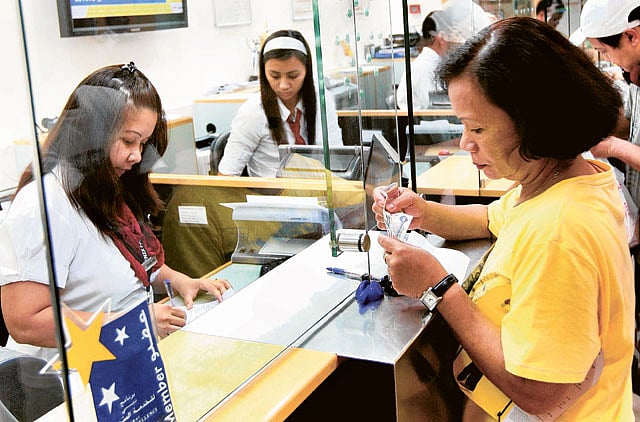
Che was still in her teens when her parents lost their house and cars to the bank, and shut down their general merchandise business in Bicol, a province southeast of Manila, Philippines. The bankruptcy left the family fighting for survival for years and they sometimes had to live off of other people's kindness.
Being the second eldest daughter of eight children, Che eventually worked at fast-food joints and supported herself through college. When she found the opportunity to work in Dubai shortly after graduation, she did not hesitate to strike out on her own abroad. Since then, Che, instead of her father, has been the economic provider for the family.
Che, 32, is one of the many working women who step up to the role of primary breadwinners for millions of households worldwide. Whereas in the past men used to leave their homes for work, a growing number of women, single or married, are becoming the financial lifeblood for their families.
In the 1960s and 1970s, it was believed that most people who make a living abroad were male, and that women were merely dependents. However, the past decades have seen an apparent increase in women as breadwinners for their families, according to Caritas Internationalis, a confederation of Catholic relief and development organisations operating in more than 200 countries.
The October 2009 "Shriver Report" by Maria Shriver and the Centre for American Progress highlights the emergence of women as breadwinners in modern America, where four out of 10 working mothers find themselves in the financial driver's seat.
These may be promising statistics for people who advocate for equality of the sexes, but many of the women who lead their households are sacrificing their own comfort and undermining their own financial future.
Financial needs
According to a recent survey by Illustrado magazine, 45 per cent of Filipino women in the UAE, both single and married, are the primary source of income for their families. About 28 per cent of these breadwinners spend more than half of their income on financial needs of their families and parents back home.
However, around 65 per cent of the women surveyed feel financially insecure, while 35 per cent believe their financial commitments lead them to neglect their own dreams. A number of women, 24 per cent, also feel that their financial difficulties prevent them from being happy.
"We have seen a dramatic number of Filipinas who sacrifice their own comfort and financial security in order to provide for their families," says Lalaine Chu-Benitez, Illustrado's publisher and editor-in-chief, in a press release.
In her early years in Dubai, Che found herself in dire straits as the income she made was barely enough to provide a monthly allowance for her parents and send four of her siblings to college.
Although she devoted nearly every drop of her earnings to her family, certain financial emergencies sometimes put the squeeze on her and she ended up borrowing from friends and maxing out all her three credit cards to get by.
‘Feel guilty'
"I would normally keep money for my food and housing and send the rest to my family. I would avoid buying things for myself because I'd feel guilty knowing that my siblings did not have any."
"There were times I only had Dh1,000 left to spend or I found myself with a negative bank account. I cried almost every night because I felt that no matter how much I sacrificed, my family was still in a bad financial shape," she says.
Through hard work and perseverance, however, Che landed a better job, earned a promotion and saw her earnings increase. Now she makes about Dh10,000 a month as a logistics team leader for a company in Dubai. And with the help of a personal loan and some generous friends, she managed to pay off, and closed her credit cards.
The loan was eventually cleared and she later took out a new one to build a house for her family back home. Now, her family has a house they can call their own and except for one sister, all the siblings she had sent to school are now degree holders. "I can say life is easier now. I'm down to my last student who is graduating this year," she says.
Given the sacrifices she has done over the years, Che admits she has neglected her own financial security. In her eight years in Dubai, she has managed to save only Dh6,000 for herself.
But she has no regrets. "It has always been my dream to secure a comfortable life for my family. For nearly 30 years, I gave everything to them and I get blessings in return. I've found a job that I love. My employer is very generous that I get bonuses and yearly increments, and I can say that my career is going somewhere," she says.
Lucille Ong, chairperson of the UAE-based Philippine Business Council, observes there are many selfless working Filipino women like Che who often neglect their own dreams because they look after their families first.
This is not because these women are forced to provide for their family or desire to take control of the household's finances. She says putting family first is embedded deep into the psyche of these women.
"I've worked with a lot of Filipino women here and I've hired a lot of them myself and everybody is, without exception, the breadwinner of the family, be it a single mum, married or single. Even if they don't have children or are not married, they are still expected to send the bulk of their salary back home," she says.
‘Spoil the families'
"And I think it's our fault because we tend to spoil the families we left behind. Married women who work abroad, for example, tend to shower their children with material stuff to compensate for being away." The high number of Filipino women breadwinners in the Middle East, she says, can be attributed to the fact that most companies in the region prefer to fill rank-and-file positions with women.
"There is always more opportunity for women here. For example, you see all these shopping malls around who need a lot of staff and majority of them really prefer to hire women as salespersons across the counters." The number of Filipino women joining the workforce in the UAE has nearly tripled in a span of nine years.
In 2001, more than 11,000 new hires were Filipino women. By 2010, the number jumped to 32,370, according to the Philippine Overseas Employment Administration.
Overall, more than 123,000 Filipino women joined the payroll of various companies in the whole of Middle East in 2010, comprising well over half of the total new hires from the Philippines.
Regardless of their culture or nationality, many women have found themselves in the breadwinner role for various reasons. Some have been divorced or their husbands have lost their jobs.
"Some wait longer before marriage, some are forced to separate once married for economic reasons and some have better qualifications and therefore the ability to earn stronger incomes than their partners. This applies to all nationalities these days, not just overseas foreign workers from the Philippines," explains Steve Gregory, managing partner at Holborn Assets.
The trend has been accelerated by the economic downturn. In the US, men have lost three out of four jobs since the recession began in December 2007, leaving millions of wives to bring home the bread while their husbands search for work, according to the Shriver Report. "The financial recession the world has experienced since 2008 means that women in the family also needs to go to work to support the upbringing of their children," notes Natalie Storey, executive consultant of Acuma Wealth Management.
Sign up for the Daily Briefing
Get the latest news and updates straight to your inbox
Network Links
GN StoreDownload our app
© Al Nisr Publishing LLC 2026. All rights reserved.