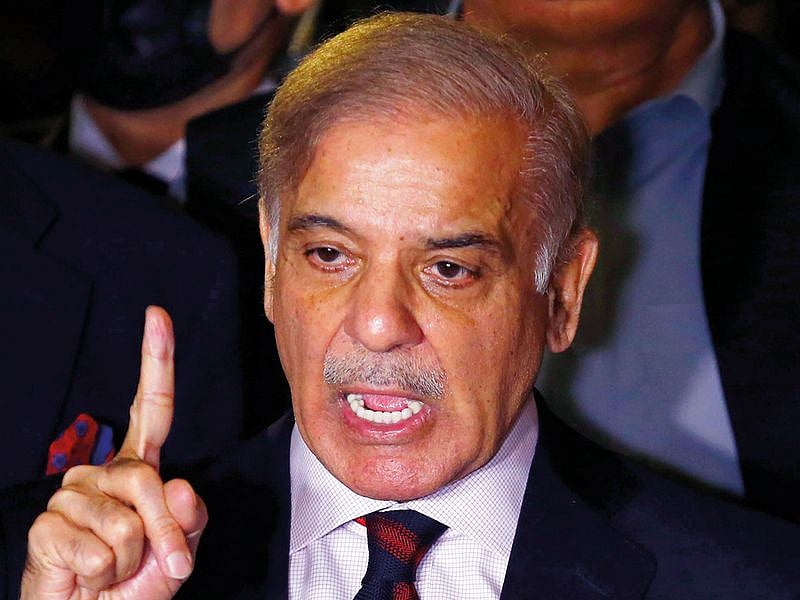
Dubai: Pakistan could become the world’s sixth-largest economy before 2050, Prime Minister Shehbaz Sharif said on Friday as he called for foreign investment in mineral processing and manufacturing.
“Instead of 2075, it will be, Inshallah, earlier than 2050,” said Sharif, when speaking at the Pakistan Minerals Investment Forum in Islamabad, citing a December 2022 Goldman Sachs report that ranked Pakistan sixth in its projections for 2075. The pre-2050 timeline was Sharif’s own assessment.
“Mine in Pakistan, process in Pakistan, manufacture in Pakistan and then export to the rest of the world,” Sharif told investors. He called for investment in refineries, smelters and factories that could turn locally mined minerals into products such as cables and electrical conductors. He said processing more minerals in Pakistan could create jobs and help bring technology and expertise into the country.
The two-day forum yielded 13 agreements and memorandums of understanding, state broadcaster Radio Pakistan reported. They covered areas including mineral exploration, investment and geological surveys, citing forum president Ahmed Hayat Lak.
What Goldman Sachs projected
Goldman Sachs economists Kevin Daly and Tadas Gedminas examined 104 economies in The Path to 2075. Their projections, based on gross domestic product measured in inflation-adjusted US dollars, placed Japan sixth in 2050. In the bank’s 2075 ranking, Pakistan followed China, India, the US, Indonesia and Nigeria.
“By 2075, with the appropriate policies and institutions, Nigeria, Pakistan and Egypt could be among the world’s largest economies,” the economists wrote. They cited the prospect of rapid population growth in those countries.
Reko Diq mine under review
Sharif said he expected production to begin in 2028 at Reko Diq, a copper and gold project in Balochistan. Barrick Mining, the Canadian company developing the project, owns 50 per cent. Three Pakistani state-owned enterprises jointly hold 25 per cent, and the Balochistan government holds the remaining 25 per cent.
Barrick had previously targeted first production by the end of 2028. In April, it said it would slow development after security risks increased and continue reviewing the project’s costs, financing and timetable until mid-2027. In its earnings release this month, Barrick said the project remained under review and cited lower expected spending at Reko Diq as the main reason it had cut its 2026 capital spending forecast.
In a separate meeting with Sharif, a Barrick delegation led by Chairman John Thornton expressed interest in investing in mineral processing in Karachi and Gwadar, Dawn reported, citing the prime minister’s office. Sharif said he wanted mining projects to provide jobs and skills training for people in Balochistan.
Remittances support Pakistan
The International Monetary Fund estimated in October that Pakistan’s economy grew 3.6 per cent in the fiscal year ended June 2026. It said remittances helped keep the current account broadly balanced and gross reserves rose to about $21.5 billion by the end of September.
IMF staff reached an agreement with Pakistan in October that could unlock about $1.21 billion under two programmes, subject to approval by the fund’s executive board. The IMF said approval would bring total disbursements under the two programmes to about $5.7 billion.

Sign up for the Daily Briefing
Get the latest news and updates straight to your inbox
Network Links
GN StoreDownload our app
© Al Nisr Publishing LLC 2026. All rights reserved.