Premium segment to drive HSBC’s retail and wealth business in the UAE
Lender witnessing strong growth in all segments of retail business such as personal loans, credit cards, mortgages and vehicle finance
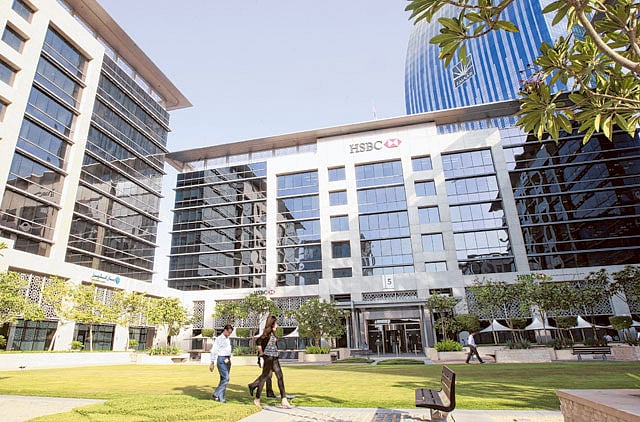
Dubai: The UAE is one of the key priority markets of HSBC globally and in the Middle East region in terms of size and opportunities, with the bank focused on the relatively large premium segment of the customer base it has in this market, according to Andy Ripley, head of Retail Banking and Wealth Management at HSBC.
“HSBC has a clear strategy for our premium customers. Our banking services in general are very much tailored towards needs of expatriates because of our connectivity with key global markets and portability of our services between markets. We have a strong proposition for the internationally-minded customers,” Ripley said.
In the UAE, the majority of HSBC’s retail customers are expatriates, those are in the premium end of the market. But this not the case in other regional markets such as Egypt or Oman where the share of the premium segment is relatively small.
“As a global bank we have a full service proposition, but premium is our focus in countries like the UAE but in different countries we have different focus depending on the local environment. We can’t go to Egypt at this point in time and say we want to be only the premium segment,” he said
In the UAE, HSBC’s retail and wealth business has a very committed customer base in internationally-oriented expatriates who want to their banking services to be connected to the rest of the world and is portable where they move next.
“We naturally attract expats with our international branding and presence in all major key markets around the world. Irrespective of the fact, if you are a Western or Asian expat, the brand is clearly recognised,” said Ripley.
Although the bank attracts expats due to its global branding and portability proposition, it has a significant customer base of Emaratis and other Middle East nationalities.
In the retail space bank has been posting healthy growth in low double digits. With the strong recovery of property markets and a projected economic growth in excess of 4.5 per cent, the bank expects healthy and sustainable balance sheet growth in the next few years.
The bank is witnessing strong growth in all segments of the retail business such as personal loans, credit cards, mortgages and vehicle finance. “Recent mortgage regulation we welcome. Nobody wants to go back to what happened in 2008 and 2009. So by introducing a more stringent affordability criteria based on better loan to value lending limits is good for long term sustainability of mortgage business in the UAE,” he said
HSBC is very active in the mortgage market in the UAE and it believes that the central bank policies around loan to value (LTV), debt burden ratio and classifications such as first property, second property and the distinctions between mortgages to expatriates and UAE nationals are clearly aimed at providing a sustainable future to the market.
In the UAE, about 80 per cent of property transactions are cash-based and only 20 per cent account for mortgage transactions. The regulations impacting mortgages here are potentially impacting only a minority of transactions because of the surplus cash in the market.
“For those people affordability is an issue, they seek mortgages. For this segment of the market regulations are important to keep the property purchases linked to their current affordability and future affordability in the context of changed economic conditions,” Ripley said.
HSBC has a relative low non-performing loans ratio and significantly lower impairment charges in the retail business compared with many banks operating in the UAE.
The bank’s lending policy is largely relationship based and is less risky.
“What we are trying to do is to capture more from our existing customer relationships. Our strategy is to expand the book size on a relationship basis and put [our] resources to enhance business with customers we already know,” he said.
Ripley sees the banking sector regulations maturing fast in the UAE.
“The regulators are doing everything this time to prevent asset bubble occurring. The credit bureau is clear intended to lend money more confidently. The very concept of bank’s ability to assess the creditworthiness and the ability of the borrower to service the debt is something we are very used to in many other markets and that gives us a lot of comfort,” he said. “The bureau will not be very disruptive as many people are assuming because the data is looked at banks only on a case by case as people apply for loans and the service comes with a price.”
Sign up for the Daily Briefing
Get the latest news and updates straight to your inbox
Network Links
GN StoreDownload our app
© Al Nisr Publishing LLC 2026. All rights reserved.