Painful reforms seen stabilising Egypt’s public finance
The IMF’s Extended Fund Facility will ease Egypts’ near term foreign exchange requirements
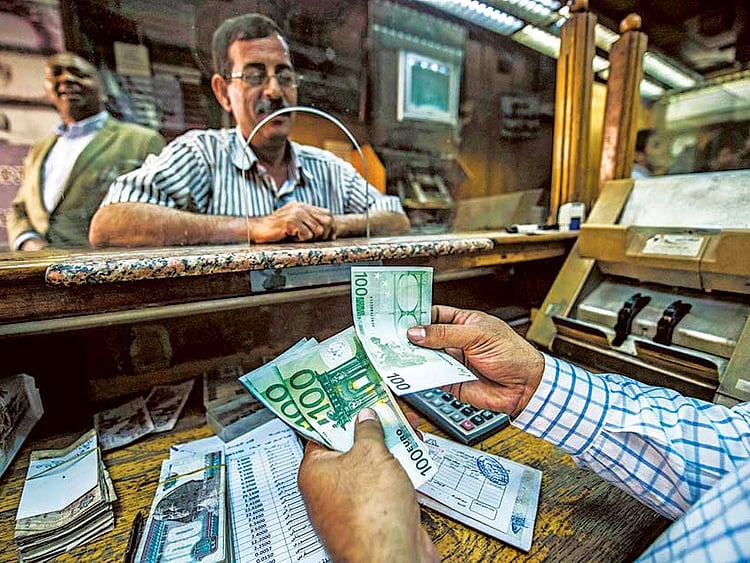
Dubai: Egypt’s decision to bring about drastic fiscal and monetary reforms is widely expected bring stability to the country’s economy and public finance.
The Egyptian authorities’ decision last week to float the Egyptian pound and to cut fuel subsidies, has paved the way for the International Monetary Fund (IMF) approving the three-year $12 billion Extended Fund Facility (EFF) announced in mid-August.
Analysts expect increase in inflation in the near term on the back of recent currency devaluation and subsidy cuts on top of recent interest rate hikes will weigh on domestic consumption and may raise social tensions, while fiscal and external deficits remain.
The first installment of the IMF loan, $2.75 billion (Dh10.09 billion), was disbursed on Friday. The IMF loan was only the first of several painful yet urgently needed steps to stabilise Egypt’s economy, and in the short term, conditions for ordinary Egyptians may continue to deteriorate.
Despite such worrying prospects, rating agencies and economists see the recent bold decisions could gradually stabilise the economy. In a recent rating upgrade Standard & Poor’s revised Egypt’s outlook to stable from negative and affirmed “B-/B” long and short-term sovereign credit ratings.
The stable outlook balances Egypt’s external and fiscal vulnerabilities, against the IMF support following the government’s upfront delivery on reforms. “The authorities’ shift to a more flexible exchange rate regime fulfilled a key IMF condition, and is also a vital step toward alleviating Egypt’s acute foreign currency shortage, narrowing the differential between the official and unofficial exchange rates and improving the country’s export competitiveness,” said Nourredine Lafhel, an S&P analyst said in a note.
The IMF’s EFF will provide external financing to Egypt to meet its foreign exchange requirements over the coming 12 months. But the overall fiscal outlook on Egypt remains constrained by wide fiscal deficits, high public debt, low income levels, and institutional and social fragility.
Social and political risks
Earlier this month, the central bank formally moved to a floating exchange rate regime. As a consequence, the official exchange rate depreciated 48 per cent against the US dollar, converging close to the rate quoted in the parallel market.
“The devaluation of the Egyptian pound and the central bank’s stated intention to allow the currency to float are major steps in Egypt’s external, monetary and fiscal adjustment and are positive for the sovereign’s credit profile. But such a large currency adjustment puts the spotlight on social and political risks in an already challenging policy environment,” Toby Iles, Director Sovereigns at Fitch Rating said in a recent note.
Last week the central bank raised its key overnight deposit and lending rates by 300 basis points, to 14.75 per cent and 15.75 per cent, respectively. This interest rate hike is also intended to tighten monetary conditions and prevent second-round inflationary pressures.
Despite the bold reform measures, in the short to medium term operating environment in Egypt is expected to remain tough. Latest purchasing managers index (PMI) data showed Egypt’s non-oil private sector activity sank further into contraction in October, with business conditions deteriorating at the strongest rate since July 2013.
Purchasing activity
Many of the issues facing companies stemmed from the weakness of the Egyptian pound relative to the US dollar. That drove costs up considerably, often making raw materials unaffordable and thus in short-supply. As a result, both output and purchasing activity fell sharply. Higher costs linked to adverse exchange rates led a number of firms to raise their charges, which contributed in turn to faster declines in both total new work and new orders from abroad.
“October’s survey highlights the increasingly difficult operating environment confronting Egyptian private sector firms. The ongoing FX shortage and EGP weakness on the parallel market are the main factors undermining economic output,” said Jean-Paul Pigat, Senior Economist at Emirates NBD.
The recent shift to a more flexible exchange rate regime is also a key step toward alleviating Egypt’s acute foreign currency shortage. A more competitive exchange rate could benefit Egypt’s export of goods and services, particularly the depressed tourism sector, if the security environment stabilizes further. The new foreign exchange regime will also, as we understand it, improve monetary policy effectiveness because inflation targeting through interest rate setting will replace exchange rate targeting.
Sign up for the Daily Briefing
Get the latest news and updates straight to your inbox
Network Links
GN StoreDownload our app
© Al Nisr Publishing LLC 2026. All rights reserved.