Why a foam roller eases soreness after a workout
Foam rolling after exercise: What the research says about soreness
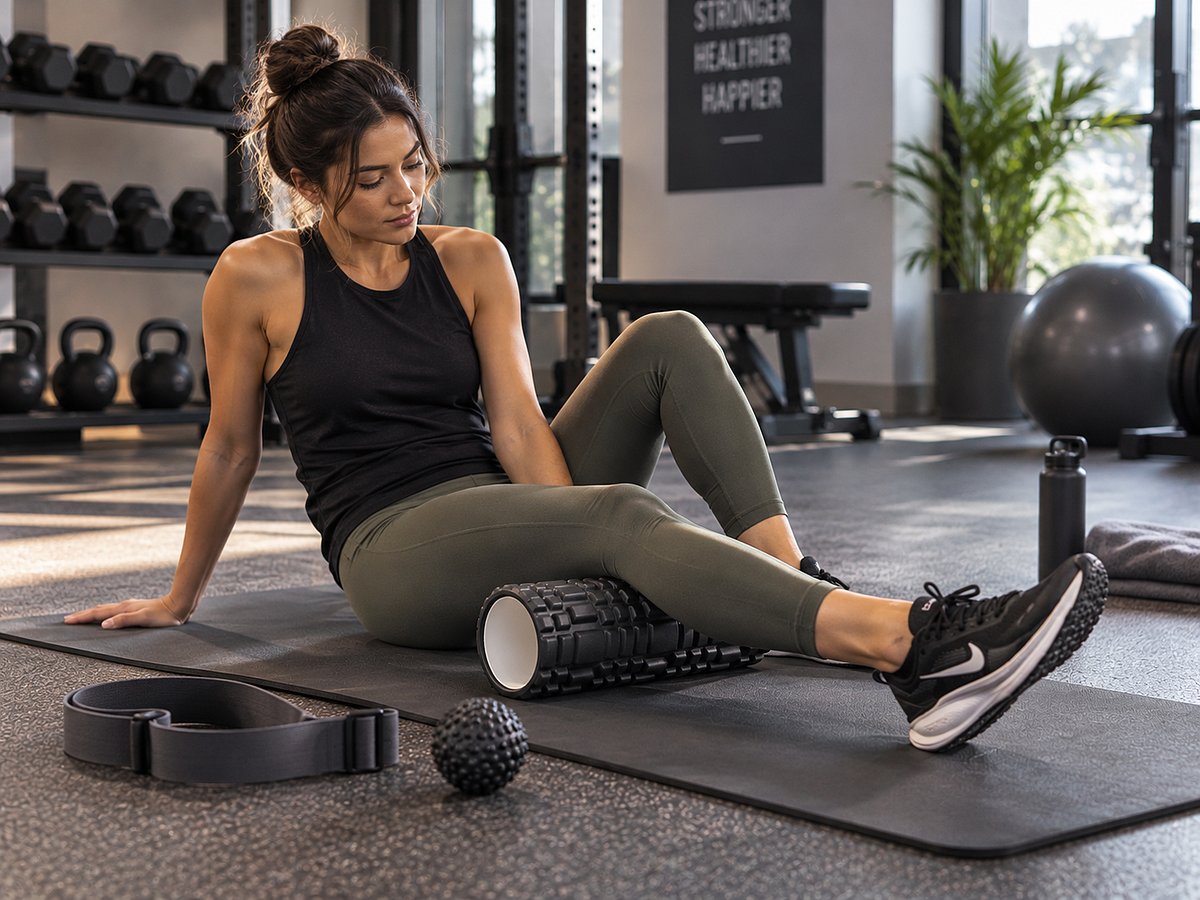
The ache that arrives the day after a hard workout is not simply leftover lactic acid. Delayed onset muscle soreness, or DOMS, commonly develops after unfamiliar or strenuous exercise and can peak 24 to 72 hours later. Research has long shown that lactate accumulation does not explain this delayed soreness. Foam rolling will not repair worked muscles overnight, but there is evidence that it can make the recovery period feel more comfortable. A 2024 systematic review covering 16 studies and 515 participants found reductions in perceived post exercise muscle soreness, particularly after 24 hours.
A foam roller lets you use your body weight to apply pressure to soft tissue. Researchers are still working out precisely why this changes how muscles feel, so claims about physically "breaking up knots" should be treated cautiously. The more defensible effects are modest reductions in perceived soreness and short term increases in range of motion. A 2020 systematic review found a positive effect on range of motion and some evidence of improved recovery after exercise induced muscle damage, without establishing a direct improvement in athletic performance.
That makes rolling useful for recreational runners, gym goers and people doing strength or mobility sessions, including anyone building a compact recovery setup at home in the UAE. Think of it as a comfort and mobility tool rather than a shortcut to muscle repair.
For basic use, move slowly over a muscle such as the calves, hamstrings, quadriceps or glutes. Hospital for Special Surgery advises keeping the roller on muscle rather than directly over bones or joints. Pressure can feel tender, but sharp or worsening pain is a reason to stop. Persistent pain, swelling, numbness or weakness warrants medical advice rather than more rolling.
Density matters more than elaborate surface patterns. A very firm roller concentrates pressure, while a softer model is usually easier for beginners to control. Length affects stability and storage: shorter rollers travel easily, while longer ones give you more room to position yourself.
Do not assume harder pressure means faster recovery. The evidence supports foam rolling as a modest recovery and mobility technique, not a test of pain tolerance. One review suggests roughly 90 to 120 seconds of total rolling can produce flexibility benefits.
This is the main tool for rolling larger muscle groups after running, leg training or a full body gym session. This 45cm Yes4All model is made from high density EPP foam and features a firm, rounded design suitable for stretching and self massage. Its 45cm format strikes a practical middle ground: enough surface for quads, hamstrings, calves and glutes without demanding the storage space of a full length roller. Beginners should control how much body weight they place on a dense roller rather than chasing maximum pressure.
A massage ball applies pressure over a much smaller area, making it better suited to targeted soft tissue work than broad rolling. Measuring 6.35cm in diameter, this compact and lightweight fascia ball is easy to carry, making it ideal for travel and relaxation on the go. That compact size also makes it easy to keep in a gym bag or desk drawer. Use it with controlled pressure against the floor or a wall rather than aggressively pressing into a tender point. As with a roller, it belongs on soft tissue, not directly on joints or bones. It complements the Yes4All roller rather than replacing it, particularly when you want more precise pressure.
A mat does not reduce soreness by itself, but it makes a floor based rolling and mobility routine considerably more practical. This Amazon Basics model features a textured surface, lightweight foam construction and a convenient carrying strap, with listed dimensions of approximately 188 × 61 × 1.3cm. The extra cushioning is particularly useful when your elbows, knees or hips are supporting part of your weight during rolling. It also gives the roller a cleaner, more predictable surface than a hard floor or deep carpet.
Foam rolling can temporarily improve range of motion, but stretching remains a separate tool rather than something a roller replaces. This Abiarst strap is listed as non elastic with 10 hand or foot loops. The loops provide repeatable grip positions, which can make controlled hamstring, calf and shoulder stretches easier than tugging on a towel. A systematic review found insufficient evidence that post workout stretching meaningfully reduces DOMS compared with passive recovery. Its role here is controlled mobility, not soreness treatment.
Foam rolling earns its place in a recovery routine because the evidence supports a modest improvement in how sore muscles feel and a useful short term increase in range of motion. It does not erase muscle damage or guarantee faster performance recovery. For most people starting a simple setup, the Yes4All High Density EPP Foam Roller is the most versatile of these four products, covering the large muscle groups that are easiest to roll after training. Add the massage ball when you want more focused pressure, and use the mat and strap to make mobility work easier to perform consistently.
Gulf News earns a commission on purchases made through links in this article, at no extra cost to you. Our editorial team selects products independently.
Sign up for the Daily Briefing
Get the latest news and updates straight to your inbox
Network Links
GN StoreDownload our app
© Al Nisr Publishing LLC 2026. All rights reserved.