Middle East War: Saudi Arabia intercepts Houthi missiles, drones as Iran talks continue
Tehran insists on seven conditions for US talks as Washington weighs further strikes
Highlights
Saudi coalition intercepts four Houthi drones targeting southern region
The Saudi-led coalition said it intercepted and destroyed four drones launched by Yemen's Houthi militia towards Saudi Arabia's southern region. Coalition spokesman Major General Turki Al-Malki confirmed the interceptions.
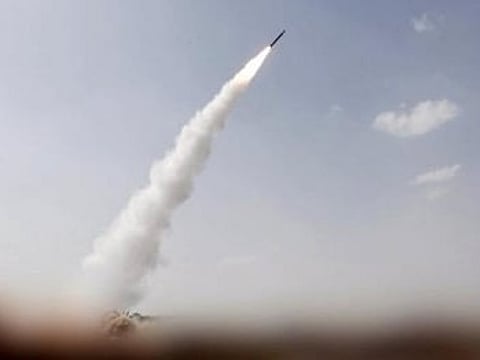
Saudi air defences intercept three Houthi ballistic missiles targeting Eastern Region
The Saudi-led coalition said its air defences intercepted and destroyed three ballistic missiles launched by Yemen's Houthi militia towards Saudi Arabia's Eastern Region. Coalition spokesman Major General Turki Al-Malki confirmed the interceptions.
Oman urges Gulf security pact including Iran
Omani Foreign Minister Badr Albusaidi urged a Gulf security framework including Iran and a non-aggression pact among the region’s eight states, the Foreign Ministry said Monday.
Speaking at Cambridge University’s Girton College, he called for “a new regional security structure” designed and implemented locally, saying reliance on external powers had lasted too long.
Excluding Iran would make any framework inherently unstable, he said.
“It’s not a matter of whether you’re friendly or hostile to Iran,” Albusaidi said. “A Non-Aggression Pact between all eight states should be the goal,” he added, referring to the six Gulf Cooperation Council members, Iraq and Iran.
'Entering new path could be considered': Iran tells US, insists on 7 conditions for new talks
Washington must fulfill seven conditions before Tehran considers negotiations, an Iranian official said on Monday, warning against a temporary deal followed by renewed military action or pressure.
Ali Bagheri Kani, deputy for foreign policy and international security at the Supreme National Security Council secretariat, spoke to state television after Mecca Pact talks involving Iran, Saudi Arabia, Turkey and Pakistan in Tehran.
“If the United States fulfills them, then entering a new path could be considered,” he said.
Bagheri Kani suggested Washington might pursue a short-term agreement to claim a political victory before the November 3 midterm elections, then resume military operations or increase pressure.
He said countries had proposed shortening Iran’s seven-day implementation period.
“Today, at the meeting, Mr. Rezaei said that if the issue is the number of days, we could accept five days or even four days,” he said, referring to council secretary Mohsen Rezaei.
“But the important point is that these seven conditions must be fulfilled,” he added.
“We have no doubt whatsoever that these seven conditions must be fulfilled. Once that happens, we will decide what to do next.”
Iran says agreed with Mecca pact countries security must come from region
Iran said it had agreed with three countries party to the Mecca defence pact, Turkey, Saudi Arabia, and Pakistan, that regional security should be ensured by countries in the region itself and not by foreign actors.
"The outcomes we agreed on were that security in the region where we live should be endogenous, meaning it should be achieved by the countries themselves, and that we must prevent any kind of foreign intervention in this region," Iran's Supreme National Security Council secretary Mohsen Rezaei said after the meeting.
Iran hails ‘very good’ talks with Mecca Pact nations
Iran's security chief said Monday he held "very good discussions" with the three member countries of the Mecca defence pact, Saudi Arabia, Turkey and Pakistan, after their first meeting in capital Tehran.
"Very good discussions took place between us," Mohsen Rezaei, head of Iran's Supreme National Security Council, told state television after the meeting with top officials from the three countries. "I feel that a new atmosphere is emerging in the region... I sensed a very positive atmosphere in the discussions among the gentlemen."
Israel calls UN-backed genocide allegations ‘propaganda’
Israel on Monday dismissed as "propaganda" a new report issued by UN-mandated investigators accusing it of committing the crime against humanity of extermination in the West Bank and genocide against Palestinians in the Gaza Strip.
The Israeli foreign ministry said on X that the investigators' finding "is not a human rights report but a propaganda document detached from reality, aimed at undermining Israel's right to self-defense, delegitimising the Jewish state, and legitimising terrorism against its citizens".
Get updated faster and for FREE: Download the Gulf News app now - simply click here.
Iran claims full control of Strait of Hormuz
Iran’s armed forces chief of staff, Major-General Ali Abdollahi, has claimed that Tehran has full control of the Strait of Hormuz during a visit to forces stationed along the Iranian side of the waterway, according to the Tasnim news agency.
Iran’s army and navy have “complete control and oversight” of the coasts of the Arabian Gulf, the islands and the Strait of Hormuz, Abdollahi said, dismissing statements by US leaders as “propaganda”.
“The strategic waterway is completely closed,” he said, adding that vessels could not transit the strait unless they complied with Iranian regulations.
Ship on fire off coast of Iraq
A vessel has reportedly caught fire 63 nautical miles southeast of Al-Faw, Iraq, according to the United Kingdom Maritime Trade Operations (UKMTO).
In a warning issued on October 26, UKMTO said it had received multiple third-party reports of the incident. The time of the incident has not yet been confirmed.
The status of the vessel’s crew, the extent of any damage and the potential environmental impact remain unknown.
UKMTO advised vessels operating in the area to transit with caution and report any suspicious activity as authorities investigate.
US forces ready for major Iran operation: Report
US forces in the Middle East are prepared to launch potentially major military operations against Iran within 96 hours of receiving an order from President Donald Trump, CNN reported, citing two US officials.
According to the report, US forces have been deployed in sufficient numbers to carry out the attacks, with potential targets including Iranian energy infrastructure, military sites and nuclear facilities. Officials said the operation could go beyond previous strikes aimed at limiting Iran’s military capabilities.
One US official told CNN: “It will be a big effort.”
Trump has not made a final decision, officials said, although some current and former US officials believe an order could come before the end of the year, potentially after the US midterm elections.
US intelligence assessments indicate Iran and Yemen’s Houthi rebels are preparing for the possibility of renewed US and Israeli attacks. Sources told CNN that Iran and the Houthis could retaliate by targeting US personnel and facilities in the region and potentially elsewhere if Iran is attacked.
Iran, Mecca pact countries continue talks after first meet
Iran and the three countries party to the Mecca defence pact agreed to continue talks after a "first" meeting in Tehran, Iranian state television said on Monday.
The meeting brought Iran together with representatives from Saudi Arabia, Pakistan and Turkey - recent signatories to the Mecca pact - and they "agreed to continue discussions to strengthen cooperation... including on regional peace and security", the broadcaster said.
Saudi Arabia intercepts three drones in Riyadh, south
Saudi Arabia’s air defences intercepted and destroyed three unmanned aerial vehicles (UAVs) in Riyadh and the Kingdom’s southern regions, according to the coalition.


